The Thomond - Dublin 4's forgotten motor car
Mark Humphrys.Article prepared for Ireland Made. Final version here, 25 Dec 2025.
Go down to Baggot Street Bridge in Dublin, and on the Dublin 4 side of the canal you will see a magnificent former bank, and beside it an office block with a pretty canal front. The latter is the site of the garage where four "Thomond" motor cars were built in 1925 to 1933, the first cars built in the Irish Free State.
The cars were built by motor engineer James A. Jones and his chief mechanic Ben Parsons. Jones had helped the Volunteers during the War of Independence, and apparently he was motivated to construct the first car built in the new Irish state.
The four Thomond cars
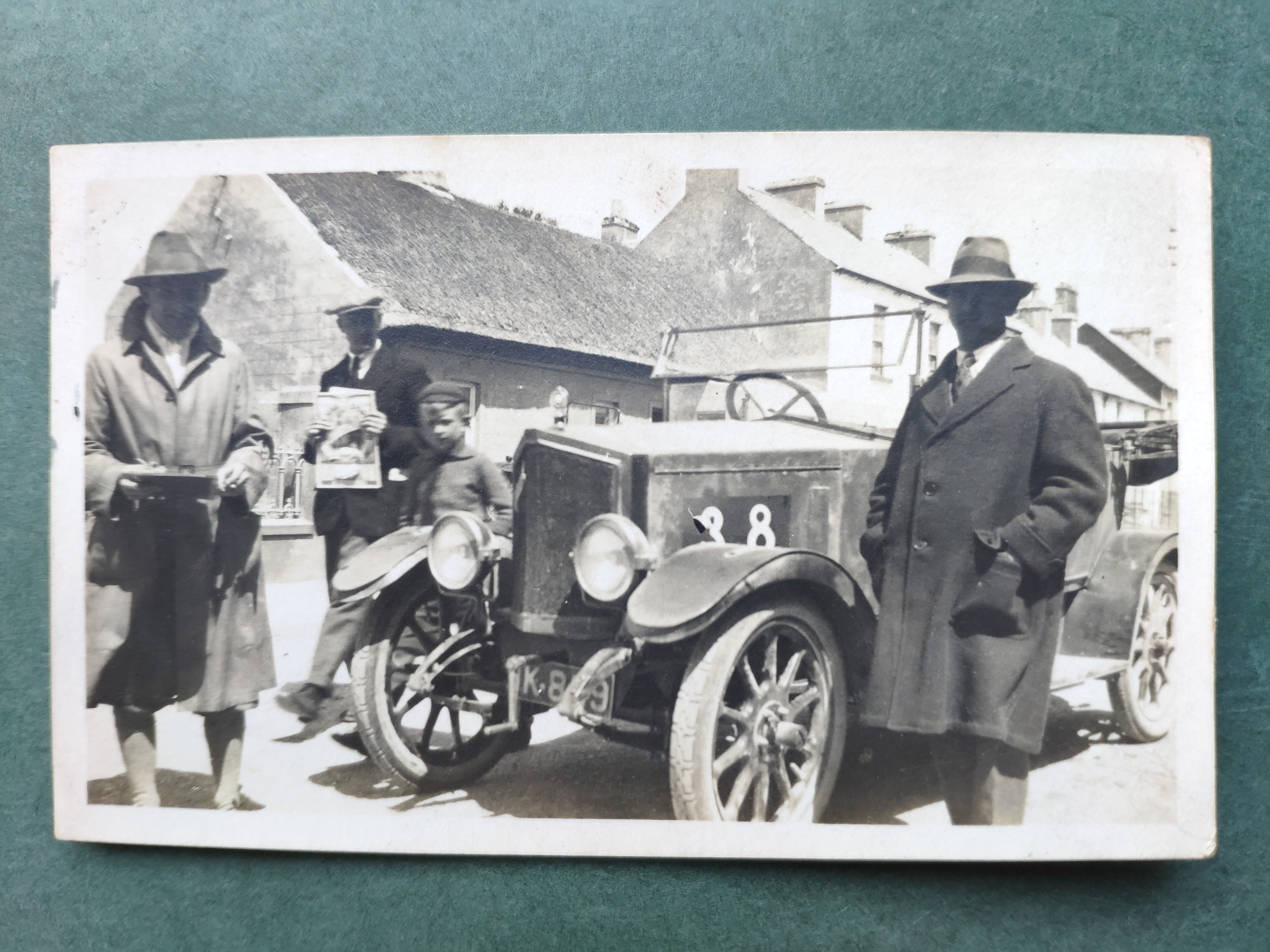
The Thomond first appears in history in The Motor News of 4 July 1925, which is a report on the Dublin and District Motorcycle and Light Car Club 'Twenty Four Hours trial' from Dublin to Donegal and back. Taking part is "Mr. J.A. Jones on the 12 h.p. Thomond". Two photographs of Thomond no.1 survive, showing it was a 4 door, 5 seater tourer, with a plywood and fabric Weymann-type body and rather primitive artillery wheels. It had a 1750 cc, 4 cylinder engine with overhead valves, RAC horsepower of 12 hp.While The Motor News continued to report Jones driving his Thomond in motor trials in 1925 and 1926, they oddly did not commission an article to interview him about what this "Thomond" car was.
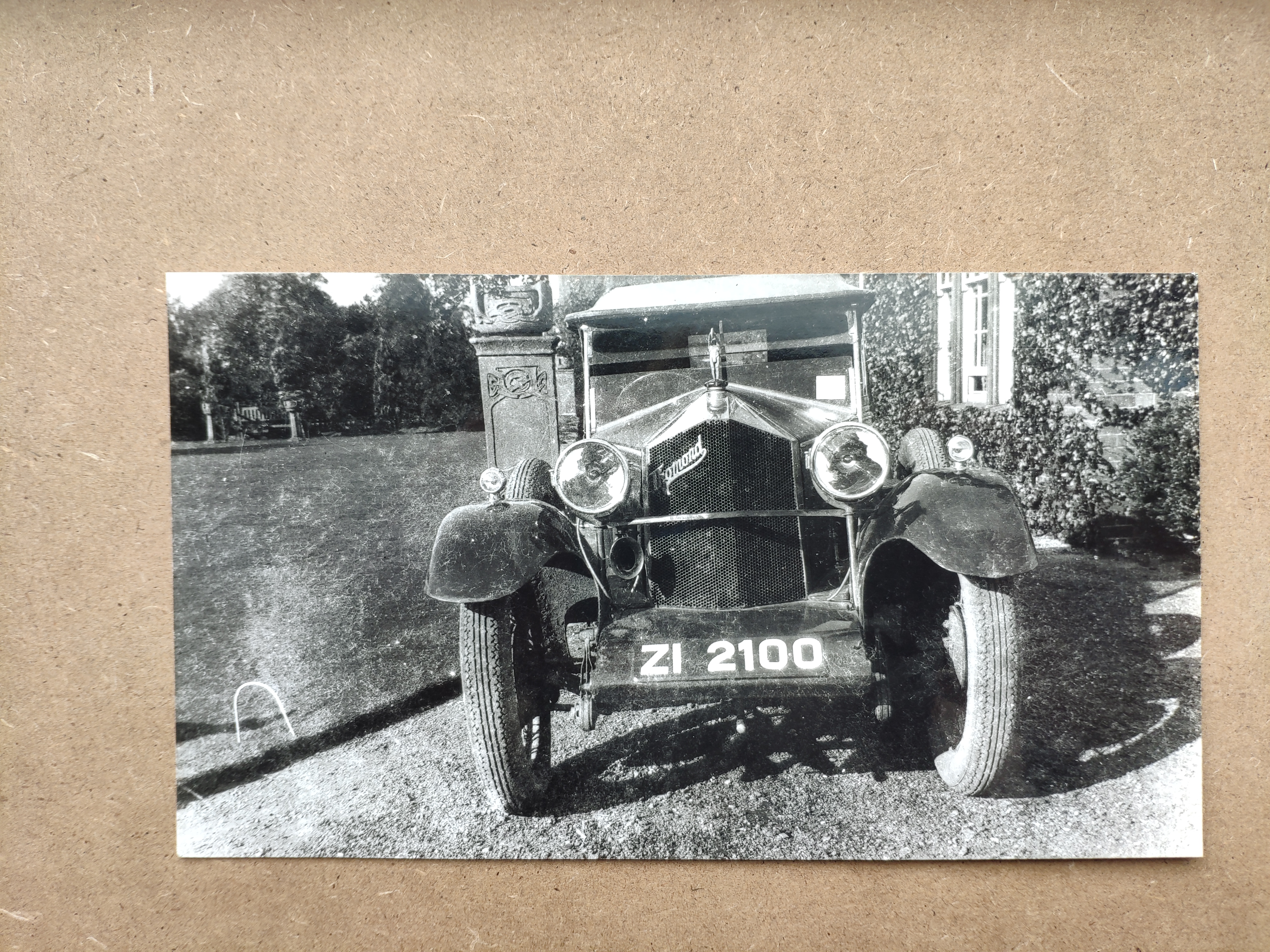
However one man got interested: my grandfather Dick Humphreys. Dick was very interested in this Irish-built car, and by 1928 he made a design for a car for Jones and Parsons to build for him. Jones and Parsons completed Dick's plans for Thomond no.2 in 1929. This was a much more sporty design, a rather pretty 2 door, 3 seater touring coupe, again with a plywood and fabric Weymann-type body, and lighter wire wheels. It used a Meadows 4ED engine, with 4 cylinders in line, 2 carburettors, 2 overhead valves per cylinder, 1496 cc, RAC horsepower of 12 hp, and 48 brake horsepower.
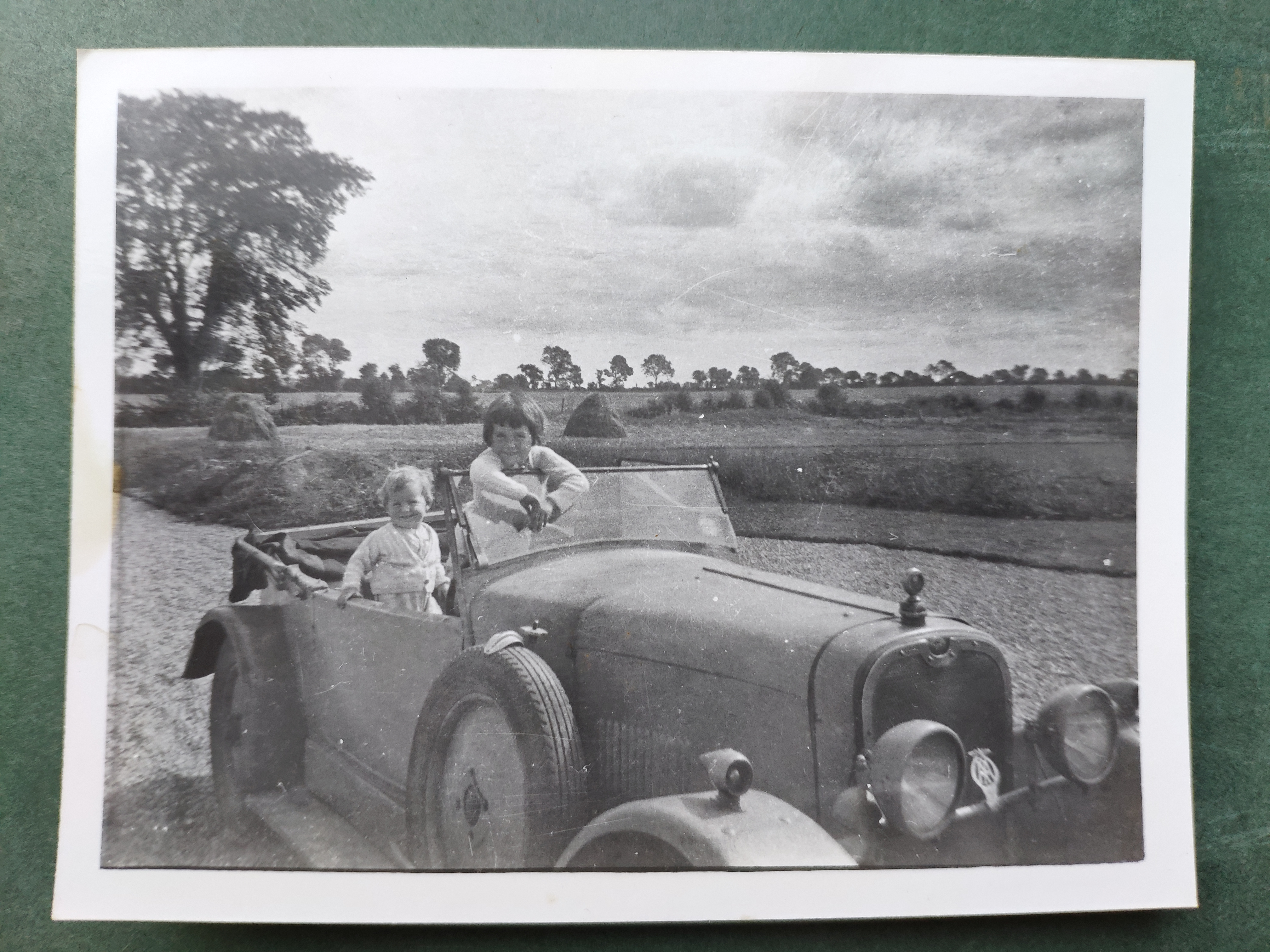
Dick was thrilled. The car was faster than anything he had owned, and he was soon driving over 60 mph long distance, and once nearly hit 80 mph. The car appears in many Humphreys family photos, which is lucky since no Thomond has been found in Jones or Parsons photos.
In 1930, Jones and Parsons built a third Thomond. A 4 door, 5 seater hardtop saloon, with metal coachwork (upper bodywork may have been fabric), wire wheels and leather upholstery. Who it was built for is unknown. There are clues it might be John or Francis McMullan, motoring friends of Jones.
On 17 Feb 1933, Dick Humphreys' Thomond (no.2) is recorded in motor taxation records as "scrapped". His cousin Aodogán O'Rahilly said that Dick crashed the car after racing a Chrysler along the Stillorgan Road. However a similar Thomond, with different bodywork, and a new number plate, turns up in Humphreys photos after this. It seems Dick had his Thomond completely re-built, and this was Thomond no.4. Interestingly, his wife Eithne recalled only one Thomond, with a stream of modifications, while his cousin Aodogán said Dick had two Thomonds, one after the other. Maybe his cousin was more interested in his cars than his wife!
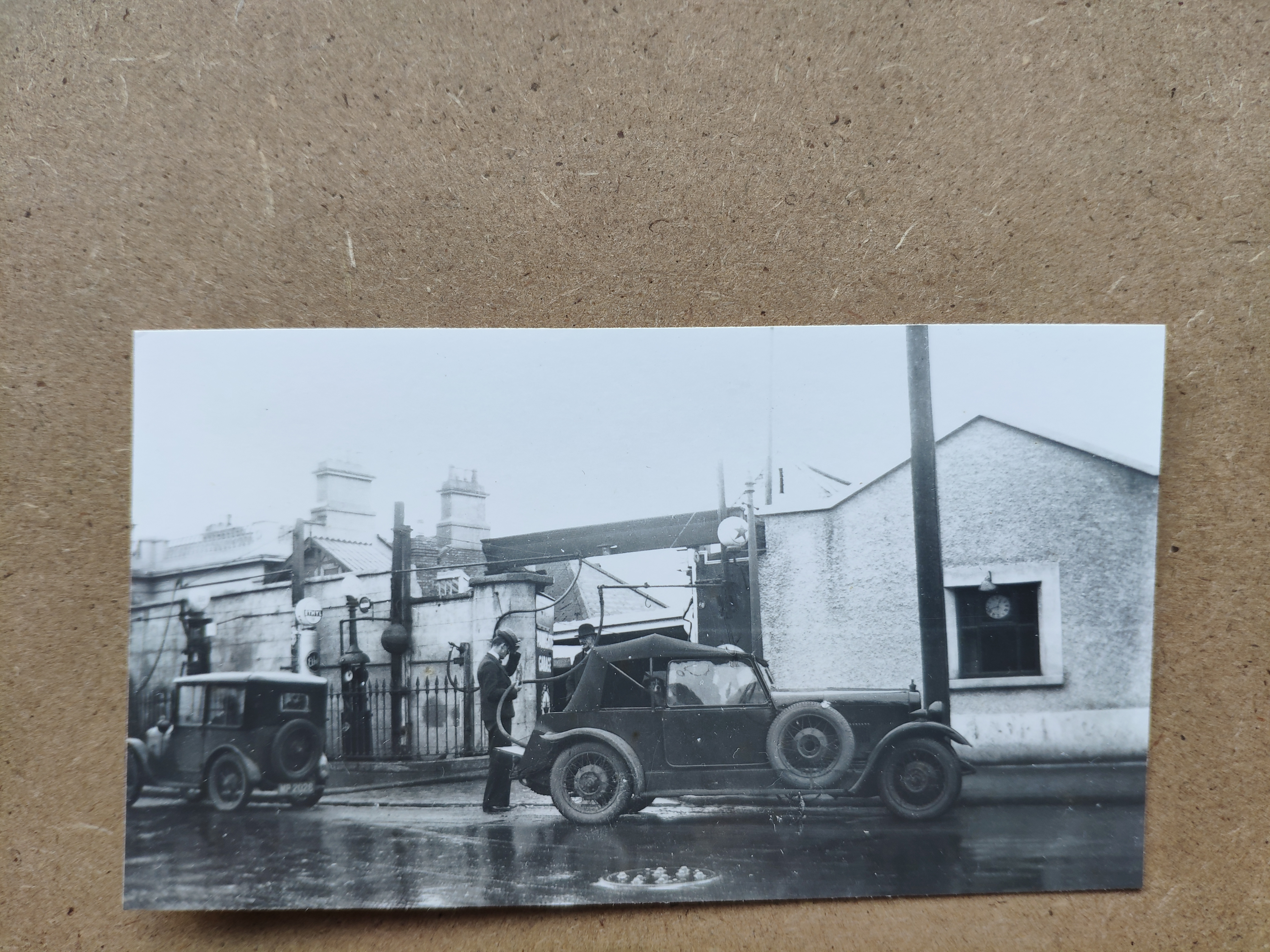
Thomond no.4, being based on no.2, was also a 2 door, 3 seater touring coupe, but with a new metal body. The engine was new and less powerful: a one carb Meadows 4ED, 4 cylinders in line, 1496 cc, 12 hp for tax, 40 bhp.
The fate of the Thomonds
There are no known remains of any Thomonds today. Thomond no.1 was being driven by Jones around 1935, according to his grand-niece, but he did not keep it. Thomond no.2 was scrapped. Thomond no.3 was apparently seen a few times up to around 1949-1951.What seems to be Thomond no.4 was bought in 1940 by Henry Barlee, modified, and crashed into Templeogue Bridge. It was scrapped. Barlee said the Meadows engine was bought by motorsport enthusiast Dudley Colley. The engine may survive today, which would be the only part of a Thomond to survive.
Emerging from obscurity
The Thomonds remained in obscurity until Dick wrote a short account in Motoring Life, May 1963. I grew up seeing pictures of his Thomond in the family home, and I started researching the car as a schoolboy in 1983. At this point, Jones, Parsons and Humphreys were dead. I was still in time, though, to interview many people who saw and even worked on the Thomonds. I published a history in the Irish Motor Sport Annual, 1985.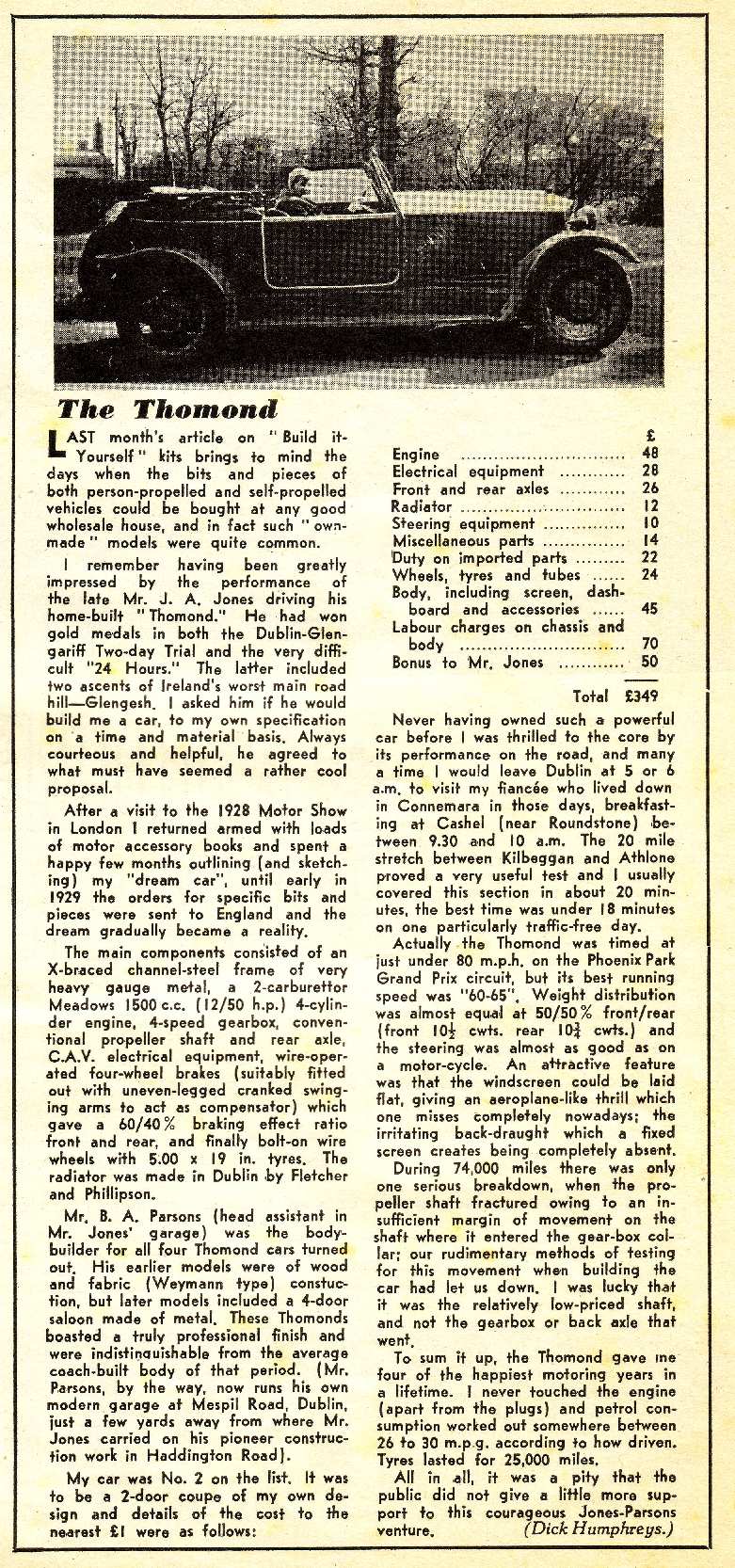
The Thomond changed my life
Researching the Thomond changed my life, because it led to researching my family tree, which became a life-consuming project, still going today. See my site: humphrysfamilytree.com and the Thomond section: humphrysfamilytree.com/Thomond. I set up a website in 1994, and soon realised I needed to get all my historical research onto it. But I had so much material that only this year, in 2025, have I finished getting the last of my research onto the site.Putting the last Thomond material online this year was a strange feeling. I wonder do the Germans have a word for the feeling when you asked questions of elderly people long ago, and got answers, and you have more questions, but it is too late. Putting the Thomond work online, I came across "Things to do" like: "Ask Alan Hogan about the colour of the Thomond he saw". And then I realise Alan Hogan was born in 1903. In fact, basically everyone I interviewed in the 1980s is dead.
Such is life. But at least I talked to some people who knew the Thomond project and saw the cars, which would be impossible today. And maybe now this work is online, we will make some more discoveries about what my grandfather called "this courageous Jones-Parsons venture".
About the author

Selected images
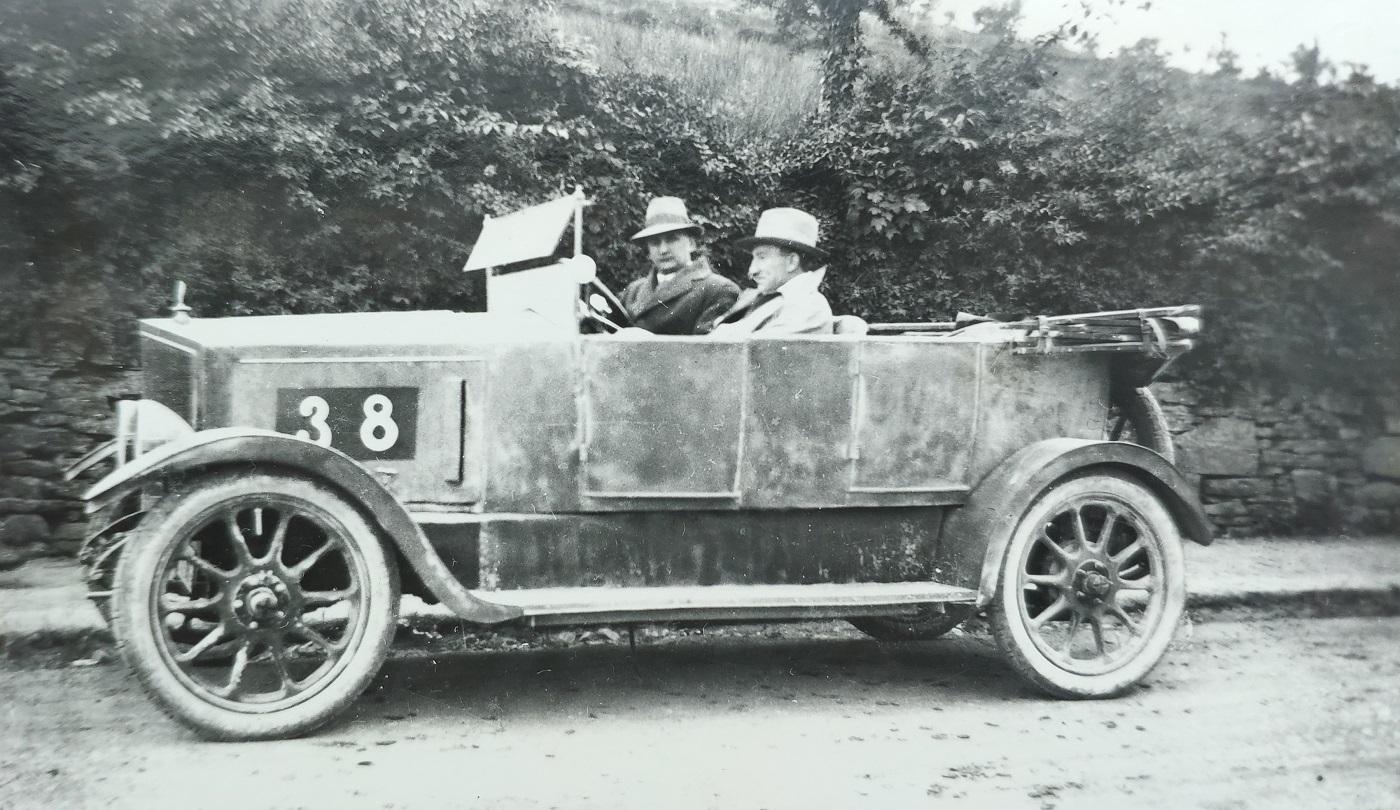
Thomond no.1.
James A. Jones (in darker clothing, driving) and his friend Mr. McMullan (lighter clothing).
Think this would be at the 1926 "24 hours" trial.
See full size.
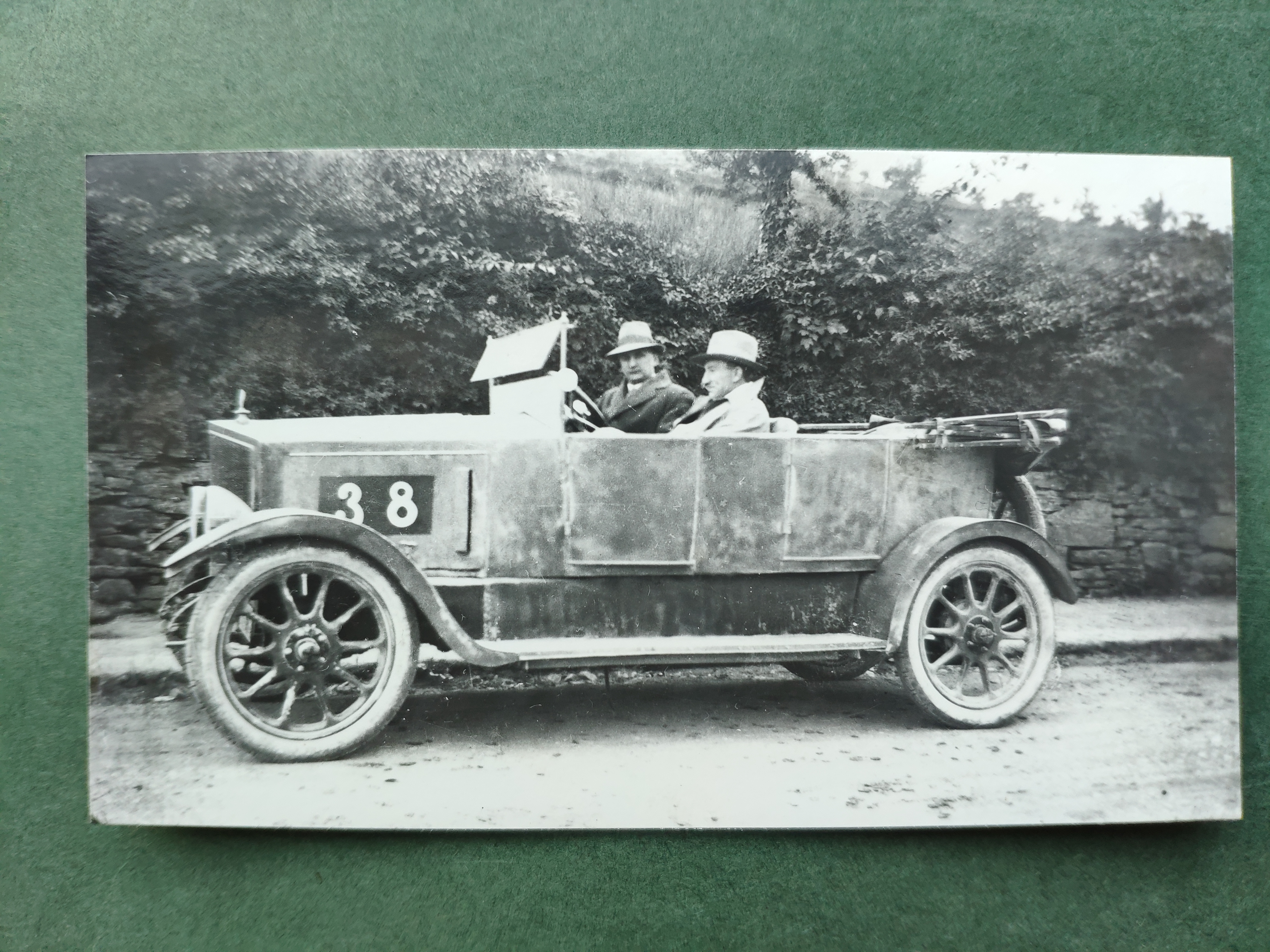
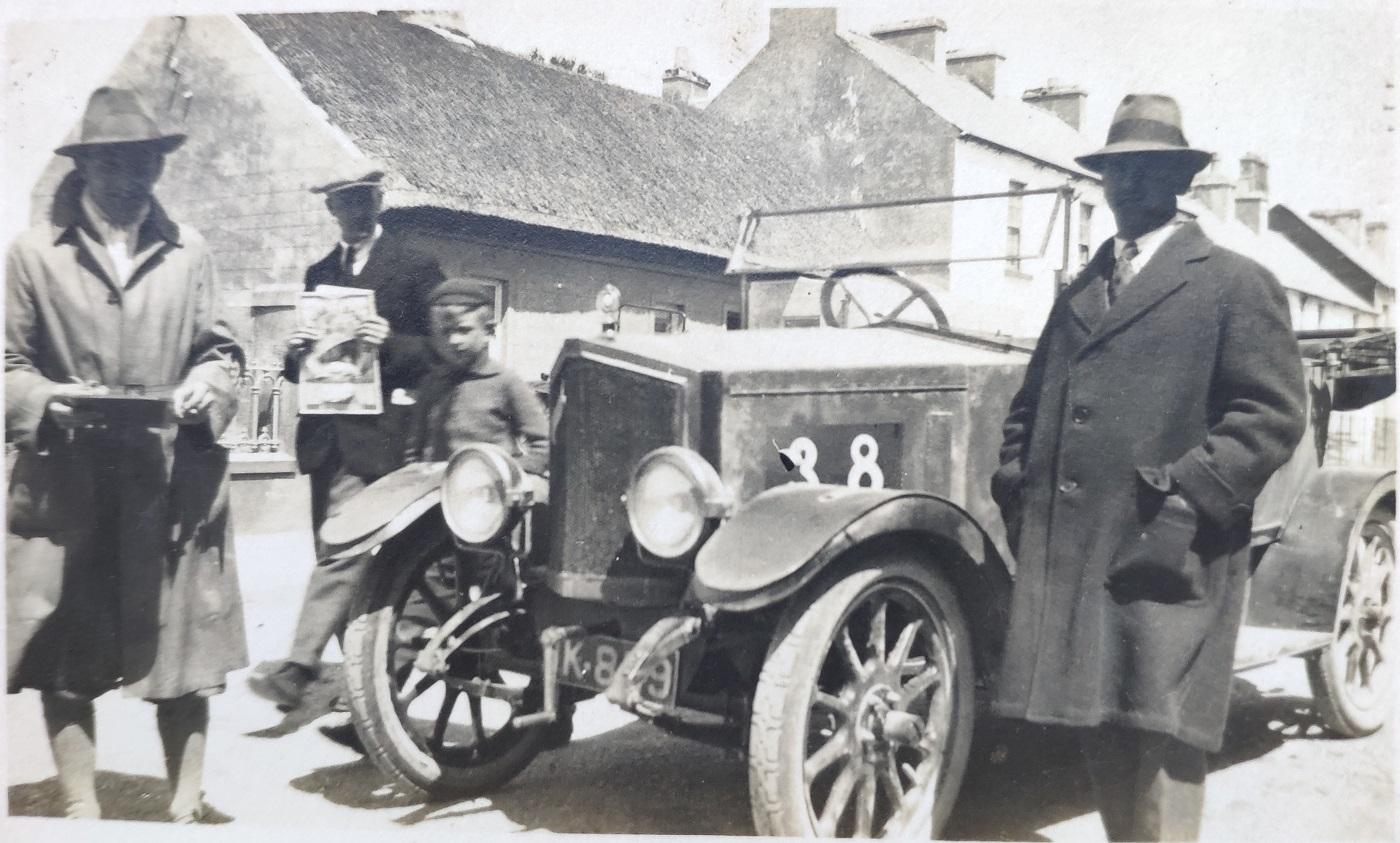
Thomond no.1.
James A. Jones (in darker clothing) and his friend Mr. McMullan (lighter clothing).
Think this would be at the 1926 "24 hours" trial.
See full size.
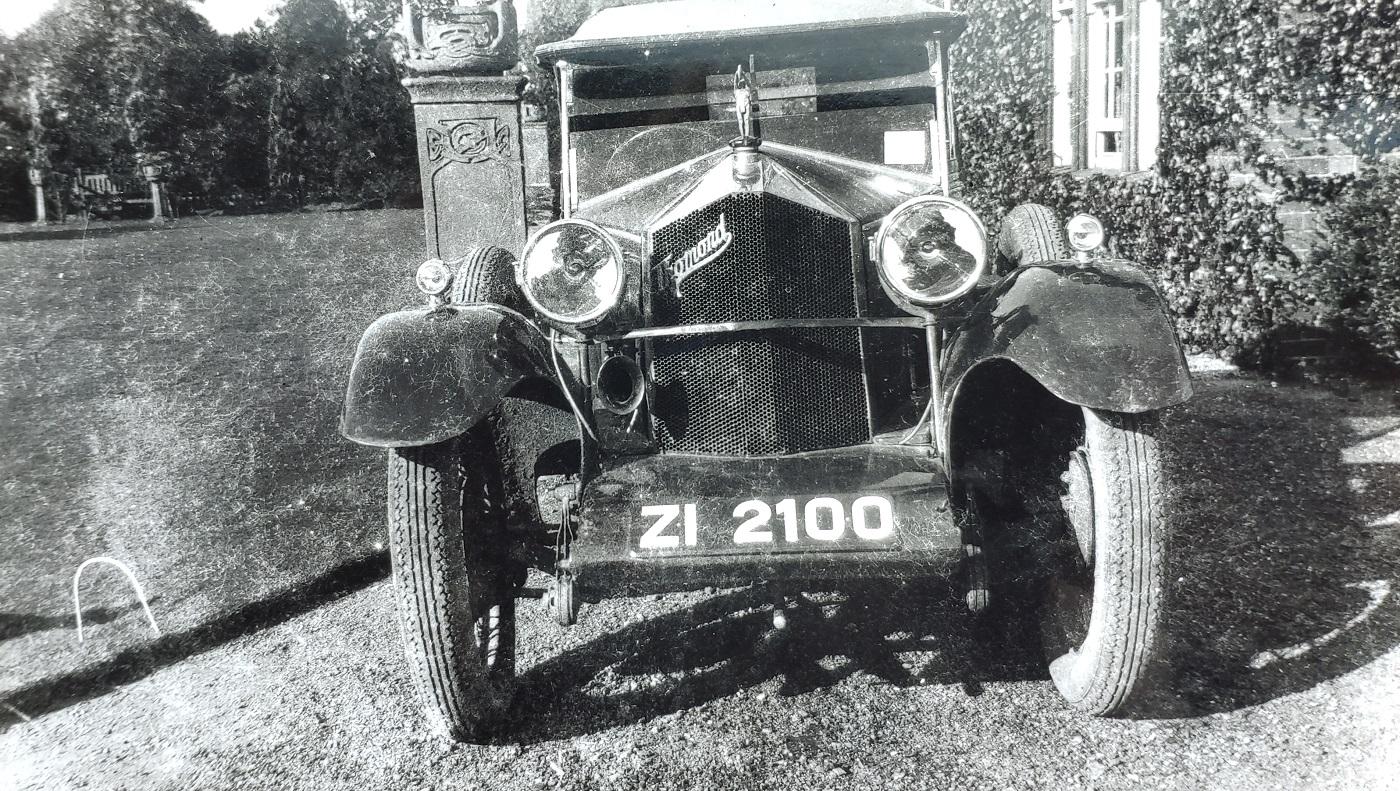
Thomond no.2.
At Dick Humphreys' house on Ailesbury Road.
See full size.
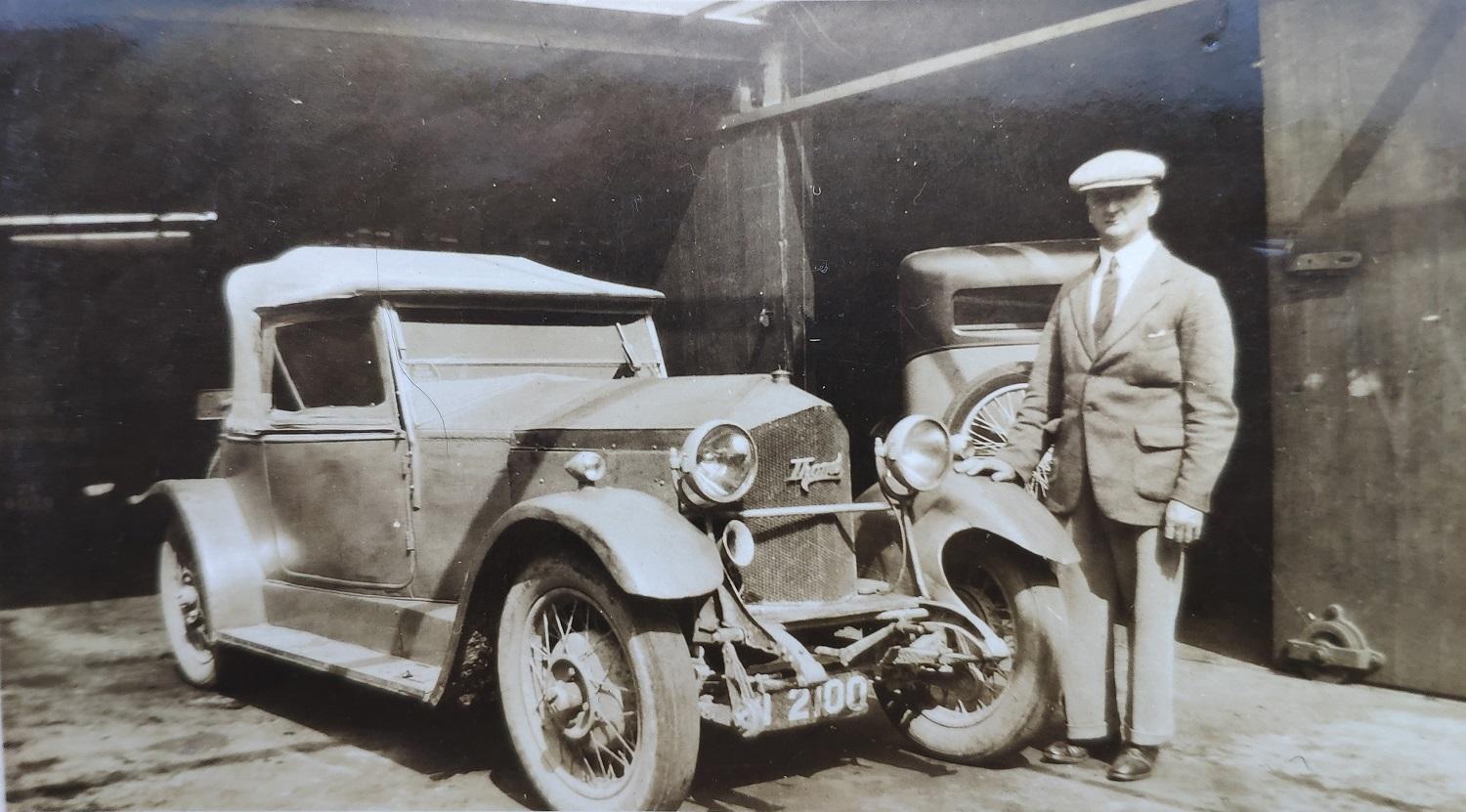
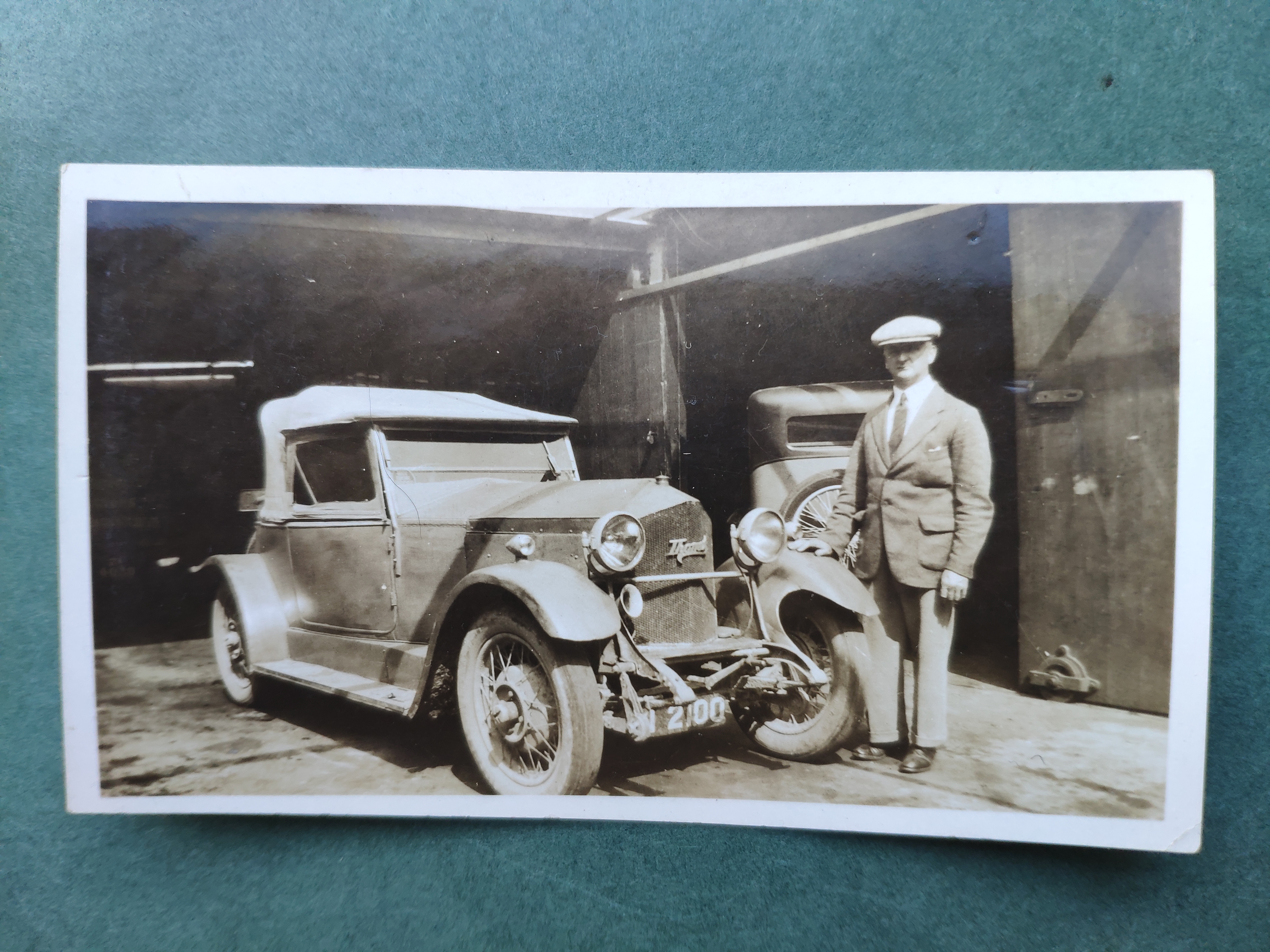
Thomond no.2, after modifications, probably 1932-1933.
With James A. Jones,
at Jones' garage near Baggot St Bridge.
See full size.
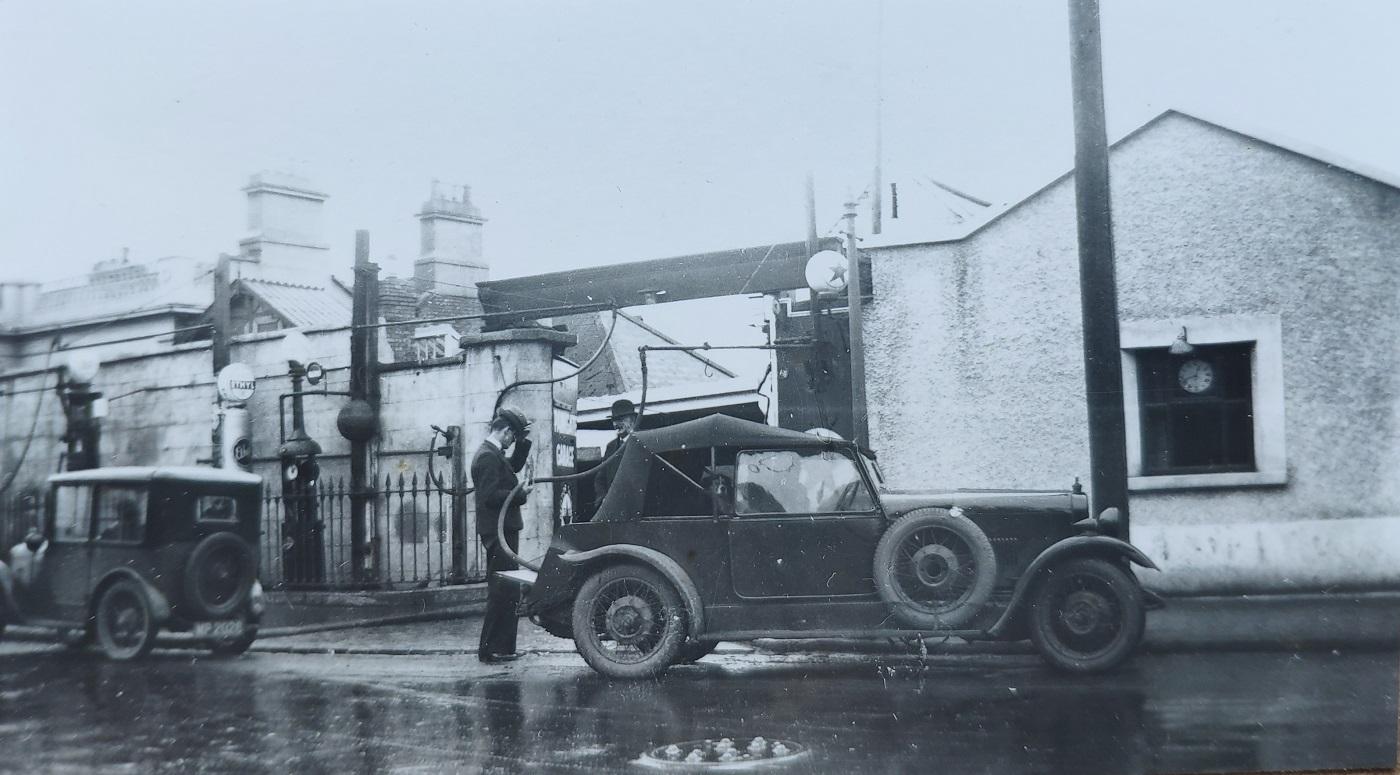
Thomond no.4, at Parkgate Garage, Conyngham Rd, Dublin.
See full size.
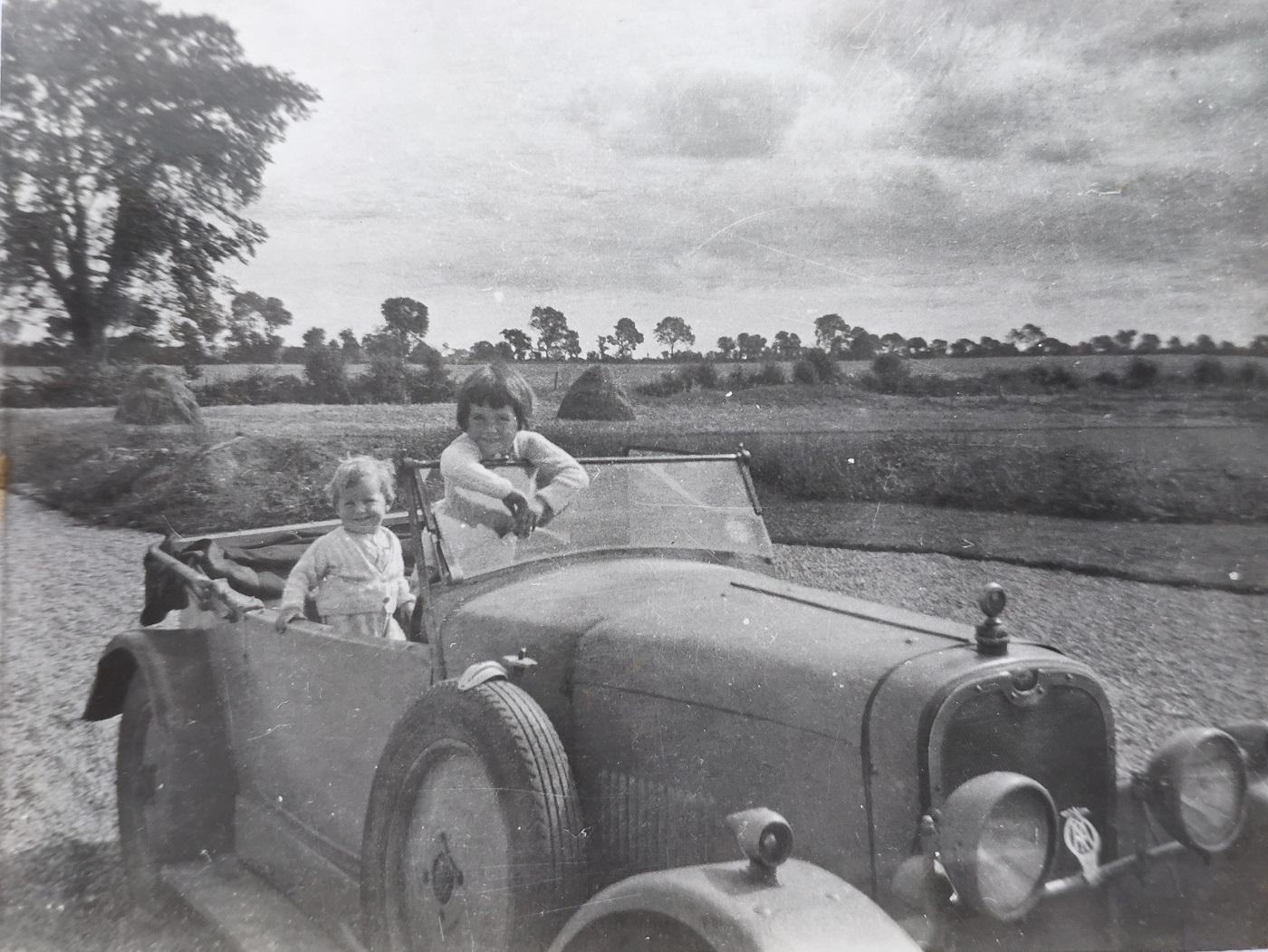
Thomond no.4, 1935-1936.
At Dick Humphreys' house in Kingswood, Clondalkin.
See full size.
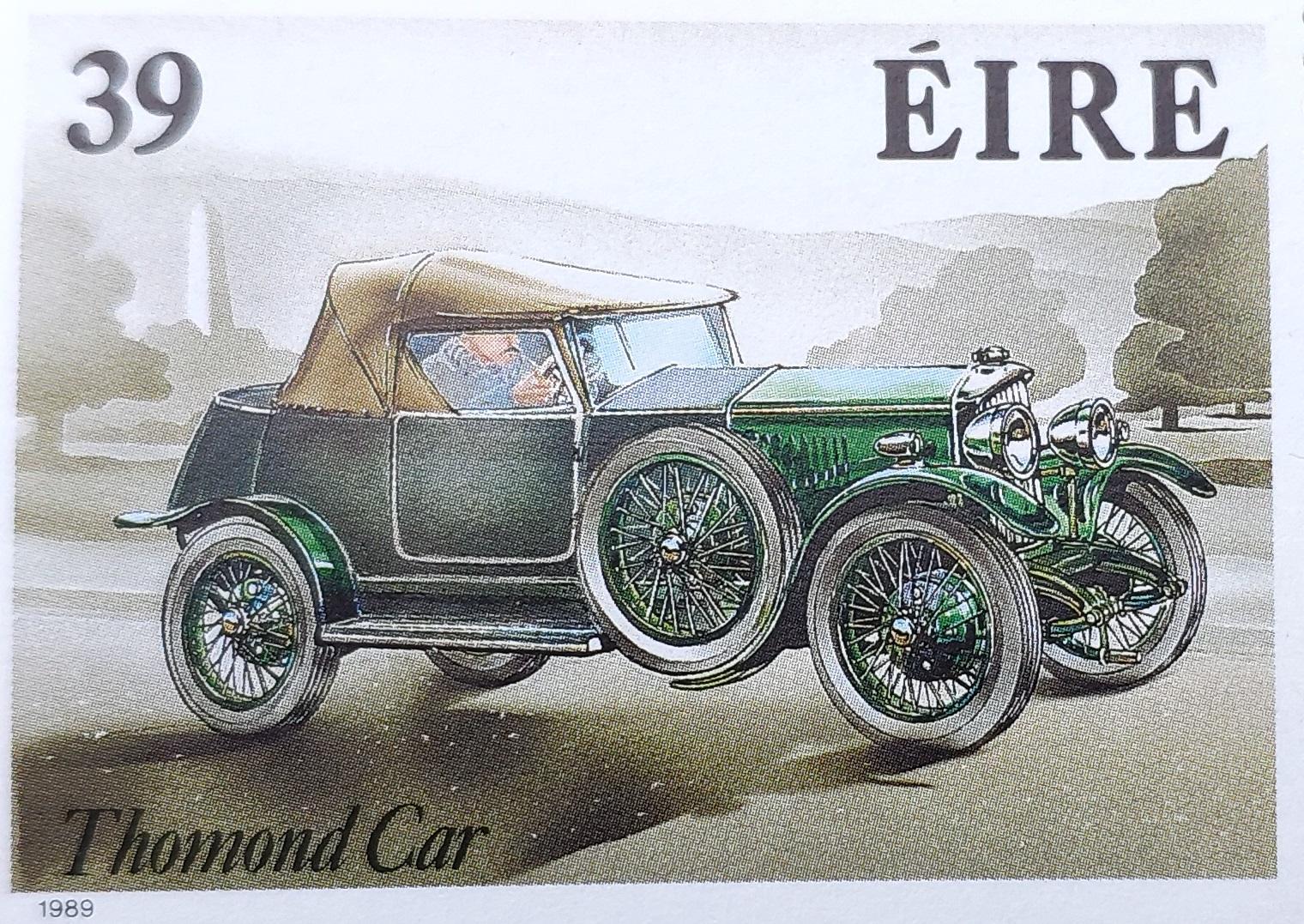
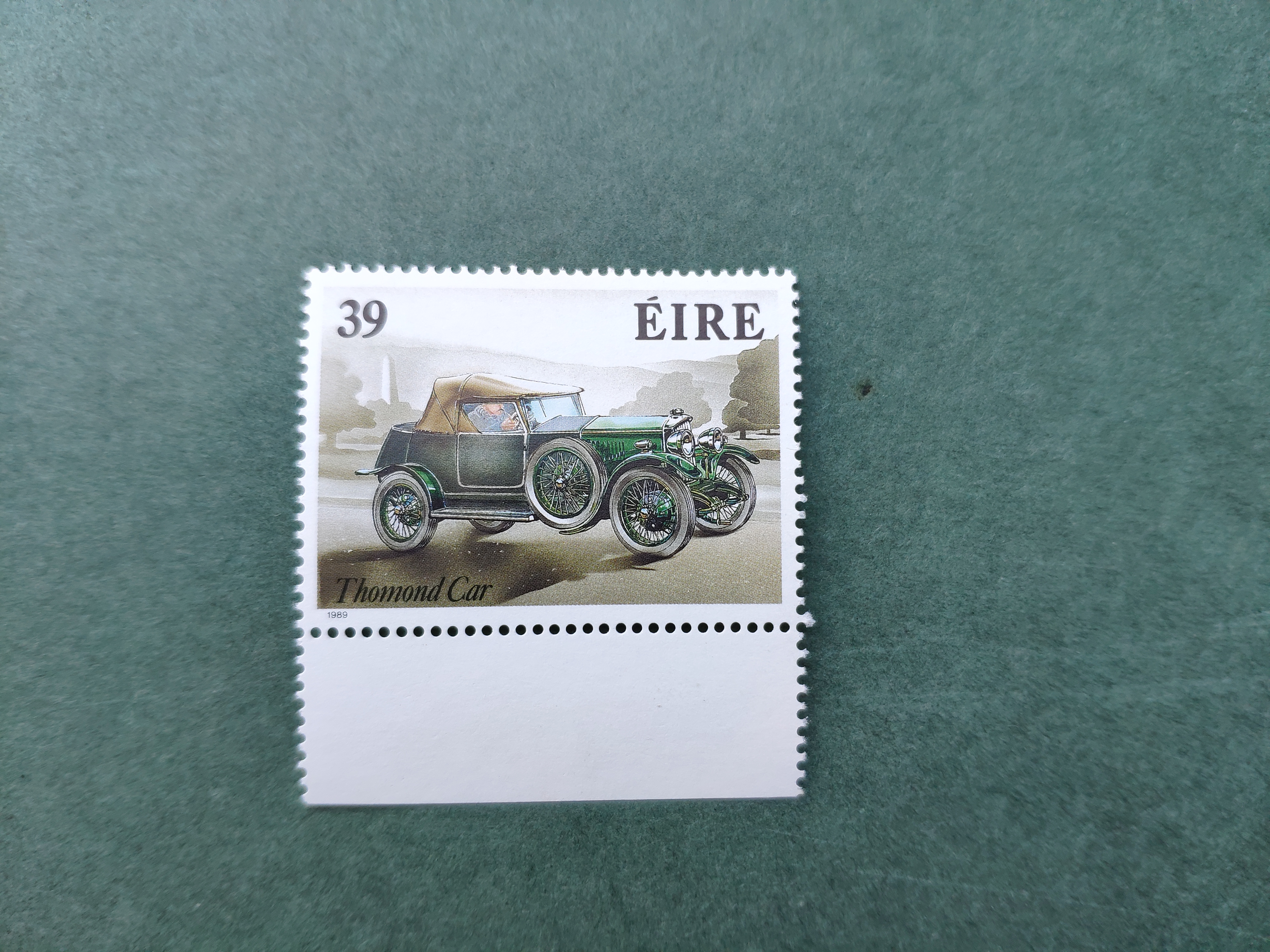
The Thomond featured on an Irish stamp, "Irish Motoring Classics", in 1989.
While it is wonderful that An Post thought of the Thomond,
unfortunately the picture is a bit inaccurate because nobody thought to contact me.
As a result, the artist never knew about Dick's 1963 article or my 1985 article,
and he worked off a single photo,
not knowing about
the 30 photos I had from different angles.
He did a pretty good job, but there are some inaccuracies.
See full size.
Selected video
I have the following two videos from 2007.They are low quality, so the only thing of interest in them is that they are from 2007.
Pan from left to right, showing: Site of Parsons' garage, Bridge House, Baggot St Bridge, 1 Victoria Buildings (the bank), site of Thomond garage, Murray's car rental.
Download AVI file.
Pan from right to left, from canal side, showing:
Bridge House, Baggot St Bridge, 1 Victoria Buildings (the bank),
site of Thomond garage,
Murray's car rental.
Download AVI file.
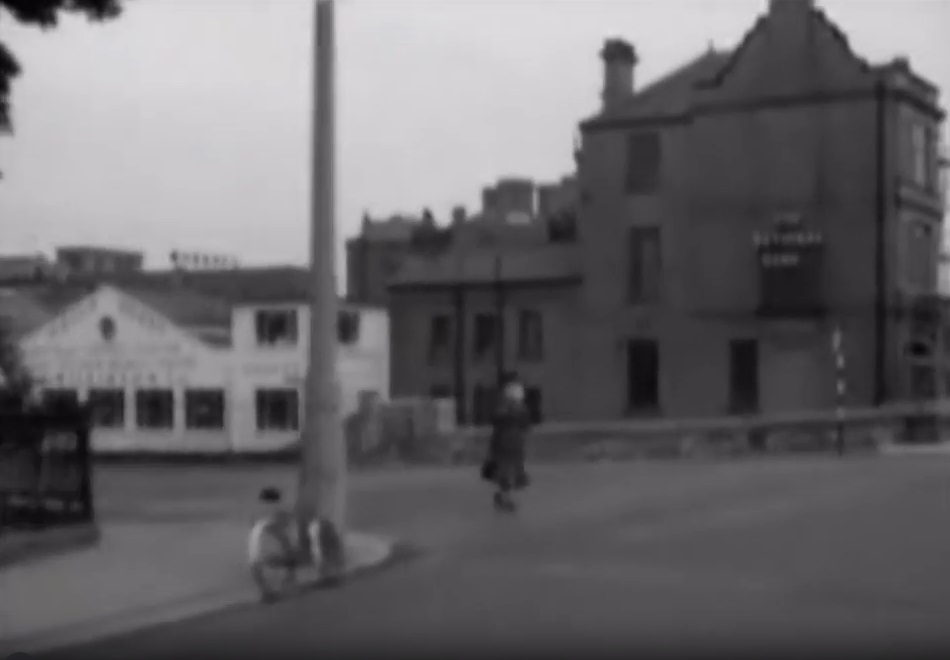
Here is an incredible
1957 video,
that I do not own.
This is the only known video of the Thomond garage.
The Thomond garage
(or to be precise the Wilkinson garage that replaced the Jones garage)
is visible here on the left.