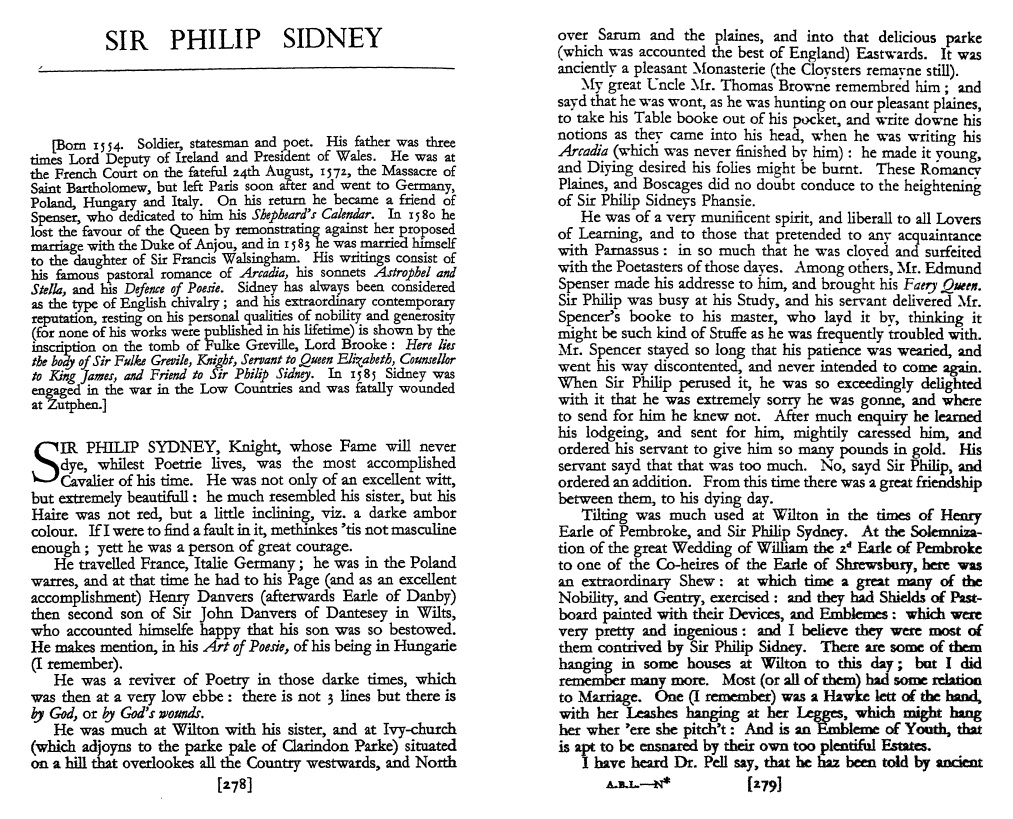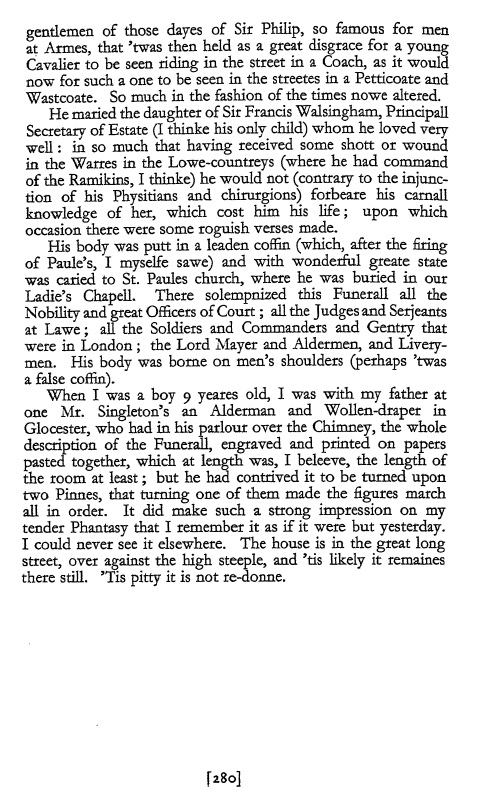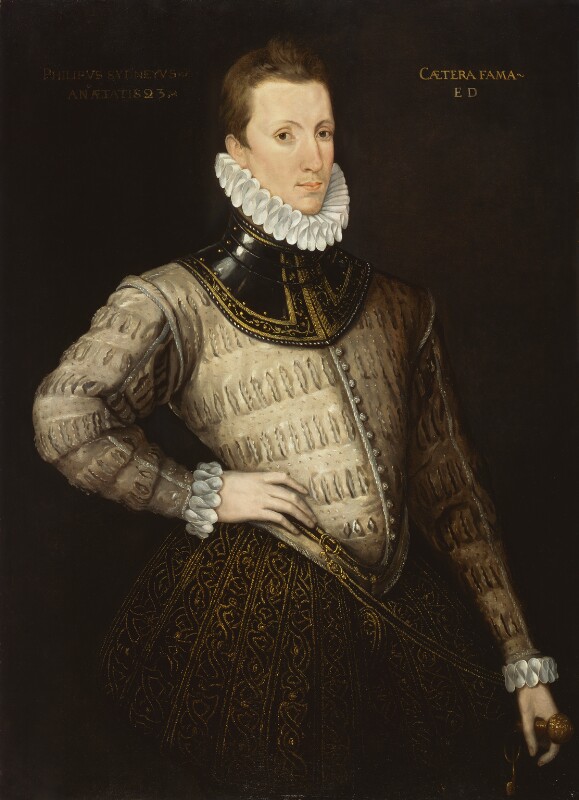
Sir Philip Sidney,
He was
educ Shrewsbury School.
He was
educ Christ Church, Oxford 1568-1571.
He was a
favourite of his uncle
Robert Dudley, 1st Earl of Leicester
at the court of
Elizabeth
(though she did not much like Sidney).
He
travelled on a sort of Grand Tour
(and also as diplomats for England) 1572-75 with
Elizabeth's spymaster
Sir Francis Walsingham.
They witnessed the St.Bartholomew's day massacre
in Paris
(started 24th Aug 1572 after the marriage of
Margaret de Valois).
He was in Ireland with his father
as at 1576.
He had a famous quarrel with
Edward de Vere, 17th Earl of Oxford,
who insulted him in 1579.
He
wrote the prose romance
Arcadia
at his sister's
house, Wilton 1579-1581
(originally called
The countess of Pembroke's Arcadia,
he wrote it just to amuse his sister).
The panels around the Single Cube Room at Wilton represent scenes from Arcadia,
painted in the 17th century.
He was
author of Apologie for Poetrie 1581,
the earliest work of English literary criticism.
He
wrote the sonnet sequence
Astrophel and Stella
("Star Lover and Star")
1582, the first sonnets in English.
Astrophel and Stella has been said to be based on his passion for
his step-1st-cousin
Penelope Devereux
("Astrophil" is "Phil", she is Stella).
Penelope was mar 1581 to
Lord Rich,
and Sonnet 35
says:
".. Doth even grow rich, meaning my Stella's name."
He was a
friend of the poet
Edmund Spenser,
who lived in Ireland (like Sidney's father).
He was a
friend of the scientific hero and martyr
Giordano Bruno,
who was in England from 1583 to 1585
(and was later burned at the stake by Rome
for advocating Copernicus' theory that
the earth goes round the sun).
Knighted 1583.
He
mar autumn 1583 to
Frances Walsingham.
His death in 1586:
He was
wounded in the Battle of Zutphen,
Netherlands, 22 Sept 1586.
He
died at Arnhem, Netherlands,
17 Oct 1586, age 31 yrs (shortly after his father).
His death occasioned a month of mourning in England.
He was given a
state funeral
on
16 Feb 1587.
He was the first commoner to receive such a tribute
(not to be repeated until the death of
Nelson
in 1806).
He was
bur in the old St.Paul's Cathedral, London.
See resources
and works.
Although none of his work was published during his life, it circulated in manuscript form
and he was regarded as the greatest writer of his time.
Frances remarried 1590 to Penelope Devereux's
brother
Robert Devereux, 2nd Earl of Essex.
Sir Philip Sidney and Frances
had issue:
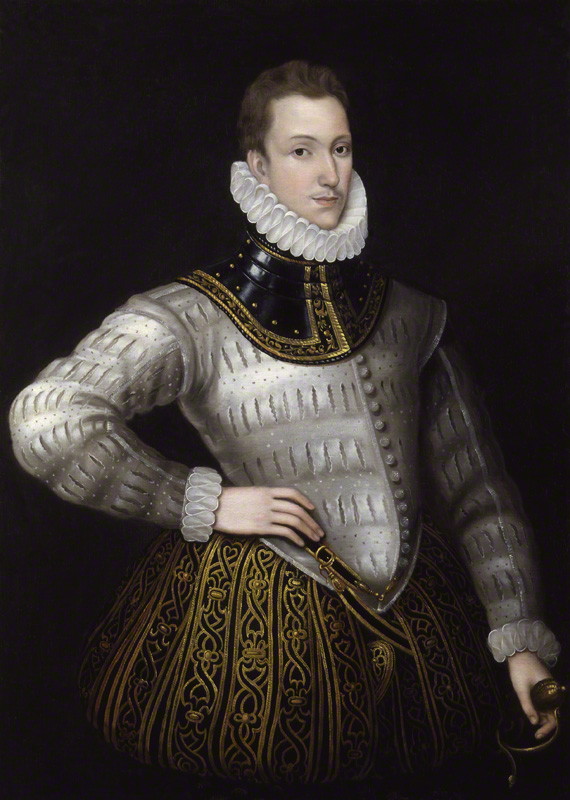
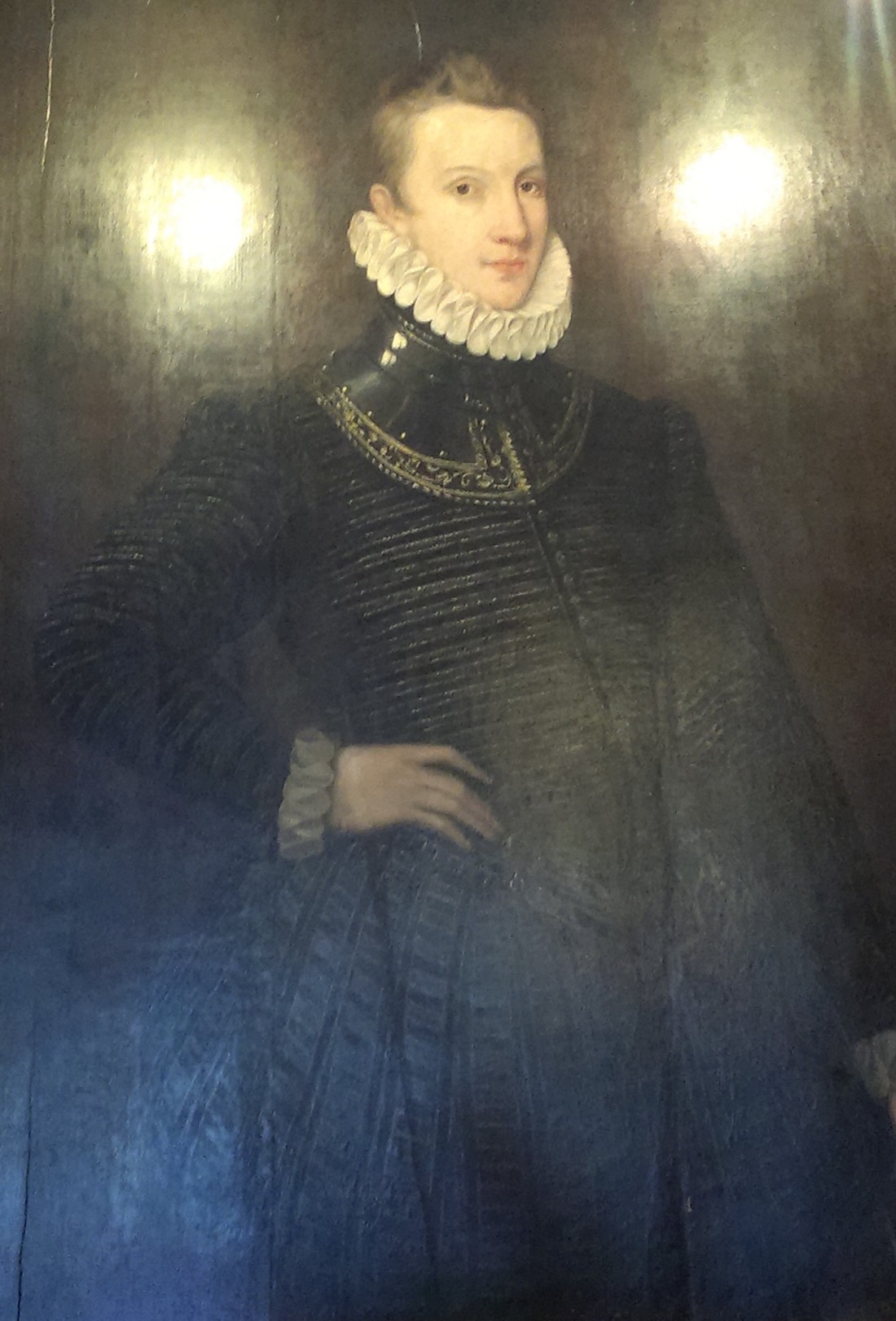
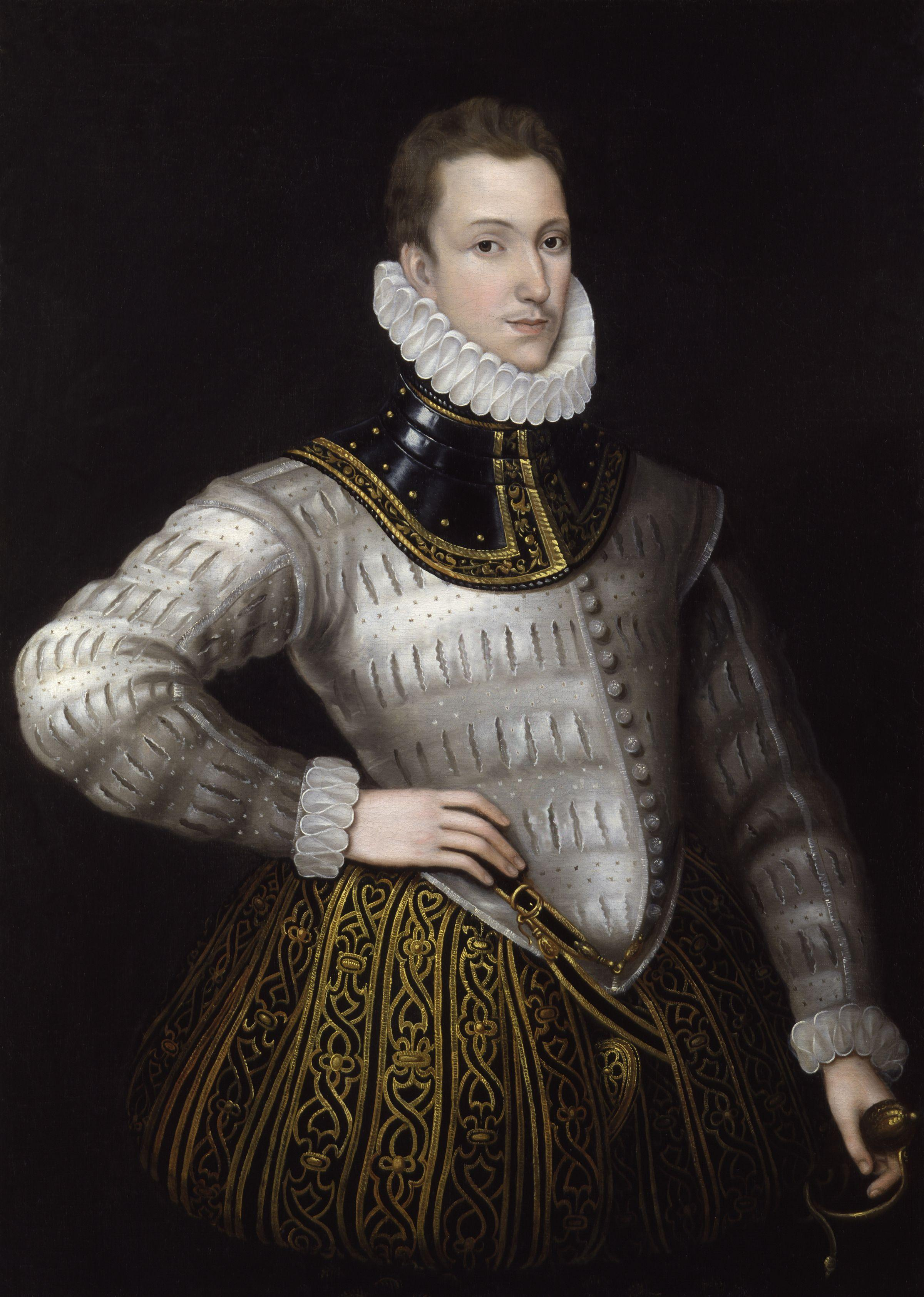
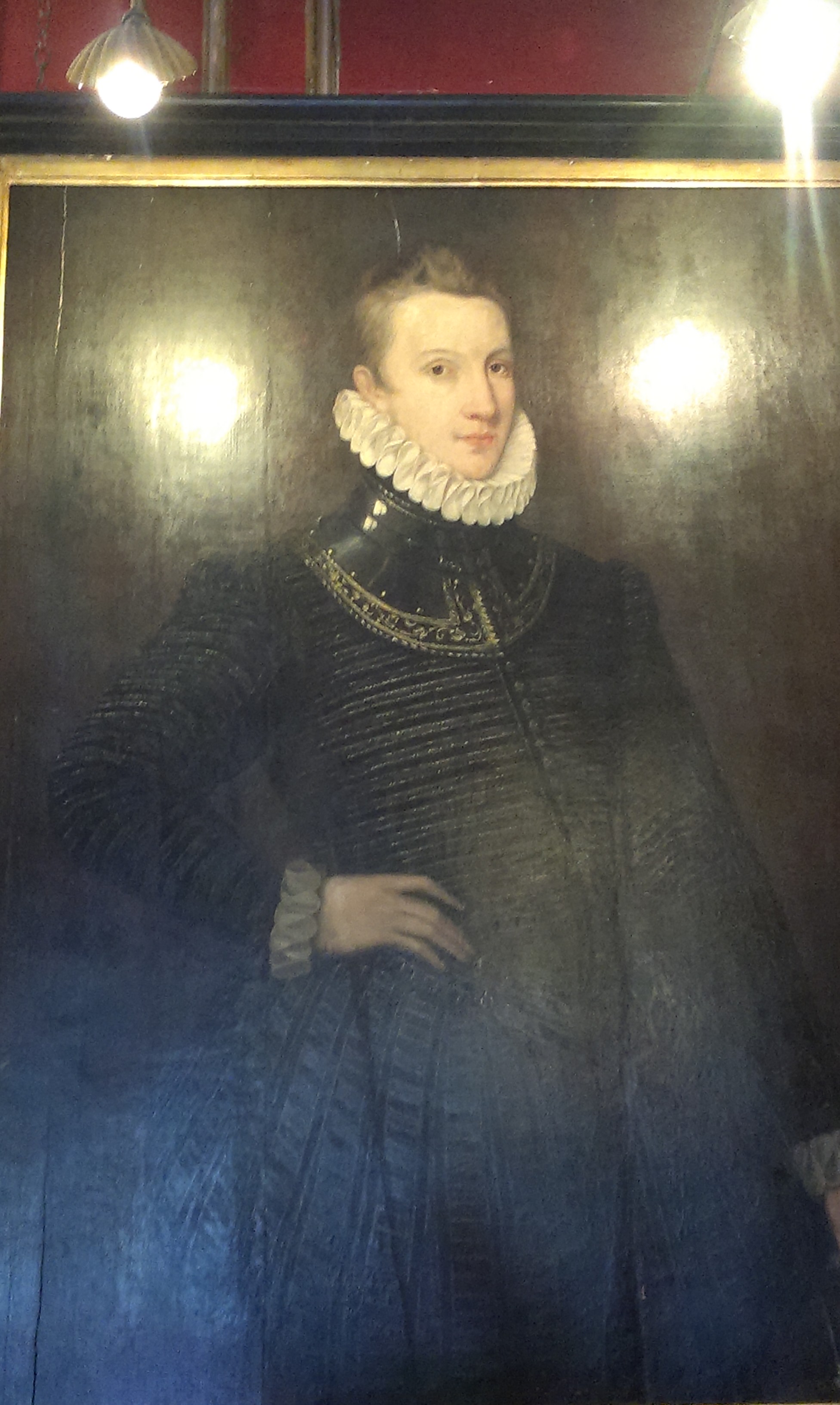
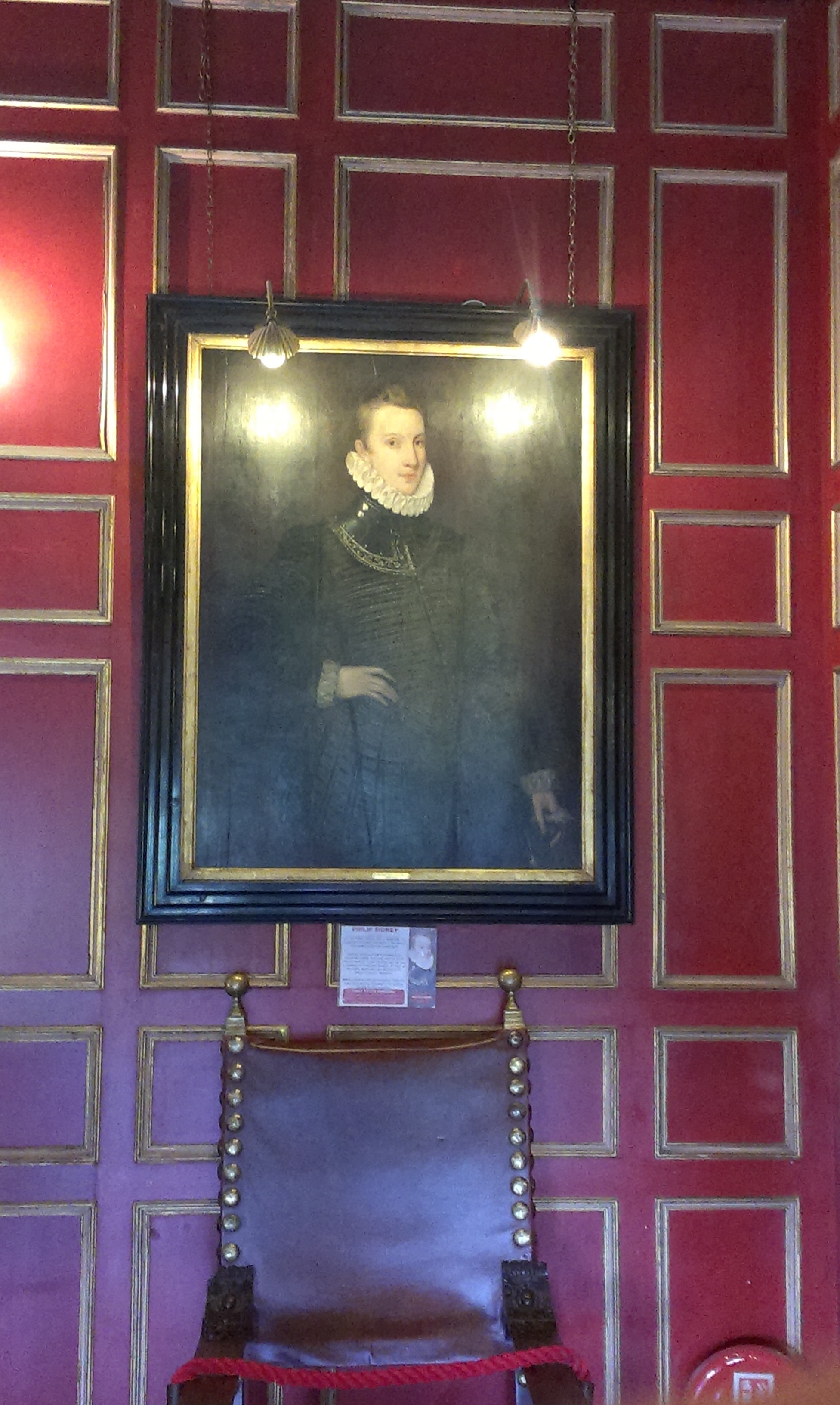
Sir Philip Sidney.
Portrait at
Warwick Castle.
See larger
and full size.
See wider shot.
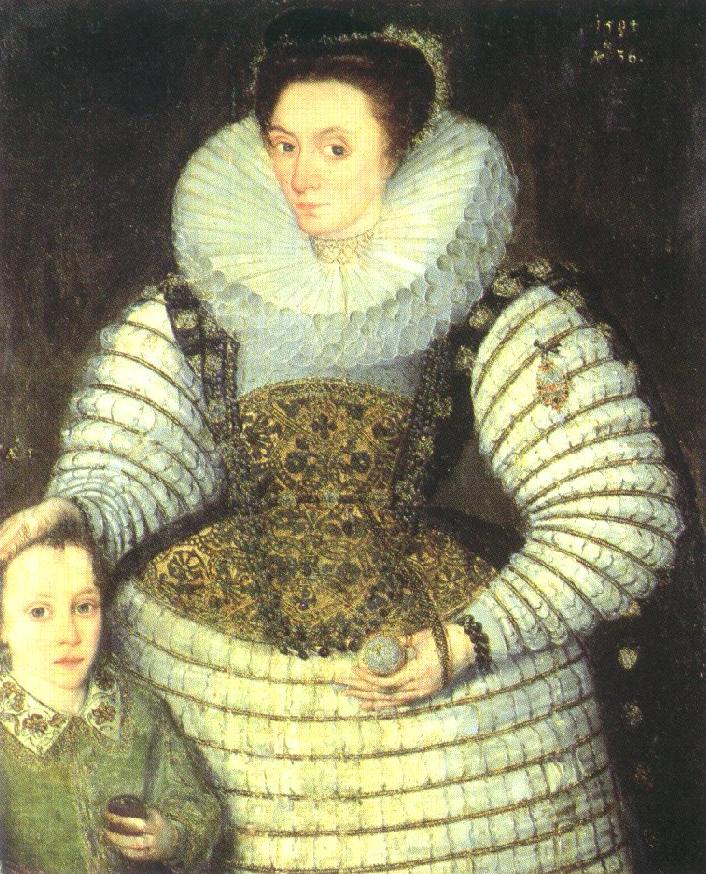
Frances Walsingham.
From here.
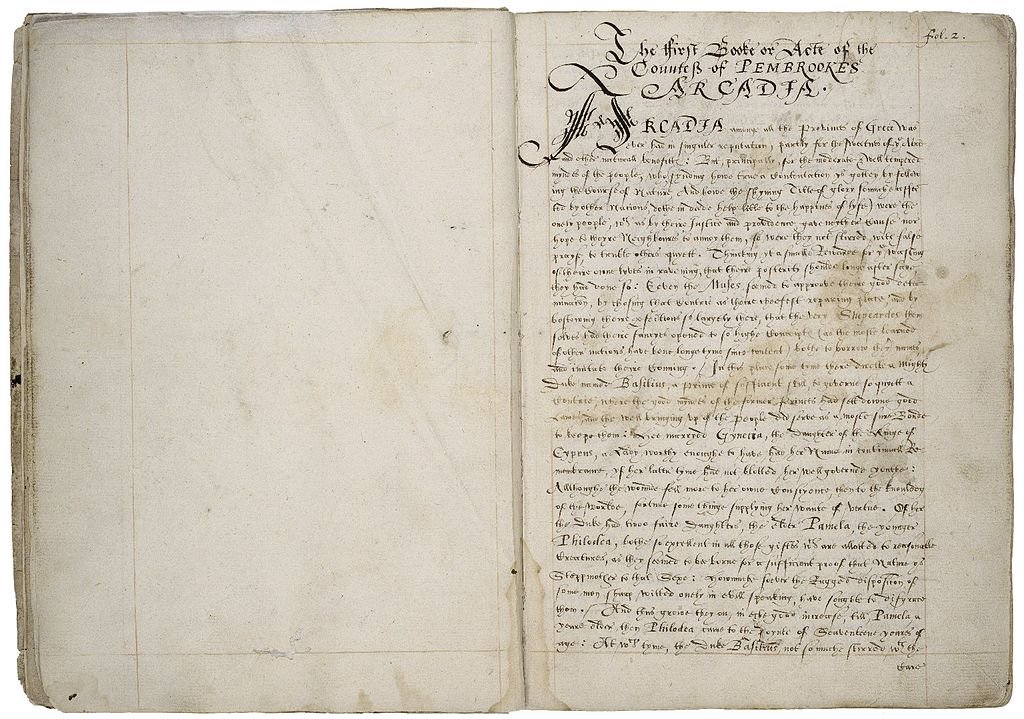
Ms of Arcadia.
From Folger Library.
See full size.
From here.
Then she spake; her speech was such,
So not eares, but hart did tuch:
While such-wise she love denied,
And yet love she signified.Astrophel, sayd she, my love,
Cease, in these effects, to prove;
Now be still, yet still beleeve me,
Thy griefe more than death would grieve me.If that any thought in me
Can taste comfort but of thee,
Let me, fed with hellish anguish,
Joylesse, hopelesse, endlesse languish.If those eyes you praised be
Halfe so deare as you to me,
Let me home returne, starke blinded
Of those eyes, and blinder minded;If to secret of my hart,
I do any wish impart,
Where thou art not formost placed,
Be both wish and I defaced.If more may be sayd, I say,
All my blisse in thee I lay;
If thou love, my love, content thee,
For all love, all faith is meant thee.
Him to her (Song 1):
Who hath the eyes which marrie state with pleasure,
Who keeps the key of Nature's chiefest treasure,
To you, to you, all song of praise is due,
Only for you the heav'n forgate all measure.Who hath the lips, where wit in fairnesse raigneth,
Who womankind at once both deckes and stayneth,
To you, to you, all song of praise is due,
Only by you Cupid his crowne maintaineth.Who hath the haire, which, loosest, fastest tieth,
Who makes a man live, then glad when he dieth,
To you, to you, all song of praise is due,
Only of you the flatterer never lieth.Who hath the voyce, which soule from sences thunders,
Whose force, but yours, the bolts of beautie thunders,
To you, to you, all song of praise is due,
Only with you not miracles are wonders.Doubt you to whom my Muse these notes intendeth,
Which now my breast, oercharg'd, to musick lendeth,
To you, to you, all song of praise is due,
Only in you my song begins and endeth.

Statue of Sidney
in the Slingerbos park, Coehoornsingel, Zutphen.
360 view.
Click to rotate.
See also street view.
Please donate to support this site.
I have spent a great deal of time and money on this research.
Research involves travel and many expenses.
Some research "things to do"
are not done for years, because I do not have the money to do them.
Please Donate Here
to support the ongoing research and
to keep this website free.