Sir Henry Harrington,
He
mar 1stly, 1577, to Cecilia Agard.
She was dau of
Francis Agard (died 1577), Secretary to Sir Henry Harrington's uncle Sir Henry Sidney, the Lord Deputy of Ireland.
Through her, Sir Henry Harrington inherited
the
manor at Grangegorman, Dublin.
Sir Henry Harrington became Seneschal (military governor) of Wicklow 1578.
Cecilia died 1584.
She was buried in Christ Church Cathedral, Dublin.
See Agard monument in Christ Church Cathedral, Dublin.
He
mar 2ndly, licence 10 July 1587,
to Ruth Pilkington.
She was dau of James Pilkington (born 1520),
Bishop of Durham.
She is the mitochondrial DNA ancestor of
Letitia Blennerhassett of Tarbert.
Sir Henry was admitted to the freedom of Dublin in 1599.
During
Essex's 1599 campaign,
Harrington suffered a heavy defeat
by the rebel Phelim MacFeagh O'Byrne
(son of Fiach McHugh O'Byrne)
in Co.Wicklow
on 29 May 1599.
The battle was at Deputy's Pass, between Rathdrum and Wicklow
(see map).
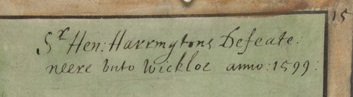
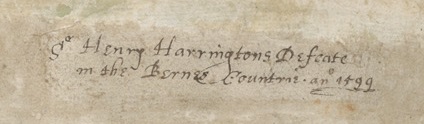
See a drawing of the battle,
"Sir Henry Harrington's Defeate in the Bernes Countrie (neere unto Wicklow)"
in the Hardiman atlas
at TCD.
Sir Henry and his house at Grangegorman
are
mentioned in the
"riding of the bounds" of Dublin
in 1603.
He died 1612, age 71 yrs.
Ruth died 1627.
Sir Henry
had issue by 2nd wife:
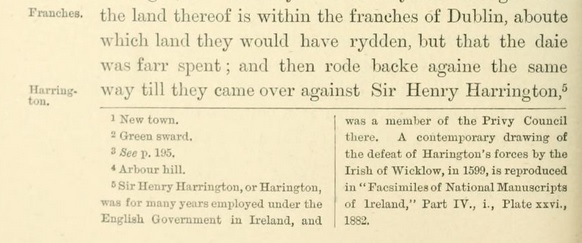
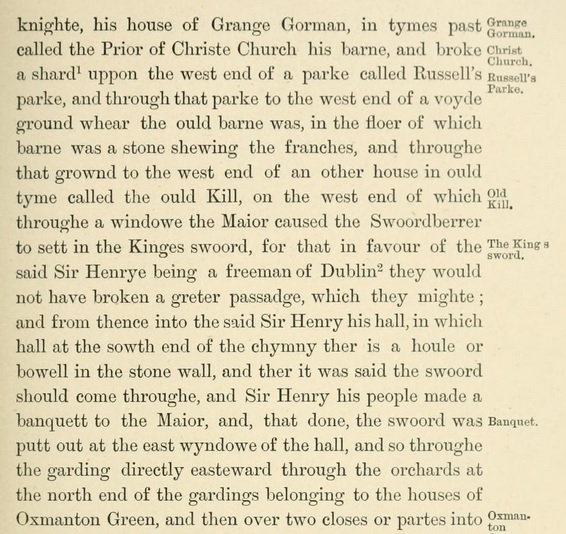

Sir Henry Harrington and his house at Grangegorman, Dublin,
mentioned in the
"riding of the bounds" of Dublin
in 1603.
From
pp.196-197
of
Vol.1 (1889)
of
[Gilbert's Records of Dublin].
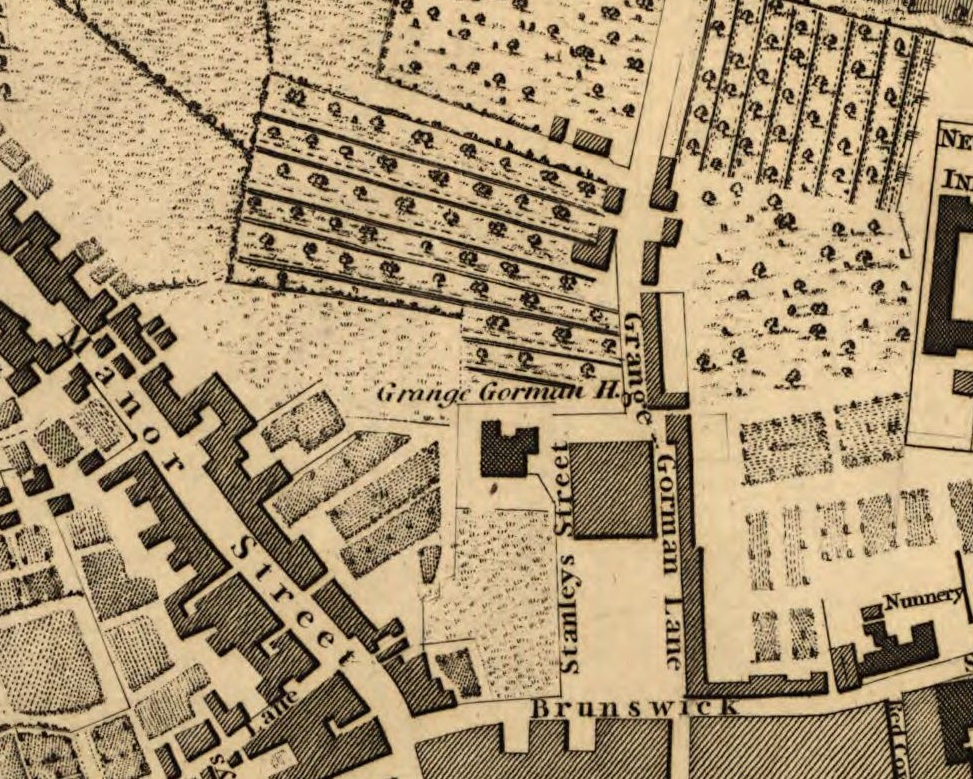
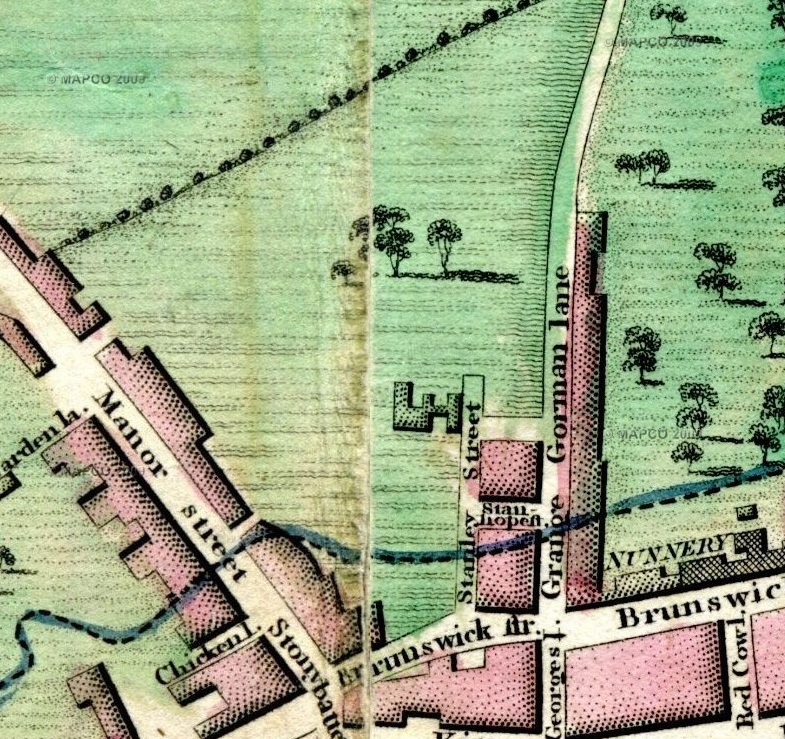
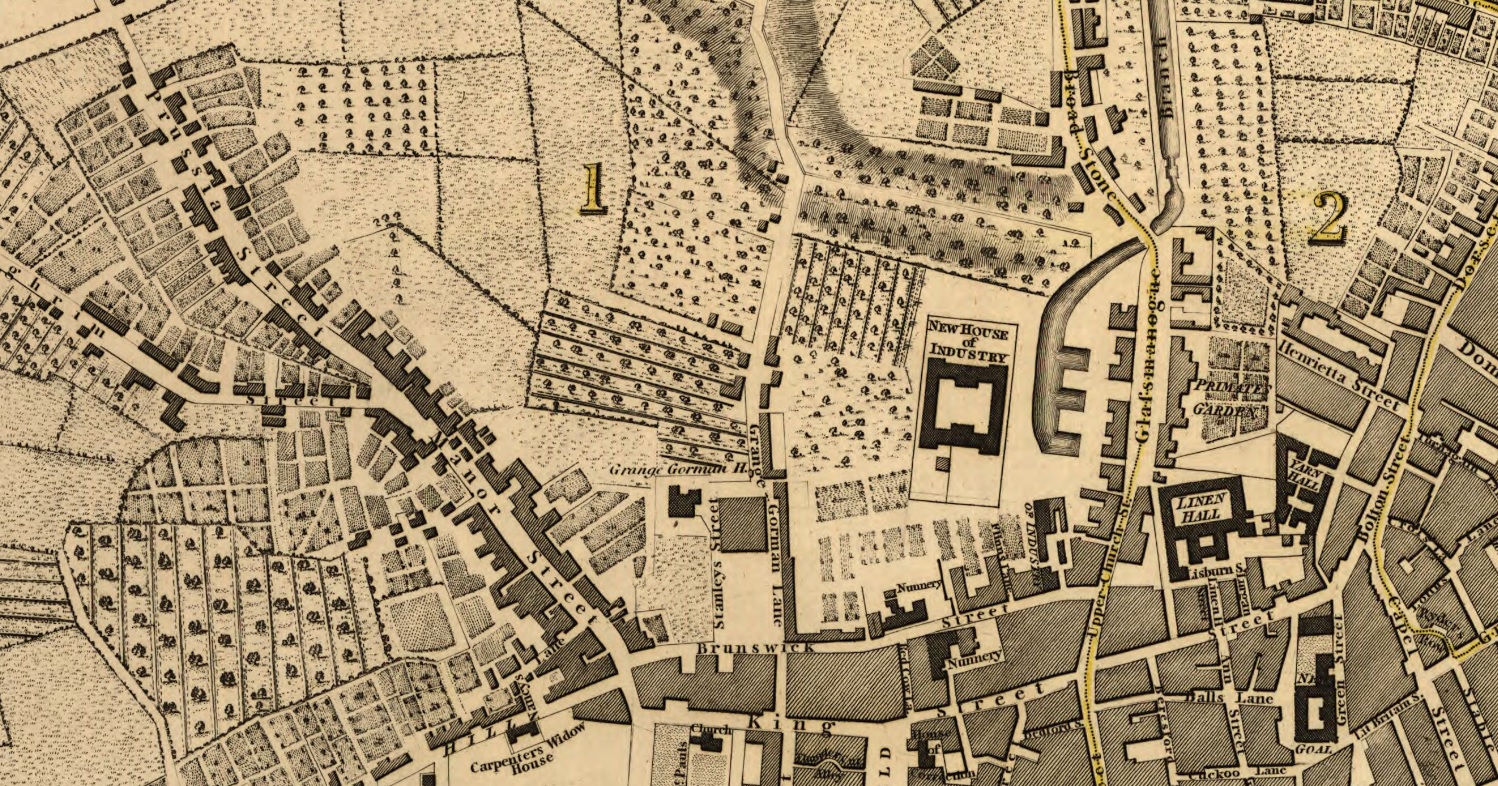
The manor house at Grangegorman (at end of Stanley St)
on 1798 map.
See larger.
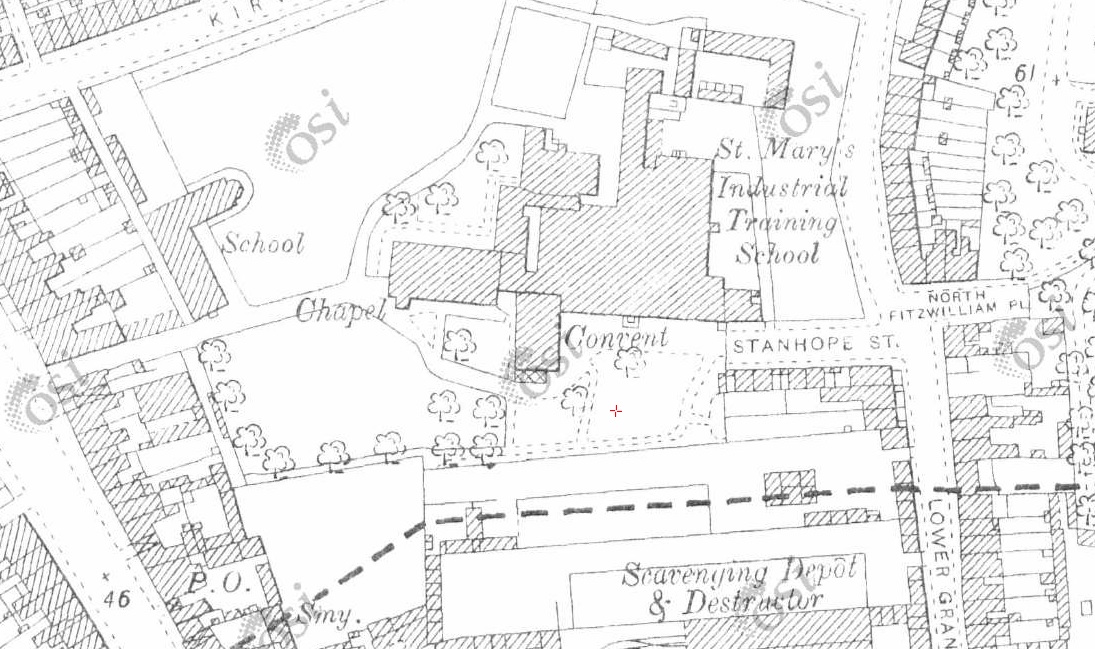
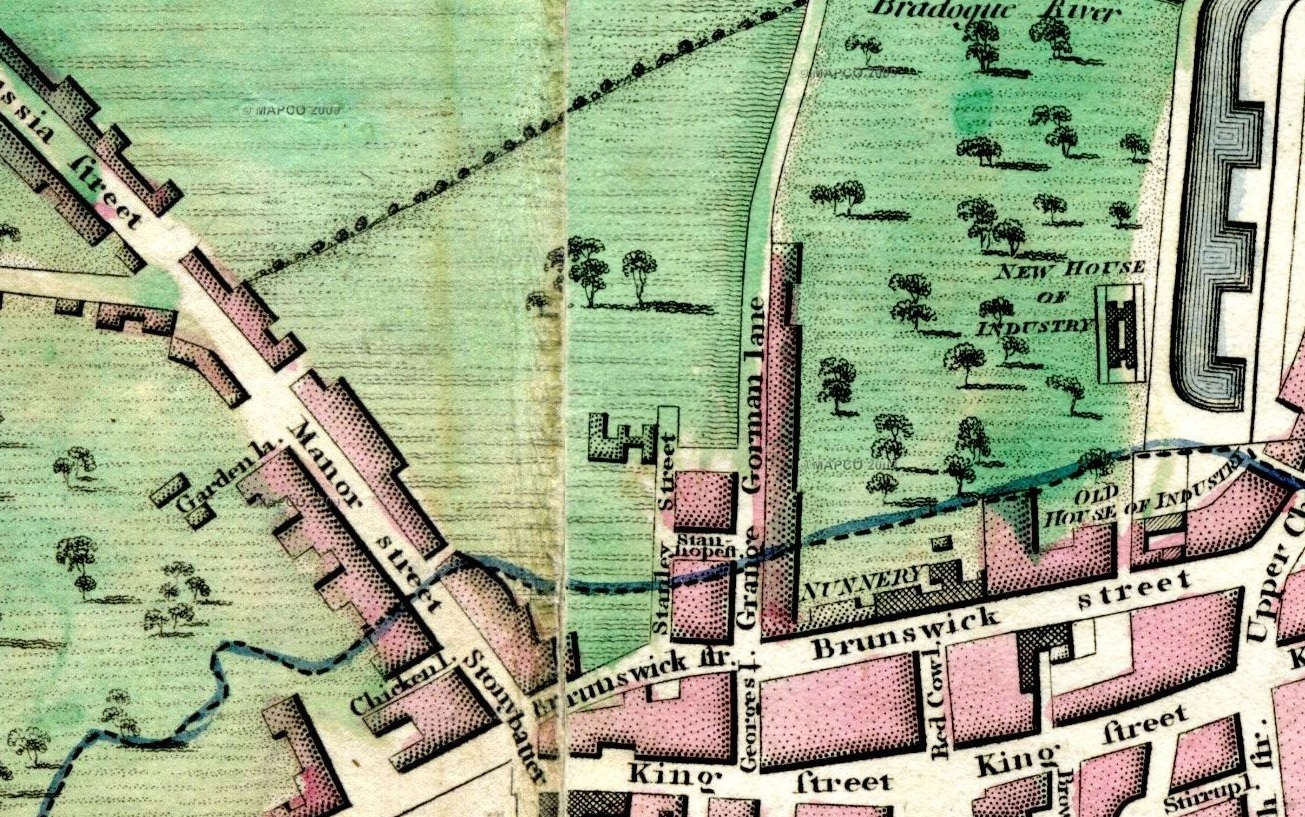
The Grangegorman manor site on
1887 to 1913 map.
The convent is on the approximate site of the vanished manor house.
See modern
street view
of Stanhope St entrance.
Please donate to support this site.
I have spent a great deal of time and money on this research.
Research involves travel and many expenses.
Some research "things to do"
are not done for years, because I do not have the money to do them.
Please Donate Here
to support the ongoing research and
to keep this website free.