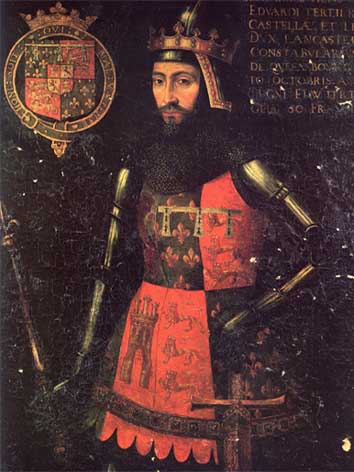
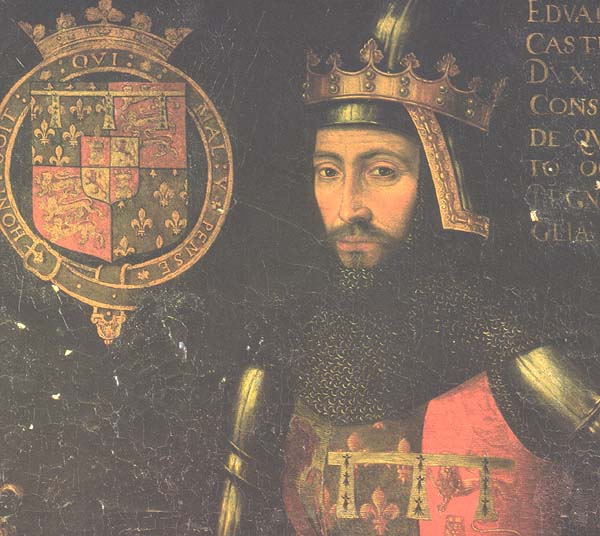
John of Gaunt,
Blanche dies, 1368:
She died 1368.
She was
bur in the old St.Paul's Cathedral, London.
John of Gaunt
had issue by 1st wife:

John of Gaunt
mar 2ndly, 1371, to
Constance of Castile and had issue.
Around 1371-1372 he began a long-term affair with Catherine Roet and had illegitimate issue.
She would eventually become his 3rd wife.
He was the effective ruler of England in the reigns of
late Edward III - early Richard II (1370s-80s).
He appears in the play
Richard II
by Shakespeare.
In the Peasants' Revolt in 1381, the rioters, angry with John of Gaunt,
completely
destroyed Savoy Palace.
He was a
patron of
John Wycliffe,
the "Morning Star of the Reformation",
who produced the first English translation of the Bible 1382.
His wife Constance died 1394.
She was bur St.Paul's Cathedral,
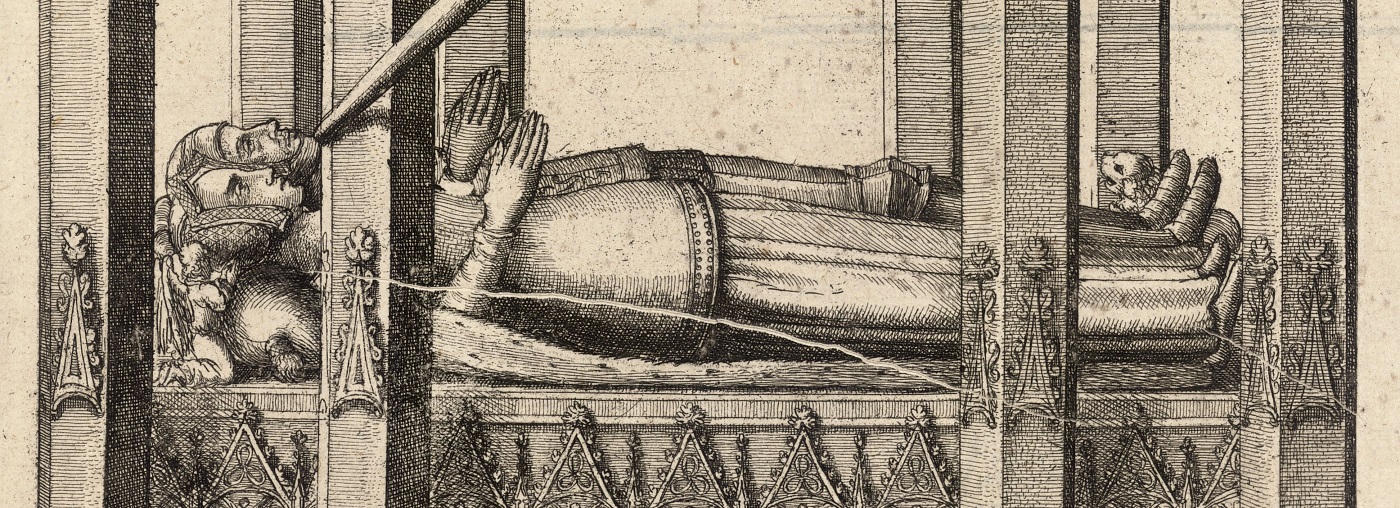
though her effigy is not on her husband's tomb.
He
mar 3rdly, 1396, to his long-time mistress Catherine Roet
[born 1350],
by whom he had already had illegitimate issue.
His children by Catherine Roet were legitimated by statute 1397
"for all purposes save succession to the crown".
John of Gaunt dies, 1399:
He died 3 Feb 1399, age 58 yrs.
He was bur in the old St.Paul's Cathedral, London.
He was never king himself, but within months of his death his son became king.
Catherine dies, 1403:
She died 10 May 1403, Lincoln, age 53 yrs.
She was
bur Lincoln Cathedral.
John of Gaunt had issue by Catherine Roet:

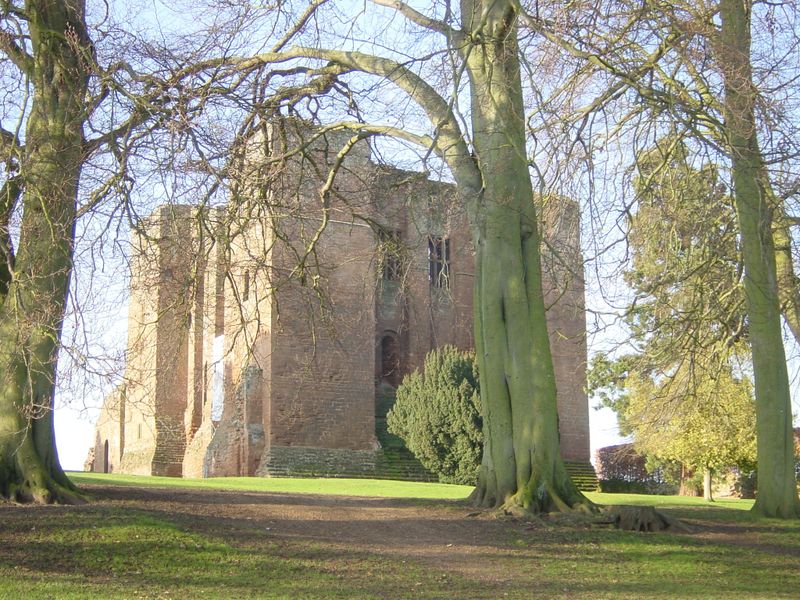
Kenilworth Castle, Warwickshire, 2003.
From here.
See more images.

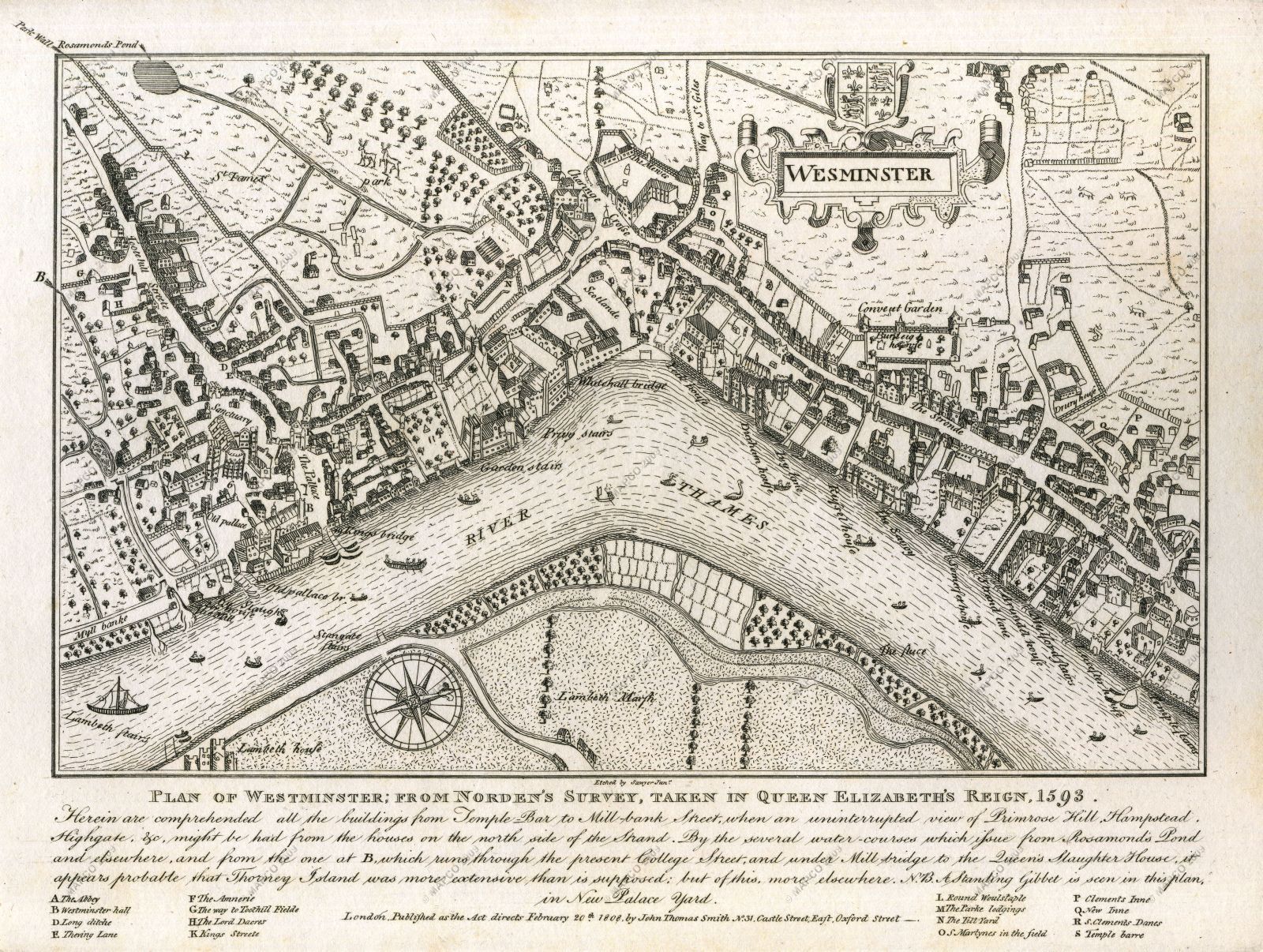
The Strand,
London, on Norden's map of Westminster, 1593.
Savoy Palace
was destroyed in 1381 and the site became the Savoy Hospital,
as seen on this map.
Note "The Savoy"
on the river.
See full size.
From London Maps and Panoramas.
This royal throne of kings, this scepter'd isle,
This earth of majesty, this seat of Mars,
This other Eden, demi-paradise,
This fortress built by Nature for herself
Against infection and the hand of war,
This happy breed of men, this little world,
This precious stone set in the silver sea,
Which serves it in the office of a wall,
Or as a moat defensive to a house,
Against the envy of less happier lands,
This blessed plot, this earth, this realm, this England
Of course the words are by Shakespeare, not by John of Gaunt.
"This England" video.
Please donate to support this site.
I have spent a great deal of time and money on this research.
Research involves travel and many expenses.
Some research "things to do"
are not done for years, because I do not have the money to do them.
Please Donate Here
to support the ongoing research and
to keep this website free.