Genealogy research by Mark Humphrys.
Genealogy research by Mark Humphrys.
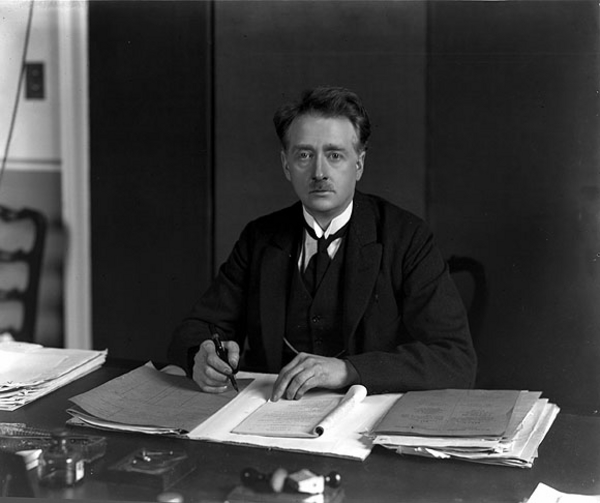
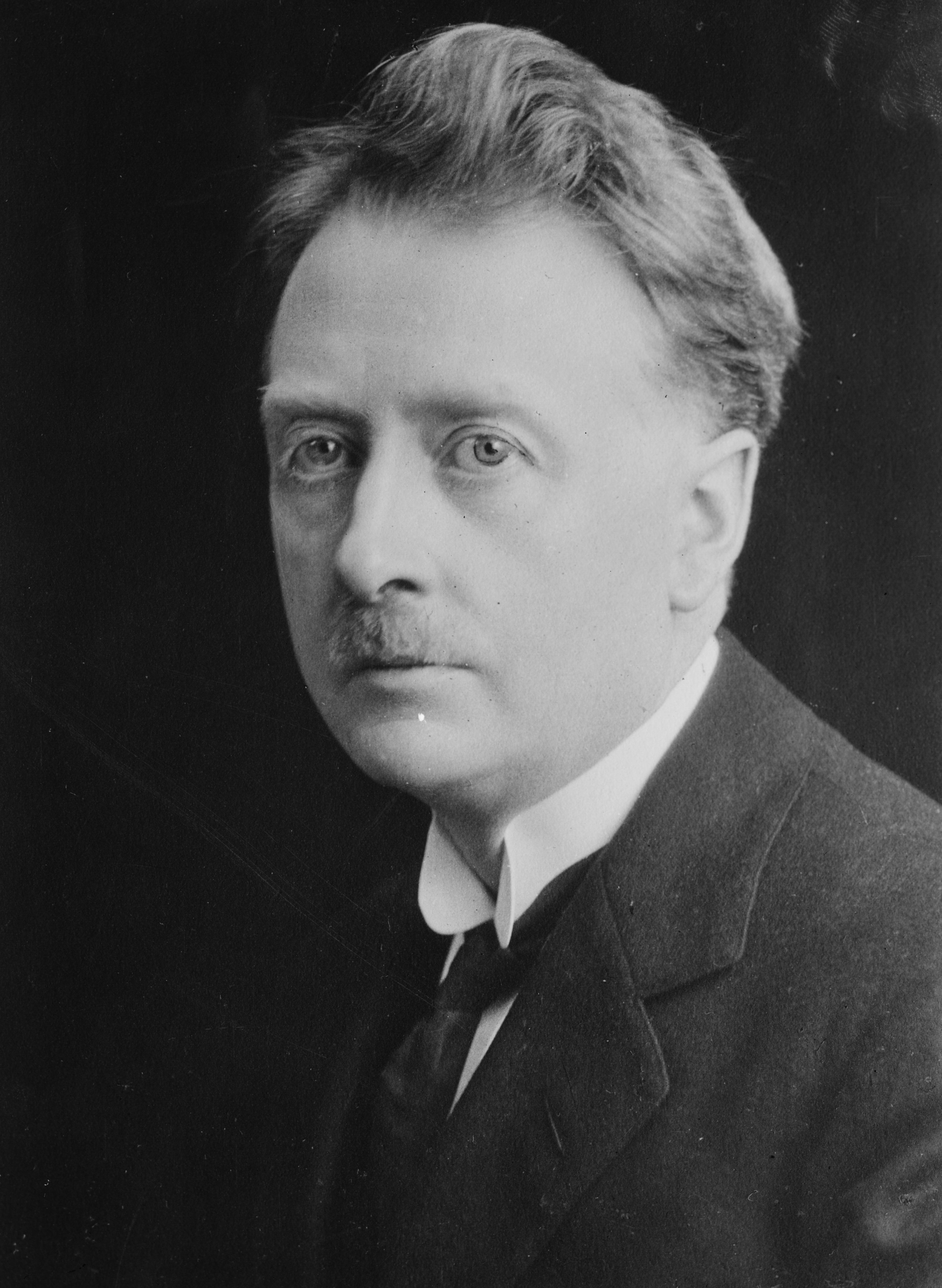
W.T. Cosgrave,
Sinn Fein councillor, 1916 rebel:
W.T.
attended first Sinn Fein convention 1905.
Sinn Fein councillor on
Dublin Corporation from 1909 through most of the period to 1922.
Councillor for
Usher's Quay ward
(along with
Michael Flanagan,
whose daughter he would marry).
See him at home
in
1911 census
(return in Irish, he is "Liam T. Ua Cosgair").
He
joined
Irish Volunteers 1913.
Fought in
1916 Rising
under Eamonn Ceannt
at the South Dublin Union.
His step-brother was killed.
Afterwards he was
sentenced to death.
Commuted to penal servitude for life.
Interned in Frongoch, Wales.
Released under general amnesty Jan 1917.
Sinn Fein MP and TD, Member of First Dail, War of Independence leader:
He was
elected as Sinn Fein MP for Kilkenny city
in by-election, 10 Aug 1917.
A poster says:
"VOTE FOR COSGRAVE - A FELON OF OUR LAND".
Elected TD for Sinn Fein
in Dec 1918 general election
in Kilkenny North,
unopposed.
James O'Mara won in Kilkenny South.
Treasurer of Sinn Fein.
Imprisoned again.
Member of the First Dail.
Could not attend first meeting in Jan 1919 because he was in prison.
In the
rollcall
at the Dail's first meeting on 21 Jan 1919,
"Liam Mac Cosgair"
is absent,
described as
"fé ghlas ag Gallaibh"
("imprisoned by the foreign enemy").
He was released in 1919.
During the
War of Independence
1919-21,
W.T. was Minister for Local Government 1919-21
in the underground government,
with the job of
organising non-cooperation with the British authorities
and establishing an alternative system.
He
mar June 1919 to Louisa Flanagan [born 28th Aug 1882].
He moved 1919 to
Beechpark, Templeogue, Co.Dublin.
Beechpark was a wedding gift to Louisa from her father.
Although on the run, W.T. did much to undermine the existing institutions of local government,
particularly after Sinn Fein swept the 1920 council elections.
Became an Alderman on Dublin Corporation after the Jan 1920 local election.
He
supported the Anglo-Irish Treaty, Dec 1921.
Louisa appears in a story in
[Ward, 1983].
There was a plan by
Cumann na mBan
members to protest the Treaty
by raising the Union Jack over the
building housing the Treaty debates
to denote the betrayal that was taking place.
They went to large shops looking for a Union Jack,
"But Mrs. Cosgrave .. happened to be in the exclusive shop of
Switzers"
[on Grafton St]
"and was told of what was happening.
She of course immediately reported the plot."
The
Treaty was passed Jan 1922.
The nationalists split.
W.T. was
re-elected TD for (pro-Treaty) Sinn Fein,
Carlow-Kilkenny,
general election, mid-June 1922.
Civil War
started end-June 1922.
As for arguments in favour, the case is often made that Cosgrave was the real founder of the state. The argument would be as follows:
Leader of Opposition 1932-44.
His party
lost power to the formerly anti-Treaty side Fianna Fail
in general election Feb 1932.
He
led Cumann na nGaedheal in opposition after 1932.
The Blueshirts:
Both sides flirted with non-democracy in 1932-1934.
On the anti-Treaty side,
now that Fianna Fail were in power,
the IRA began to disrupt meetings of any opposition,
with apparent government approval.
On the pro-Treaty side,
Cumann na nGaedheal had links with
the
Army Comrades Association
(the Blueshirts),
which was formed Feb 1932
as an anti-IRA, anti-communist group
to protect the opposition.
The Blueshirts
adopted symbols of then-fashionable European fascism.
They
were not a serious fascist movement
(with racial beliefs etc.)
though membership was restricted to Christians,
and they did express support for aspects of European fascism.
Blueshirts re-named the National Guard, July 1933.
Cumann na nGaedheal was
re-named Fine Gael
after merger with Blueshirts
Sept 1933.
But Fine Gael was dominated by the normal democratic party Cumann na nGaedheal,
and the Blueshirts were finished by the end of 1934.
W.T. did support
Franco
in the
Spanish Civil War
1936-39,
as did the remnant Blueshirts.
For W.T. (and other Catholic democrats in Ireland who supported Franco)
this was about supporting the Catholic church
against
communists who were
burning churches and killing thousands of clergy,
rather than about supporting non-democracy per se.
Opponents of
Fine Gael
still
link them to
the Blueshirts and fascism.
However the people in Ireland who actually supported Nazi Germany in WW2
were the IRA.
Fine Gael were in fact the most
pro-Allied
party in Ireland during WW2.
W.T.'s deputy leader
James Dillon
wanted Ireland to join Britain in the war effort against Nazi Germany.
(W.T. himself supported neutrality.)
W.T. was
opposition leader until he resigned from the Dail, Jan 1944.
He was
member of Irish Racing Board 1945, chairman for many years.
Louisa dies, 1959:
She died 16 June 1959,
Beechpark, age 76 yrs [GROI].
She was
bur Cosgrave family grave,
Goldenbridge cemetery, Inchicore, Co.Dublin.
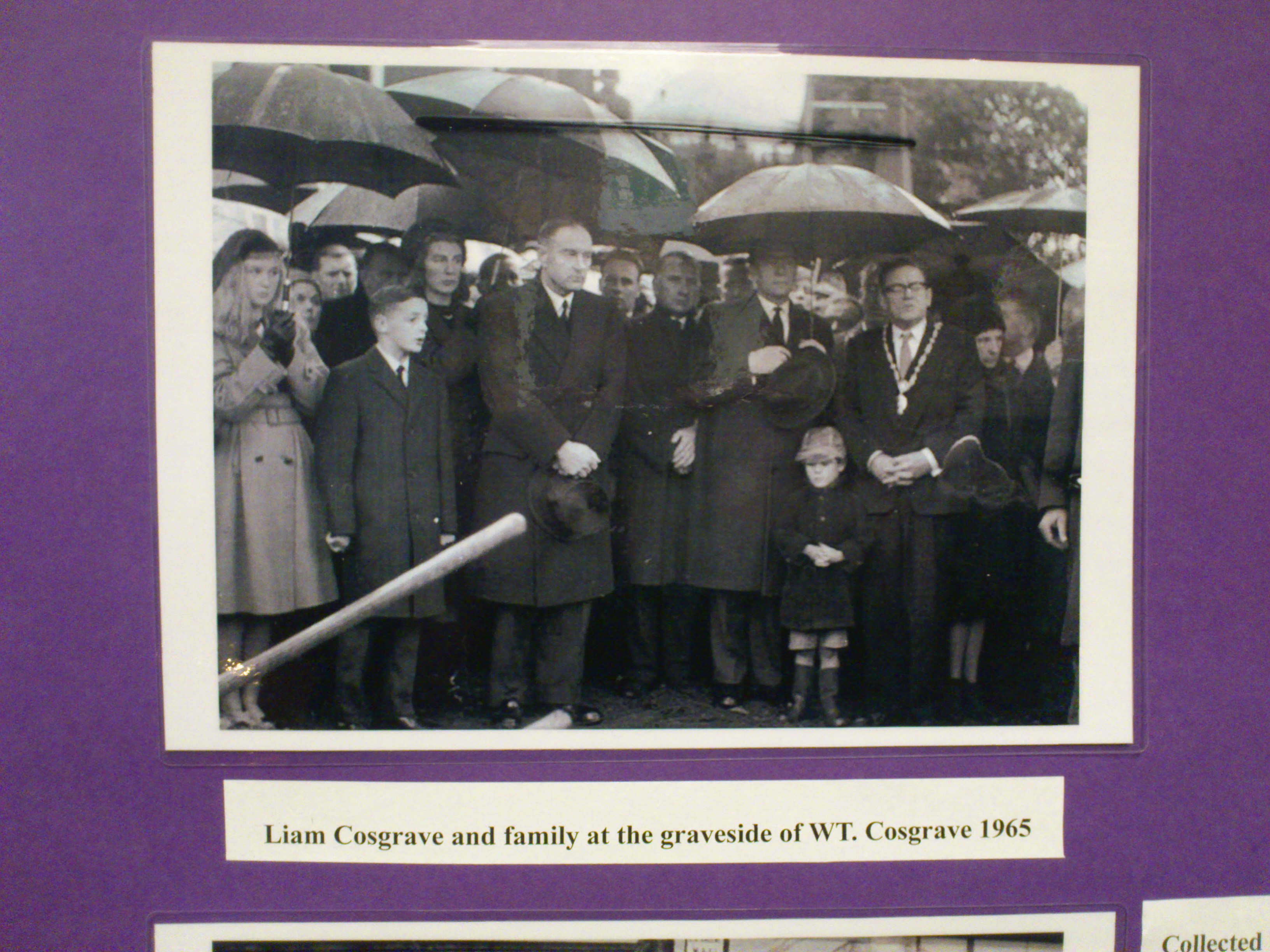
W.T. dies, 1965:
He died at Beechpark, Tue 16 Nov 1965, Dublin, age 85 yrs.
State funeral, Thur 18 Nov 1965,
bur
Goldenbridge cemetery.
See photo at funeral.
The President Eamon de Valera
and the Taoiseach Sean Lemass
attended.
Deirdre Flanagan and her sisters listed among the chief mourners.
See funeral reports in
Irish Press, 19 Nov 1965, and
Irish Independent, 19 Nov 1965.
W.T. and Louisa
had issue:

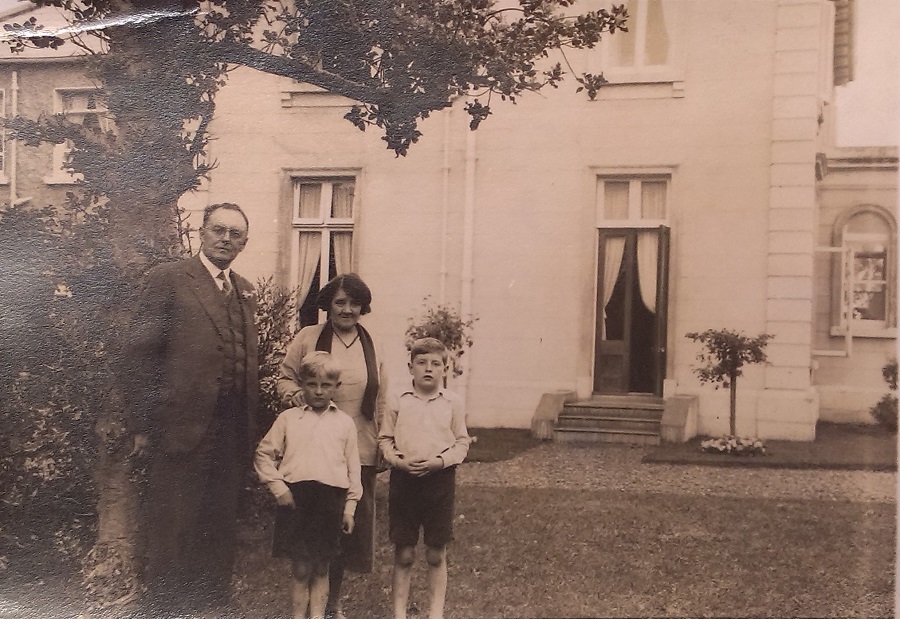
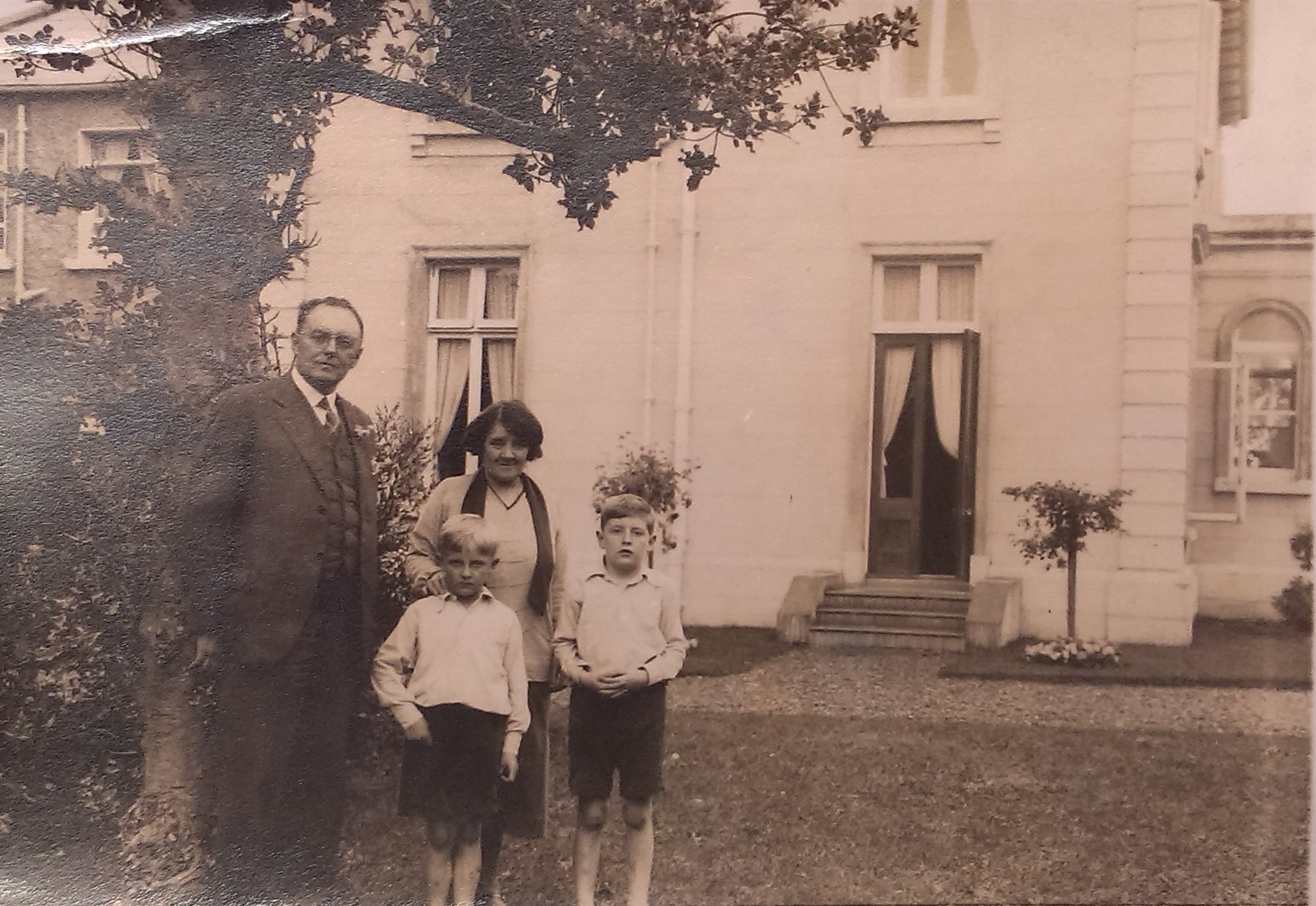
Louisa Flanagan
and her sons Liam
and Míceál,
and unknown person,
Beechpark.
See larger
and full size.
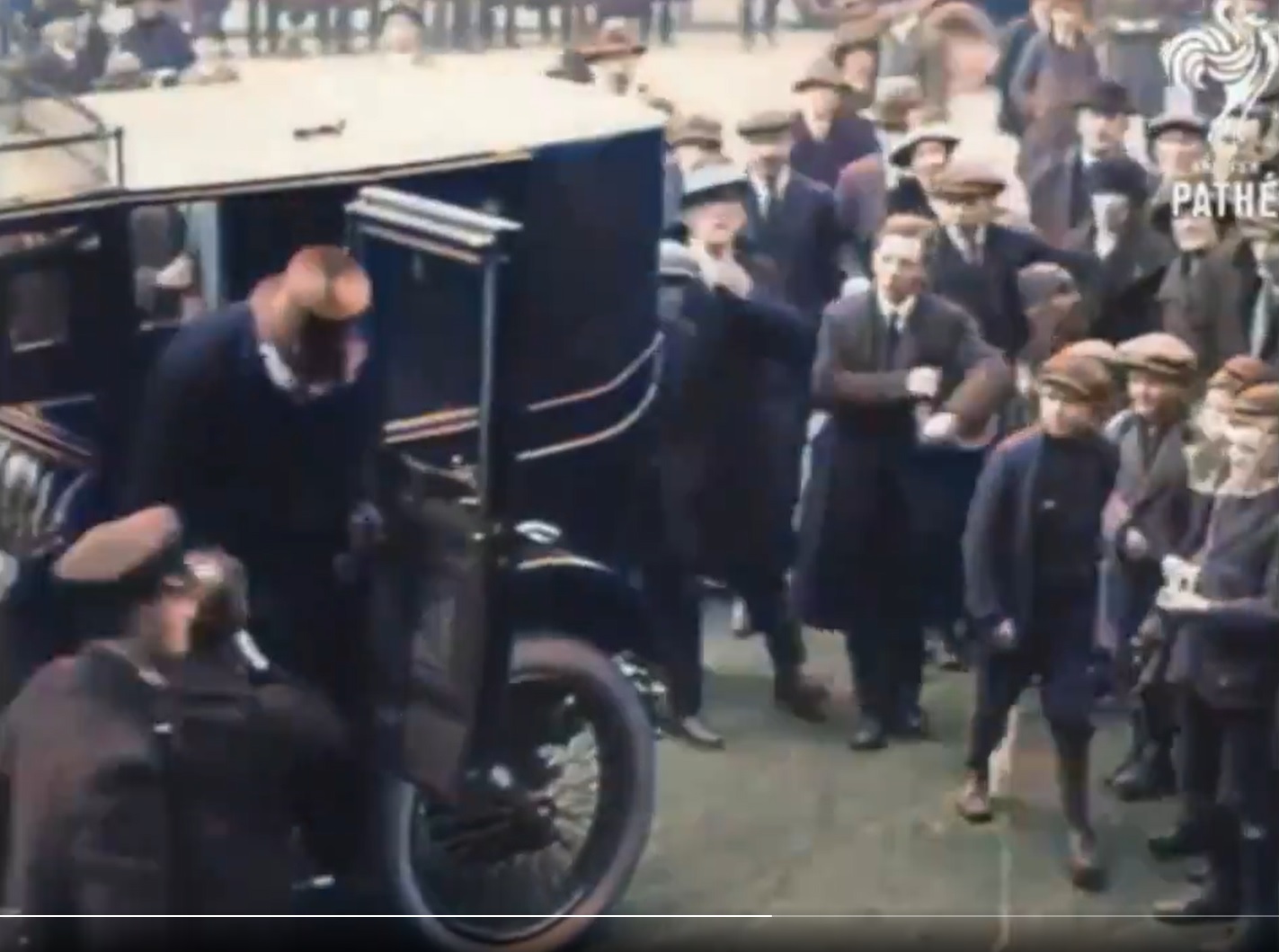
Arthur Griffith,
Michael Collins,
W.T. Cosgrave (alighting from car)
and Eamon De Valera.
Arriving at the Mansion House, 1922.
Both Arthur Griffith and
Michael Collins died in Aug 1922.
Video colourised by
Rob Cross.
Original video from British Pathe.
Ministers
of the Irish Free State, 1922.
(W.T. is first to be shown.)
From British Pathe.
President W.T. Cosgrave at Limerick's Civic Carnival, 1931.
From British Pathe.
Coverage of
1933 election.
Featuring W.T. and his wife Louisa Flanagan.
From British Pathe.
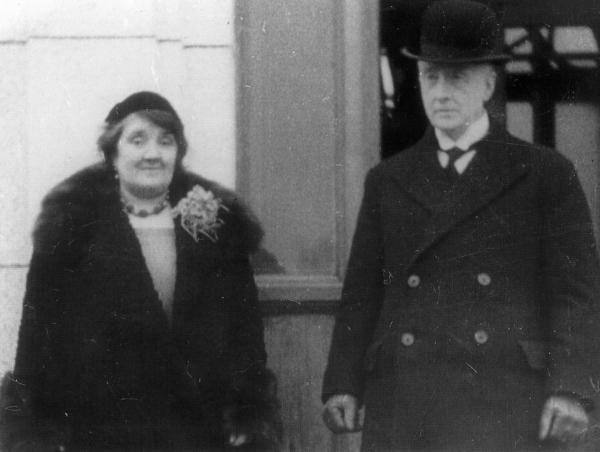
Louisa Flanagan and
W.T. Cosgrave.
Scene shown in above video.
During
1933 general election.
Image courtesy of
Cork Multitext Project, UCC
(formerly here).
Used with permission.
Coverage of
1933 election.
Featuring W.T. addressing huge crowd at College Green, Dublin.
From British Pathe.
 at
[RIA].
at
[RIA].

Please donate to support this site.
I have spent a great deal of time and money on this research.
Research involves travel and many expenses.
Some research "things to do"
are not done for years, because I do not have the money to do them.
Please Donate Here
to support the ongoing research and
to keep this website free.