Richard Fitzwilliam, 7th Viscount Fitzwilliam
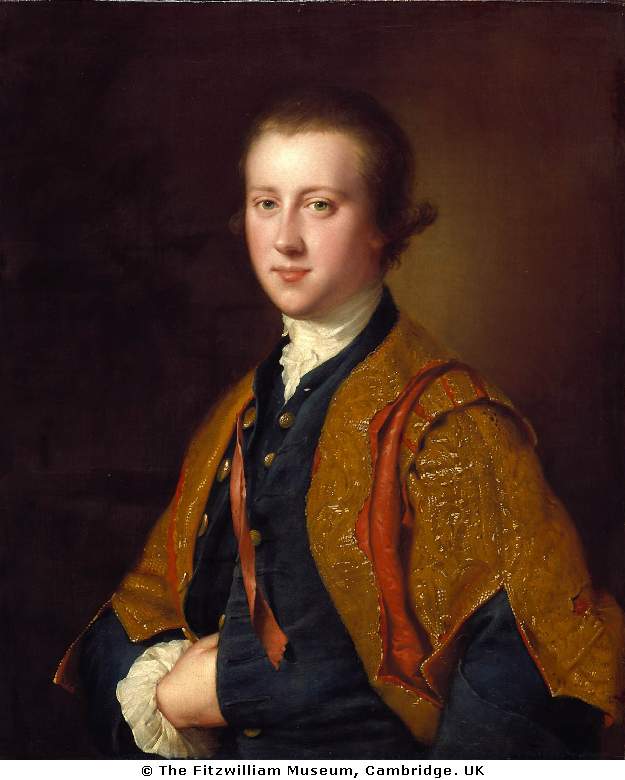
7th Viscount,
at Trinity Hall, Cambridge,
on his graduation in 1764 (age 19).
Portrait by
Joseph Wright of Derby.
Used here with the kind permission of the
Fitzwilliam Museum, Cambridge.
Also
here.
Richard Fitzwilliam, 7th Viscount Fitzwilliam,
born 1 Aug 1745.
See
wikipedia
and
wikitree
and
historyofparliamentonline.
His
father
moved to Ireland in apparently 1756
and lived at
Mount Merrion,
Co.Dublin.
He was educ
Charterhouse School in London.
He was educ
Trinity Hall, Cambridge
(admitted 1761, MA 1764).
He
fell in love with a barmaid at Cambridge.
His horrified father packed him off on a
Grand Tour to forget her.
On his return he found the girl married off (aided by his father).
He
vowed never to marry, and didn't.
(As a result, the title went extinct.)
He succ 1776 when his father died.
He
took his seat in the
Irish House of Lords
1776.
He let Mount Merrion
again after his father's death 1776.
See [Ball, vol.2, 1903]
for the tenants.
He lived mainly in England,
at the Fitzwilliam (formerly Decker) house
in
Richmond Green, Surrey.
Although he made frequent visits to Mount Merrion.
He began in 1784
a long affair with
Anne Bernard [or Marie Anne Bernard,
born 1769, French].
She was a dancer at the
Paris Opera.
She used the stage name "Mademoiselle Zacharie".
Only age 15 when they began an affair. He was age 39.
He had two sons with her,
though he never married her,
and so the title went to his brother rather than his sons.
Many letters survive from her.
They
show her as poorly educated.
The affair continued to at least 1790.
He had issue by Anne Bernard:
- Henry Bernard.
Henry Fitzwilliam Bernard.
Known as "Fitz" in childhood.
He is "Henry Bernard" mentioned in father's will as living (1815)
in Richmond Green with a wife and daughter.
- Billy Bernard.
- (dau) Bernard. Probably died in infancy.
He was a great lover of France,
fluent in French,
and a supporter of the French Royalists after the
French Revolution 1789.
His house at Richmond Green
was a centre for exiled French nobles and Royalists
who had fled the
French Revolution
to England.
Fellow of
Royal Society
1789.
MP for Wilton
1790-1806.
(Wilton was home of his 1st cousin the
10th Earl of Pembroke.)
He
continued the development of Georgian SE Dublin.
Act for enclosing centre of Merrion Square 1791.
Fitzwilliam Square designed from 1789,
laid out 1792.
He was the
author of several works:
- Letters, by "Atticus".
Published in English in 1802.
Exploring the doctrinal foundations of stable government.
- The Concordatum Explained, 1803.
Published anonymously.
A critique
of the 1801 concordat agreed by Napoleon and the Pope.
-
Lettres d'Atticus
(or: Considerations sur la religion catholique et le protestantisme
par un Anglois protestant),
a French translation of his previous work,
published 1811.
This showed considerable sympathy for Catholicism.
- Pensées d'Atticus,
1813. Short meditations on religion, philosophy, and history.
He
built the
new Catholic church at Booterstown
for his Catholic tenants in 1812.
Act for enclosing centre of Fitzwilliam Square 1813.
The Fitzwilliam estate is left to the Pembroke family:
Just before his death, he organised to leave his
vast estates in Ireland
to the descendants of his 1st cousin the
10th Earl of Pembroke.
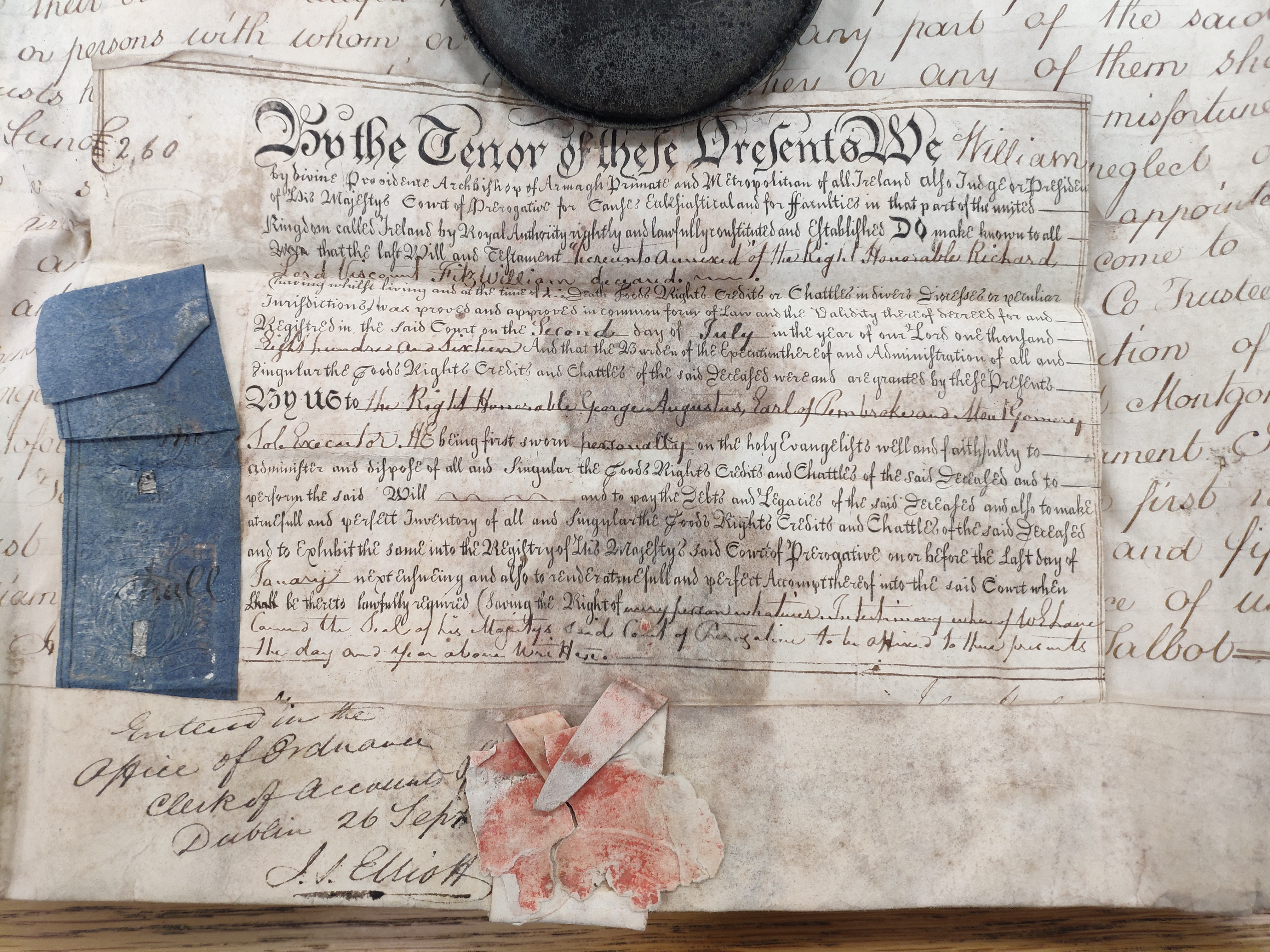
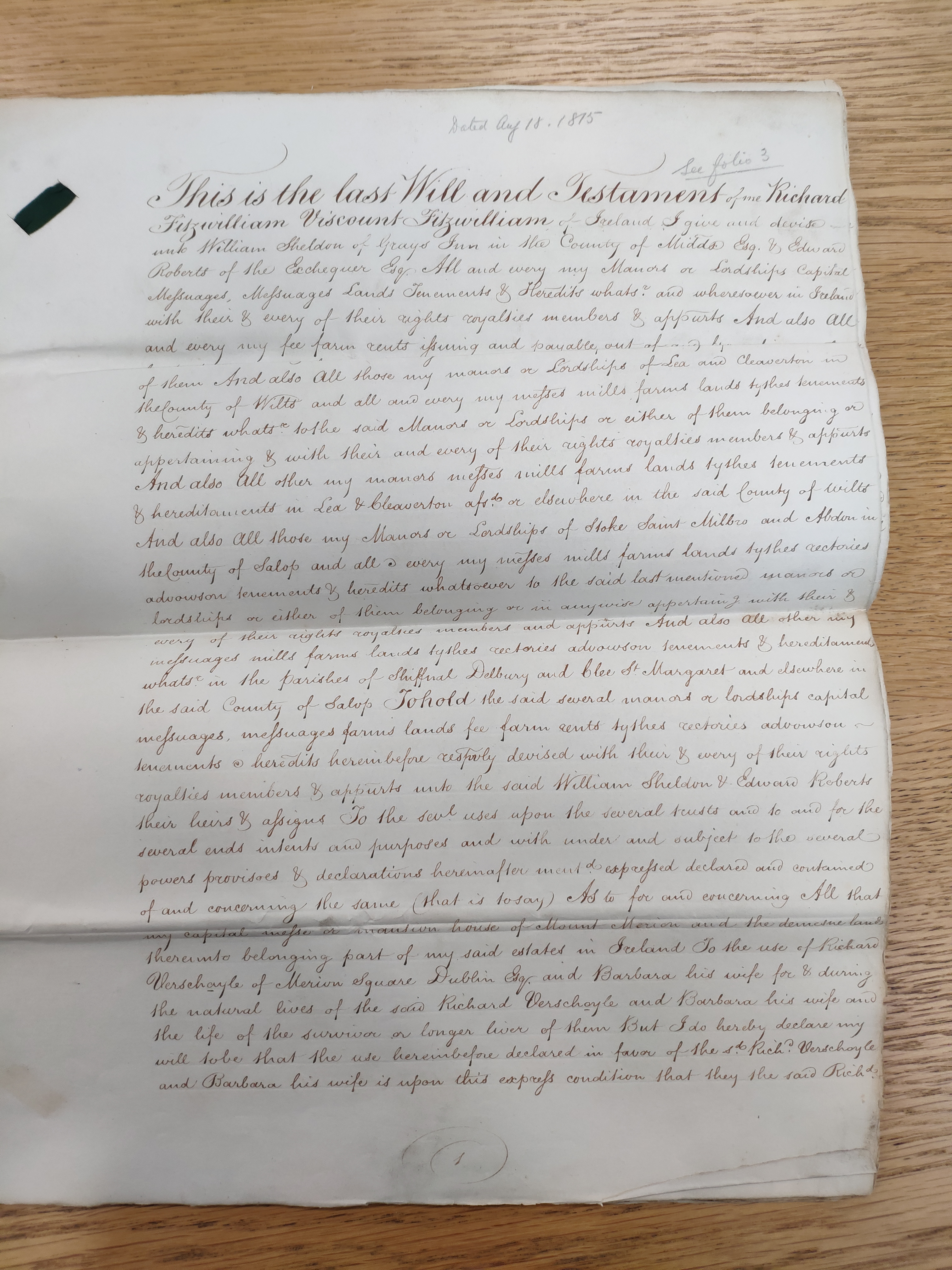
His will dated 18 Aug 1815.
-
Although he had two brothers,
they were ageing, with no sons (they were also said to have been feeble-minded),
and it was clear that the Viscounts Fitzwilliam were dying out,
so he decided to dispose of the estate before his death.
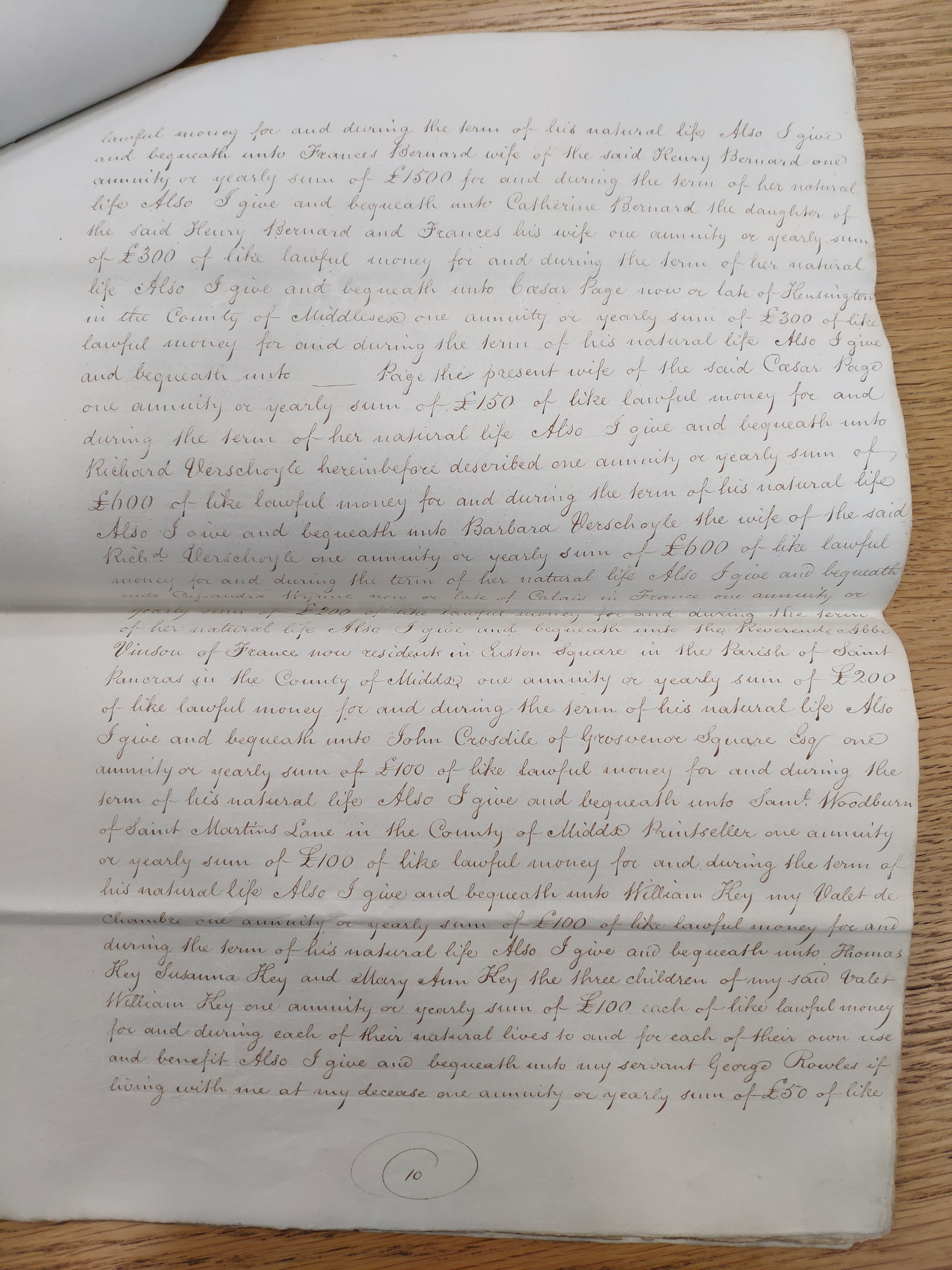
He did leave his two brothers an annuity.
-
Apparently he considered leaving his estates to the
4th Earl Fitzwilliam
(succ 1756, died 1833).
The Earl Fitzwilliam's family had been
involved with Ireland for centuries
and had regarded the Viscount Fitzwilliam's family as
kinsmen.
But they were not proven relations at all.
(Actually, they were obscurely related through Shelley,
but he may not have even known this.)
The story goes that the 7th Viscount
was appalled by the Earl Fitzwilliam's manners in drinking tea, and resolved in favour
of Pembroke.
(Maybe it was the young
future 5th Earl Fitzwilliam
that he had for tea.)
-
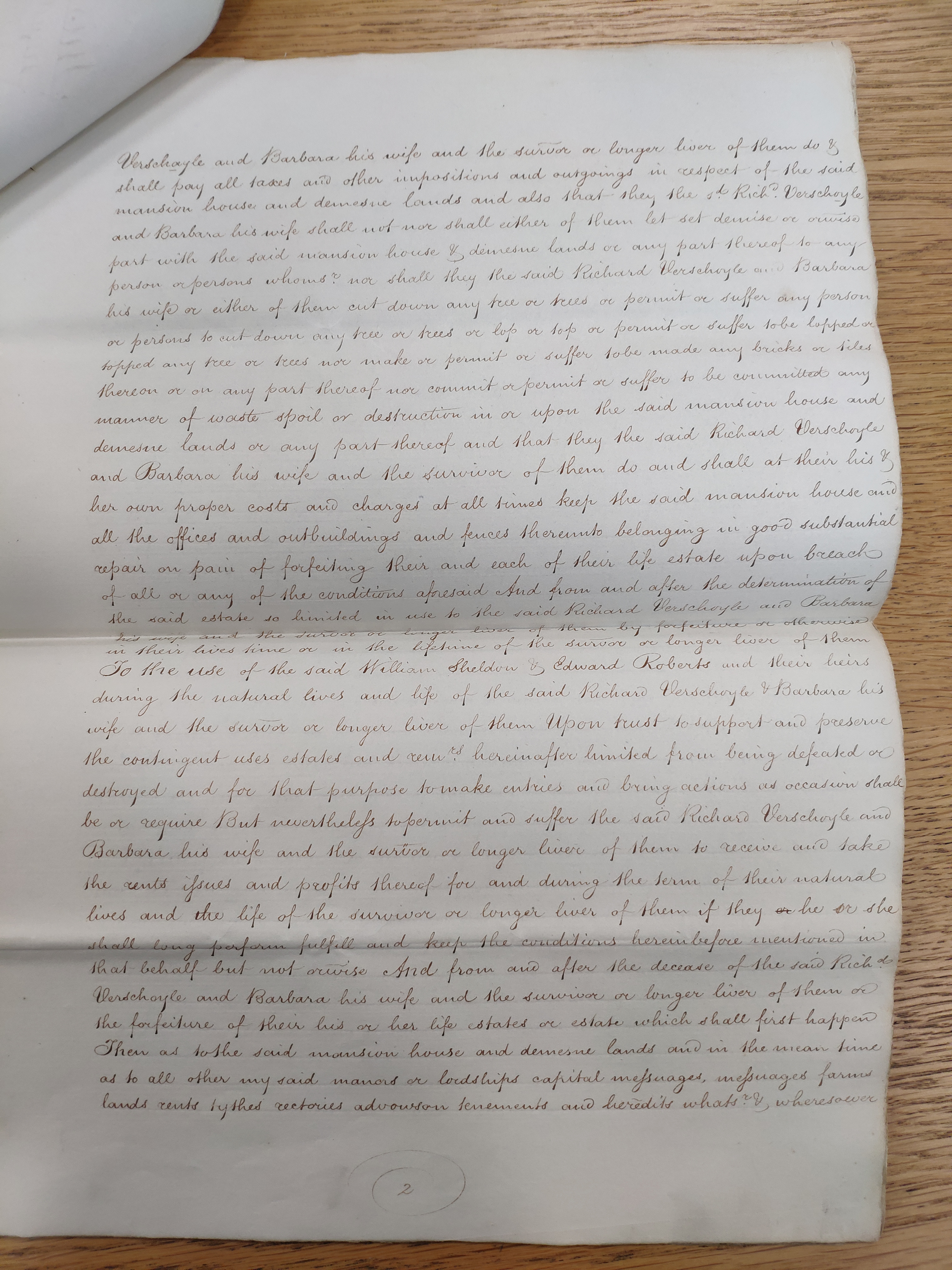
His will leaves the entire estate
to his 1st cousin's son,
the 11th Earl of Pembroke (succ 1794, died 1827).
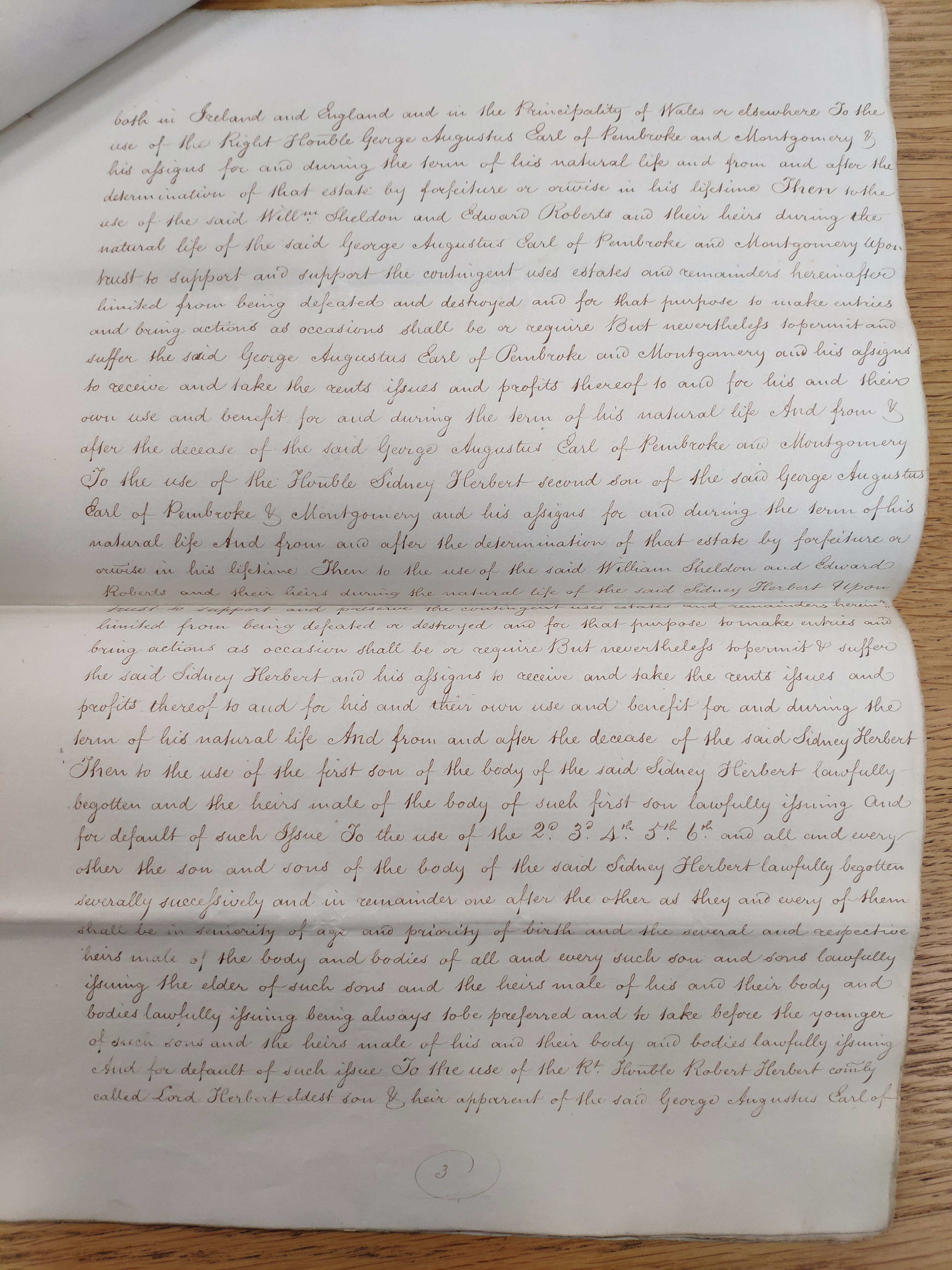
His will says that
after the 11th Earl's death
it is to go
to the Earl's younger son
Sidney
(later 1st Baron Herbert of Lea, then a child, born 1810).
If Sidney leaves no heirs it is to go to
the elder son Robert (later 12th Earl, born 1791).
(Robert of course has a large Pembroke inheritance of his own.)
If the line of the 11th Earl fails,
he leaves the estate to his cousins through Shelley, the family of the
Earl of Onslow.
-
The Fitzwilliam estate in Ireland became the Pembroke estate.
Death, 1816:
He
died unmarried, 4 Feb 1816, age 70 yrs,
in his rooms at 31
New Bond Street,
London.
He was buried in St Mary Magdalene, Richmond,
where there is a memorial to him.
See findagrave.
His will pr 22 February 1816,
Prerogative Court of Canterbury.
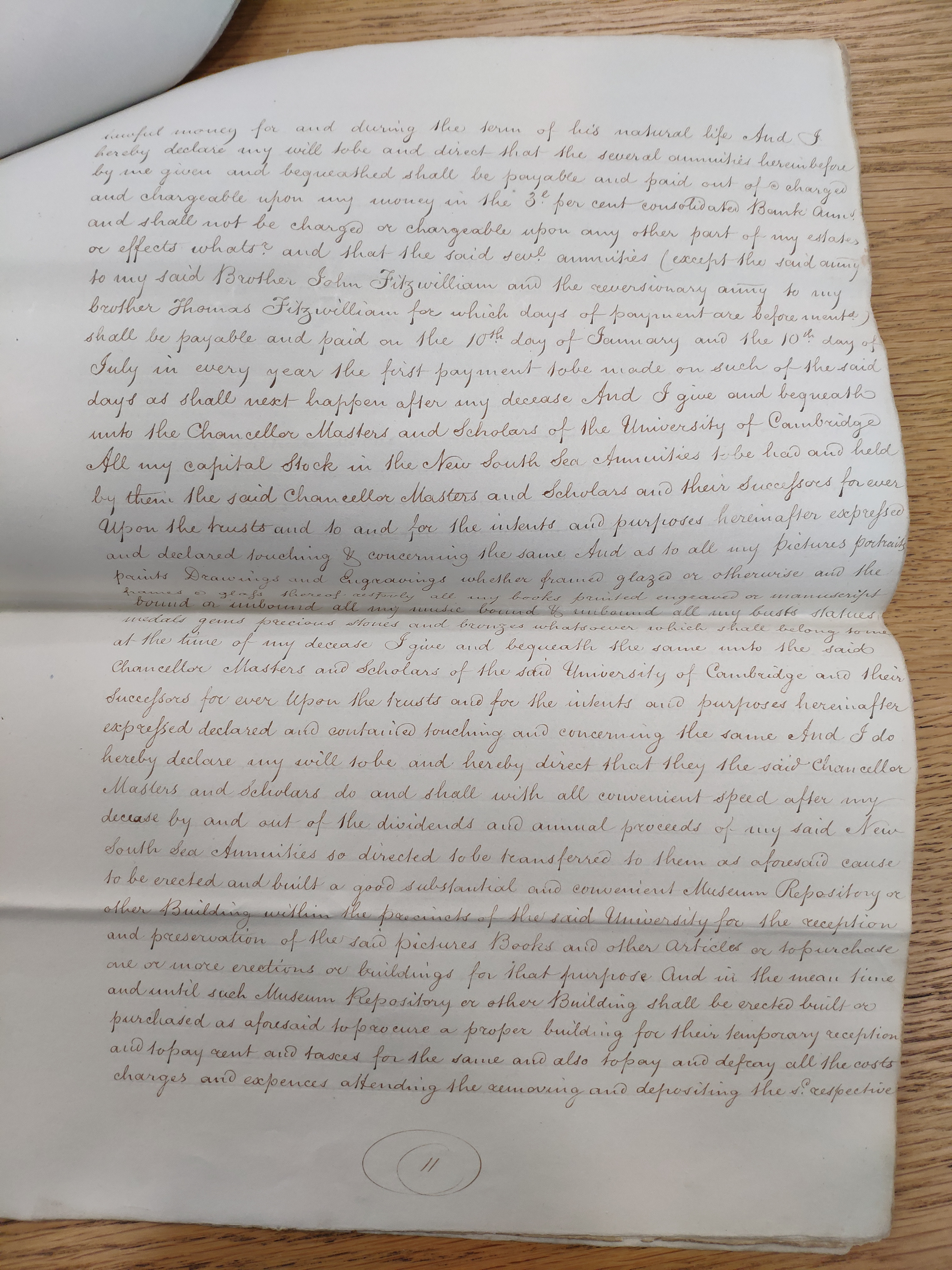
He had spent a lifetime collecting works of art and other treasures,
and decided to leave them all
(and many Fitzwilliam family portraits)
to the Cambridge that he had always loved.
This founded the Fitzwilliam Museum, Cambridge 1816,
starting its extensive collection.
He left them a huge sum of money to build a museum building
and maintain the collection
and fund related scholarship.
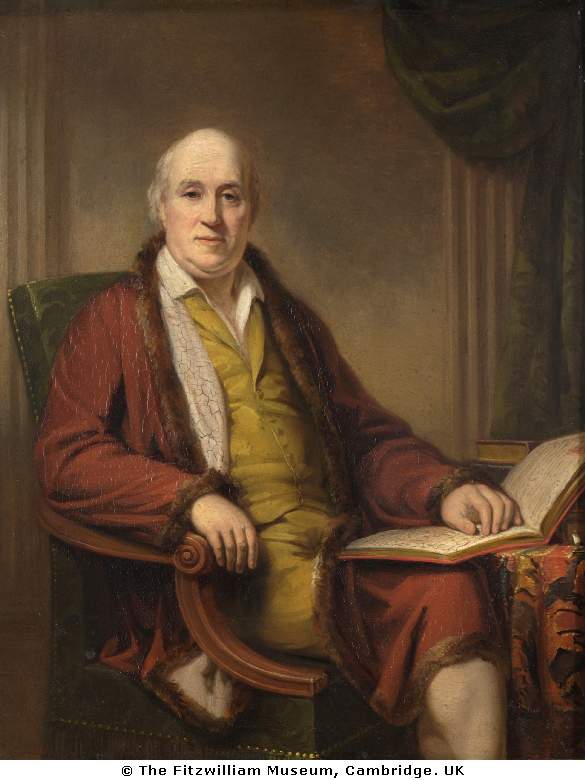
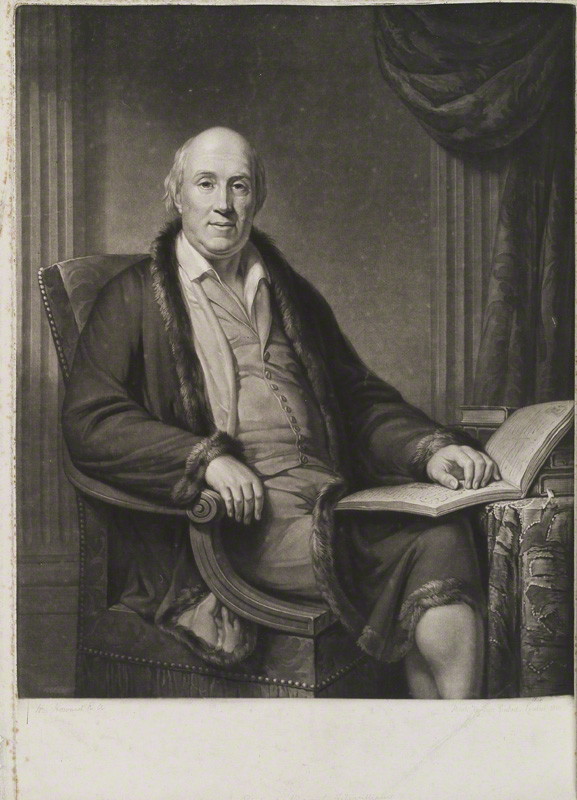
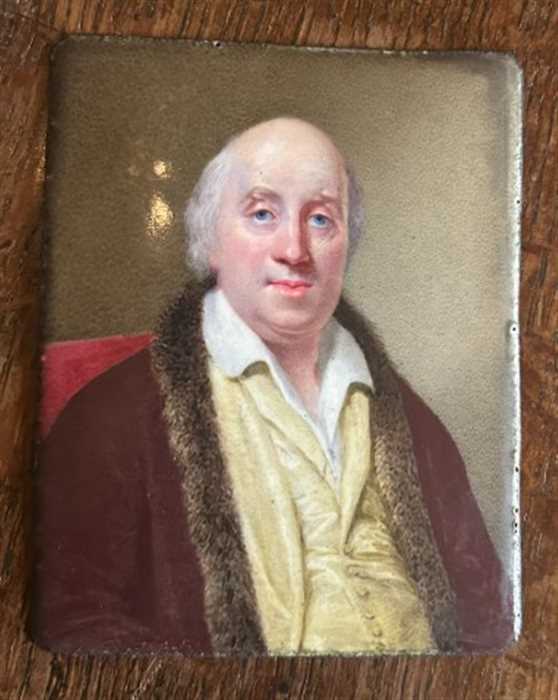
7th Viscount.
Portrait 1810 by Henry Howard.
NOT by
Nathaniel Hone (died 1784).
Used here with the kind permission of the
Fitzwilliam Museum, Cambridge.

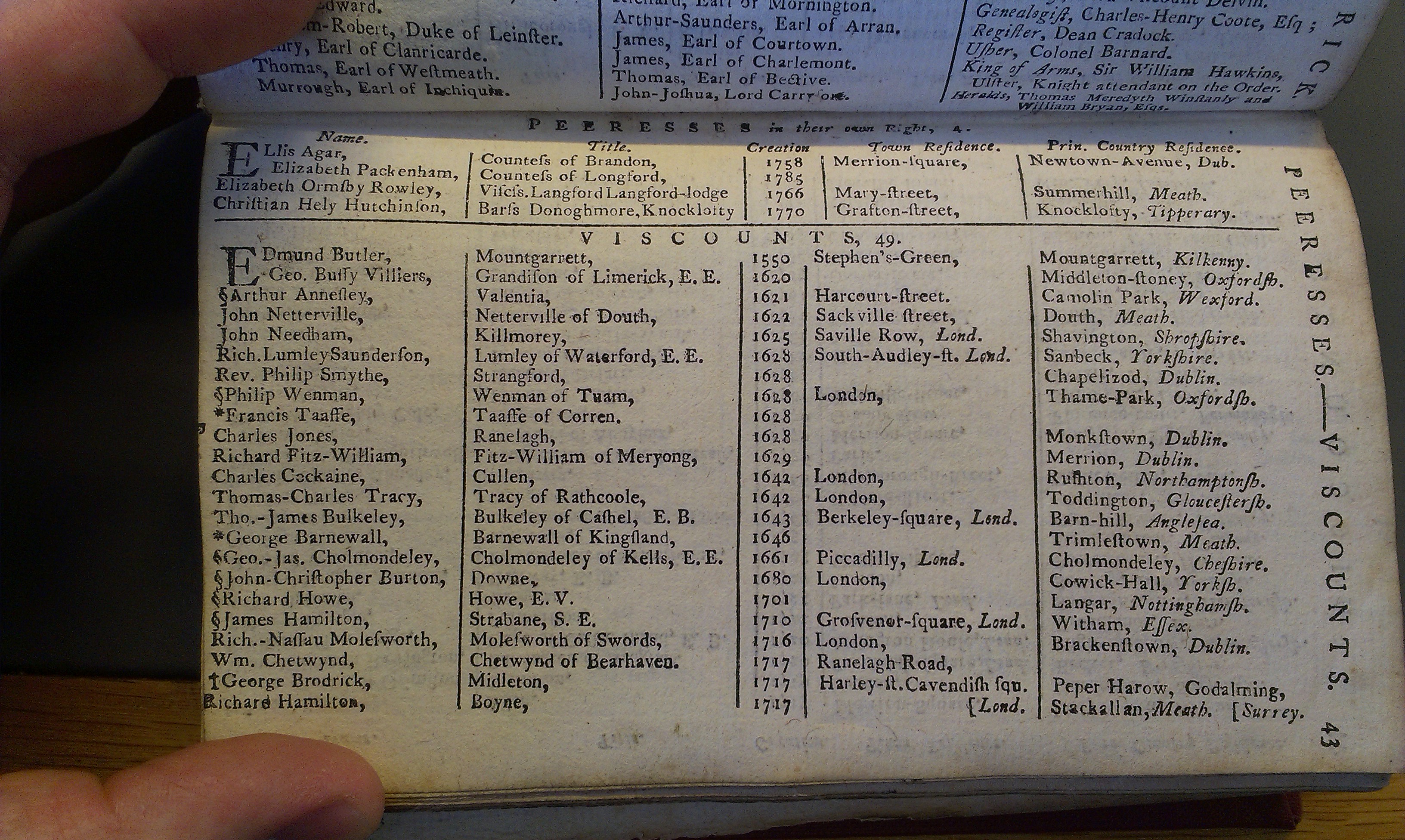
Listing of the Viscounts in
[Dublin Almanack, 1787].
Shows the 7th Viscount inaccurately with his seat at "Merrion".
See
full size.
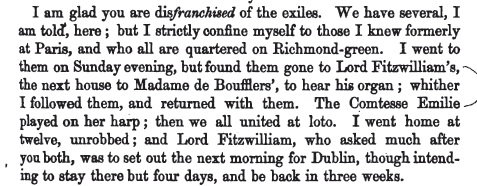
Letter by
Horace Walpole,
from Berkeley Square, London,
Wed 8 June 1791.
Shows the 7th Viscount planning an incredibly quick
trip to Ireland, to leave Mon 6 June.
From
Letters of Horace Walpole,
vol.9
(and here), p.323.
The "exiles" refer to exiled French nobles and Royalists,
who had fled the
French Revolution
to England.
Many of the French exiles lived in Richmond.

Follow-up letter by Walpole,
from Strawberry Hill,
23 June 1791,
showing the 7th Viscount has already been to Ireland and back.
From above, p.328.
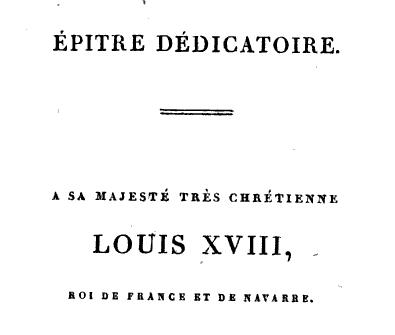
The 7th Viscount
dedicated his book
Lettres d'Atticus
(1811)
to the exiled
King of France
Louis XVIII.
Louis XVIII was
in exile in England
1807-14.
He was restored to the throne in France in 1814.
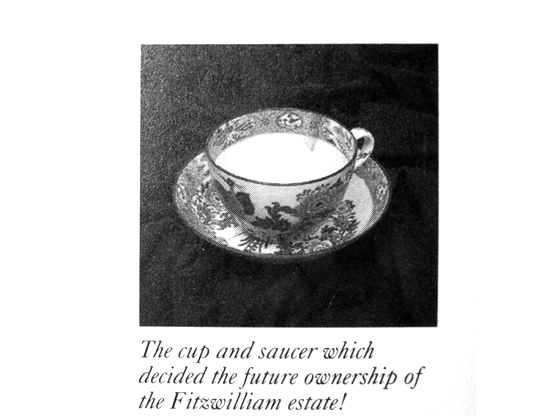
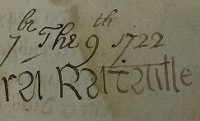
This is said to be the cup of tea that lost the estate to the Earls Fitzwilliam.
This is kept in the Pembroke Estate Office, Dublin [Wilkinson, 1925].
From Mount Merrion 300.
Used with permission.
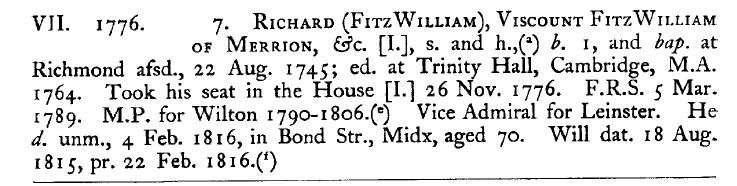
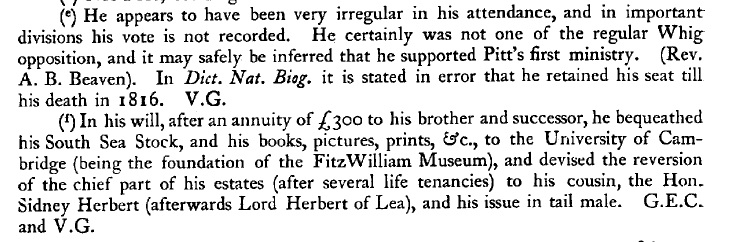
7th Viscount in
[Complete Peerage].
Baron Vaux and Earl of Warrington
The 7th Viscount
and his father the
6th Viscount (died 1776)
and his grandmother
Frances Shelley (died 1771)
all looked at trying to revive one or both of the following titles.
See papers in
2057/L/14
covering a wide range of dates from 1760 to 1790.
The titles the family attempted to claim are:
References
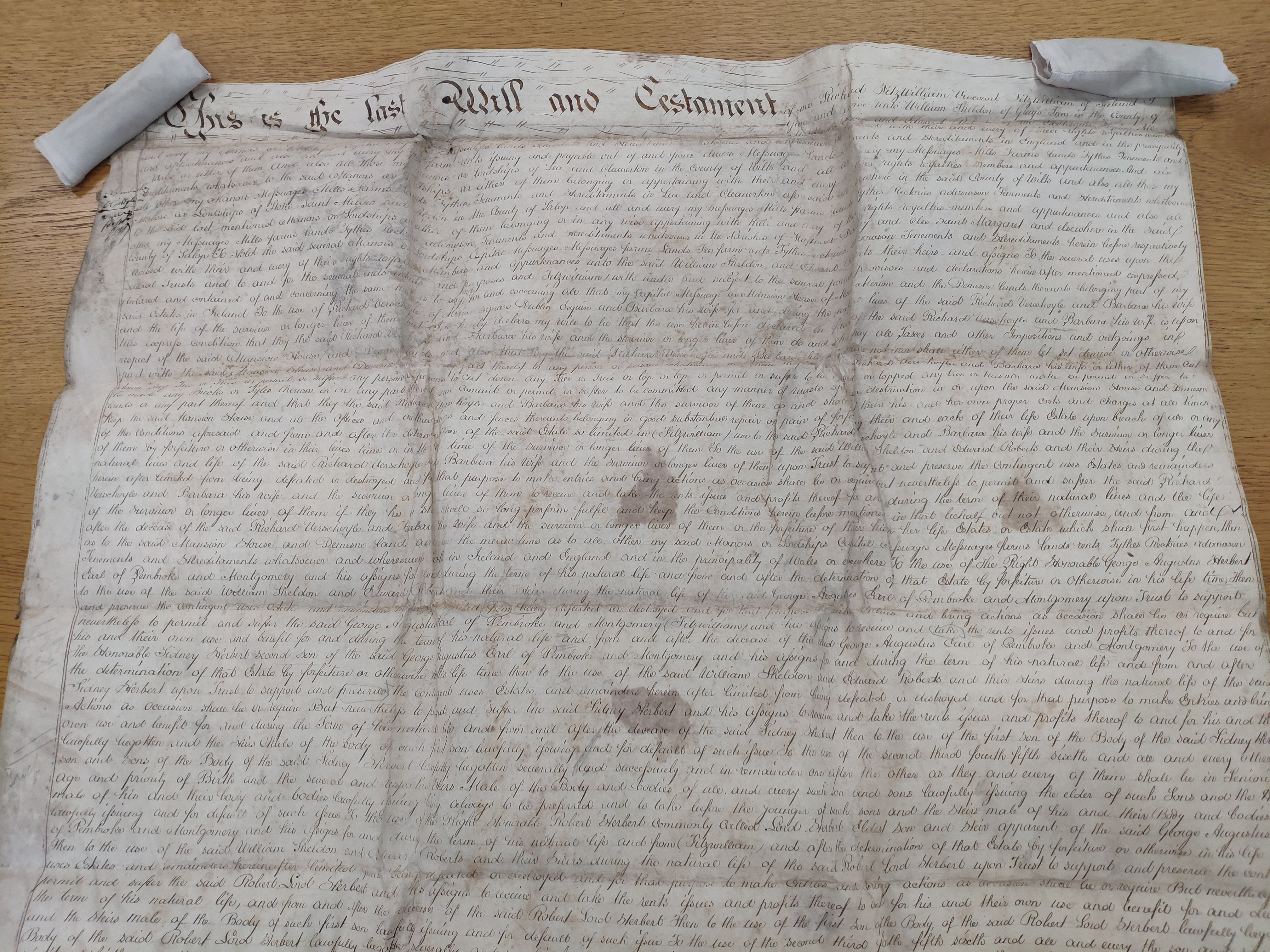
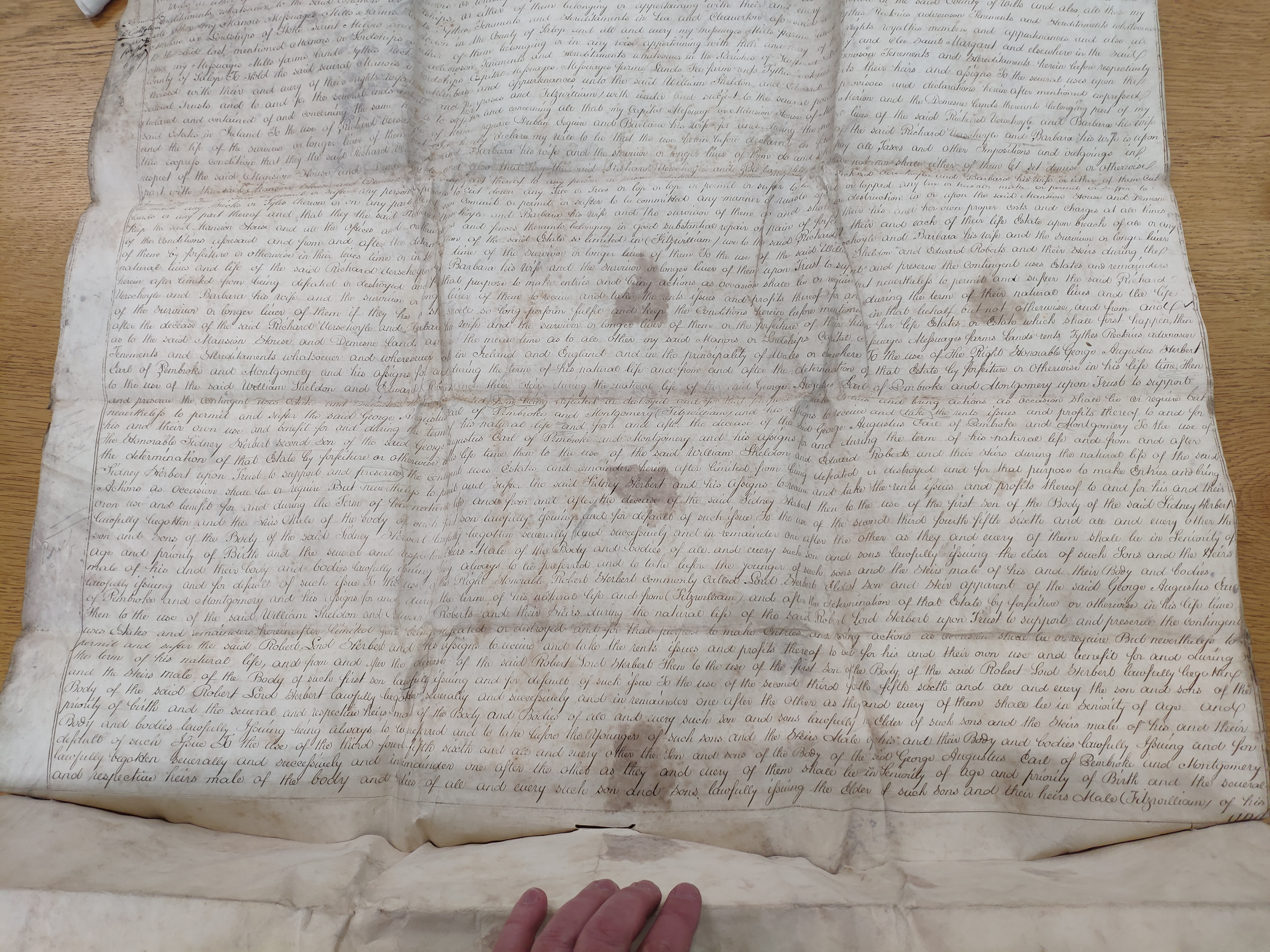
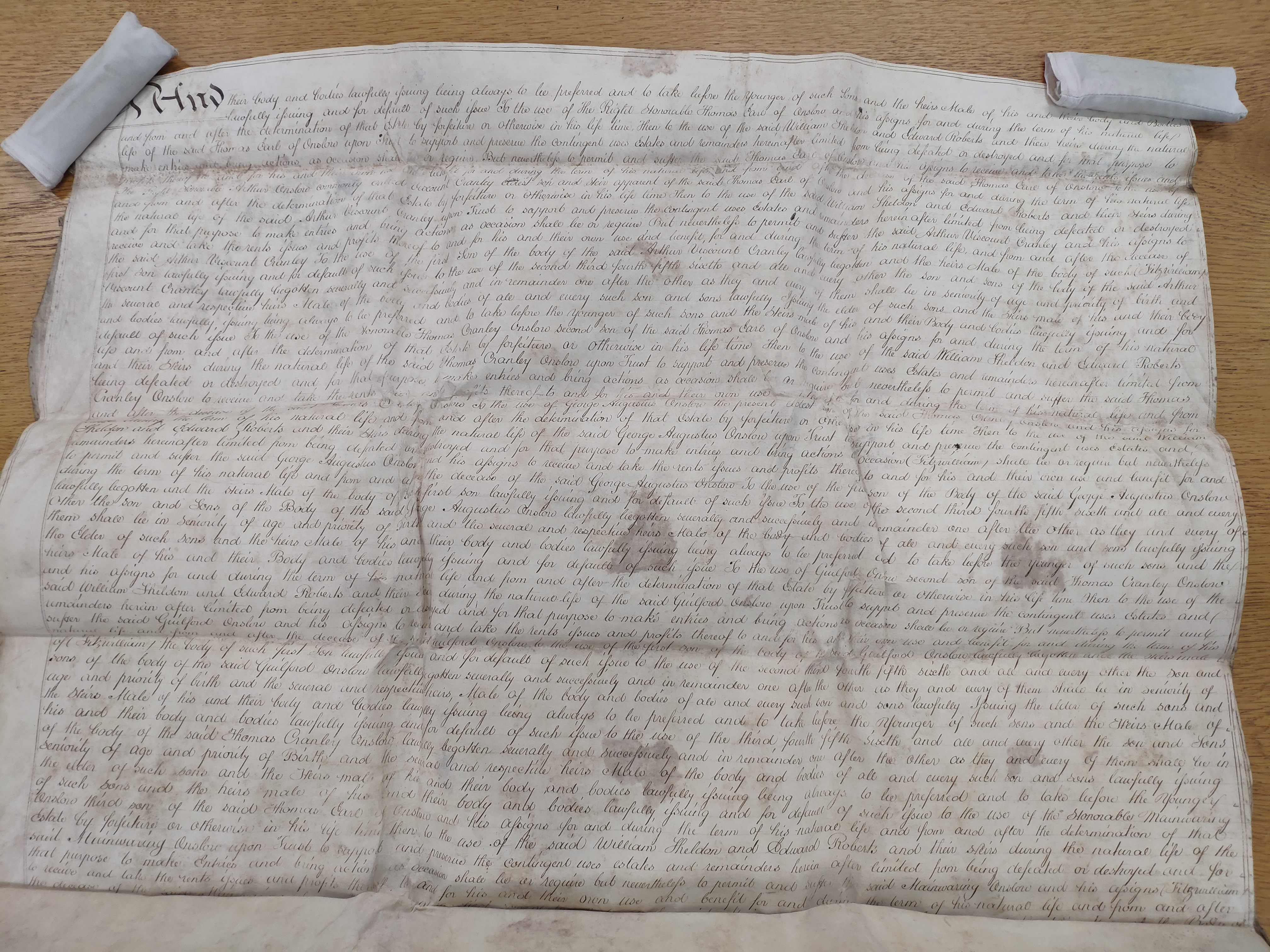
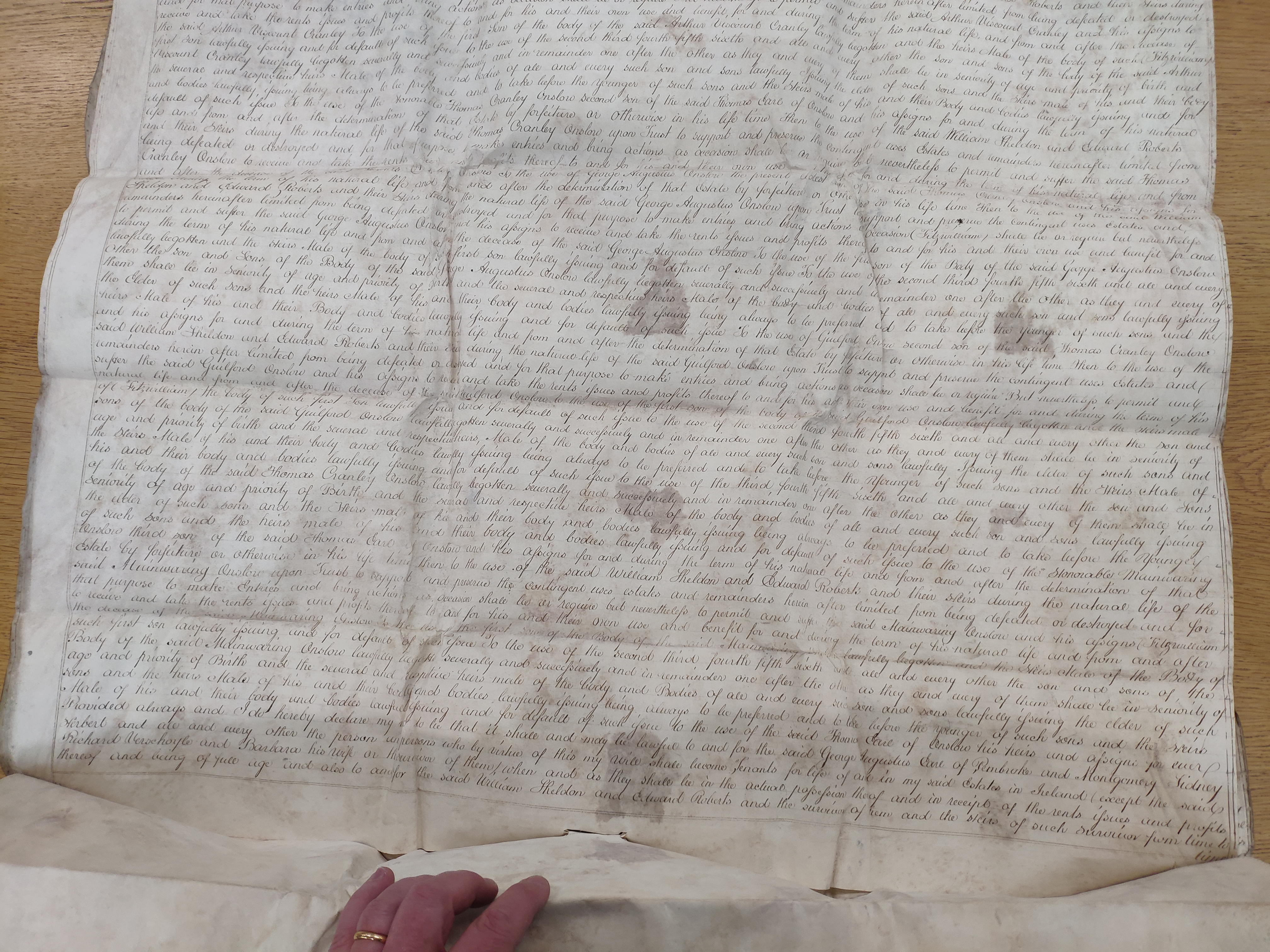
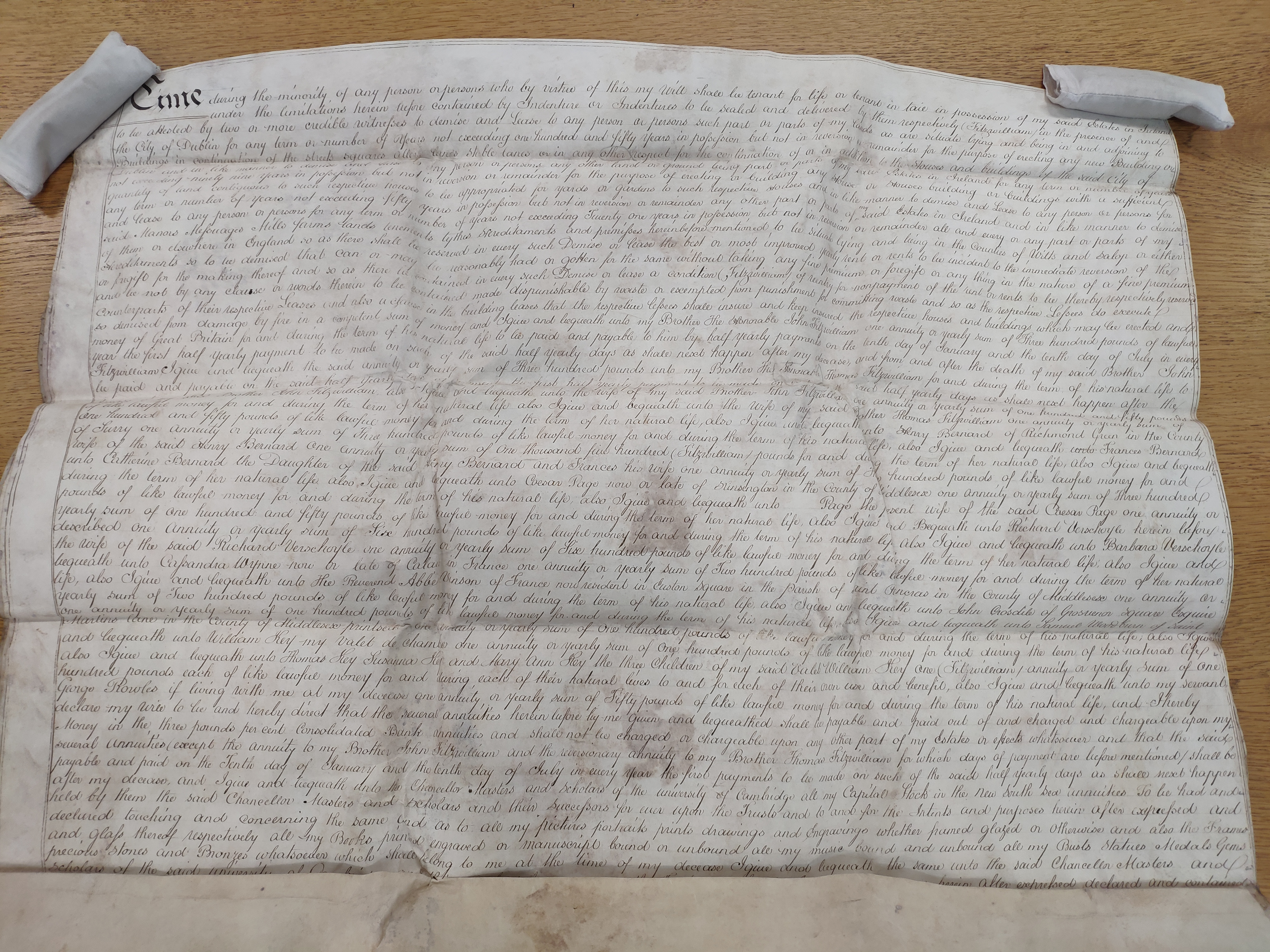
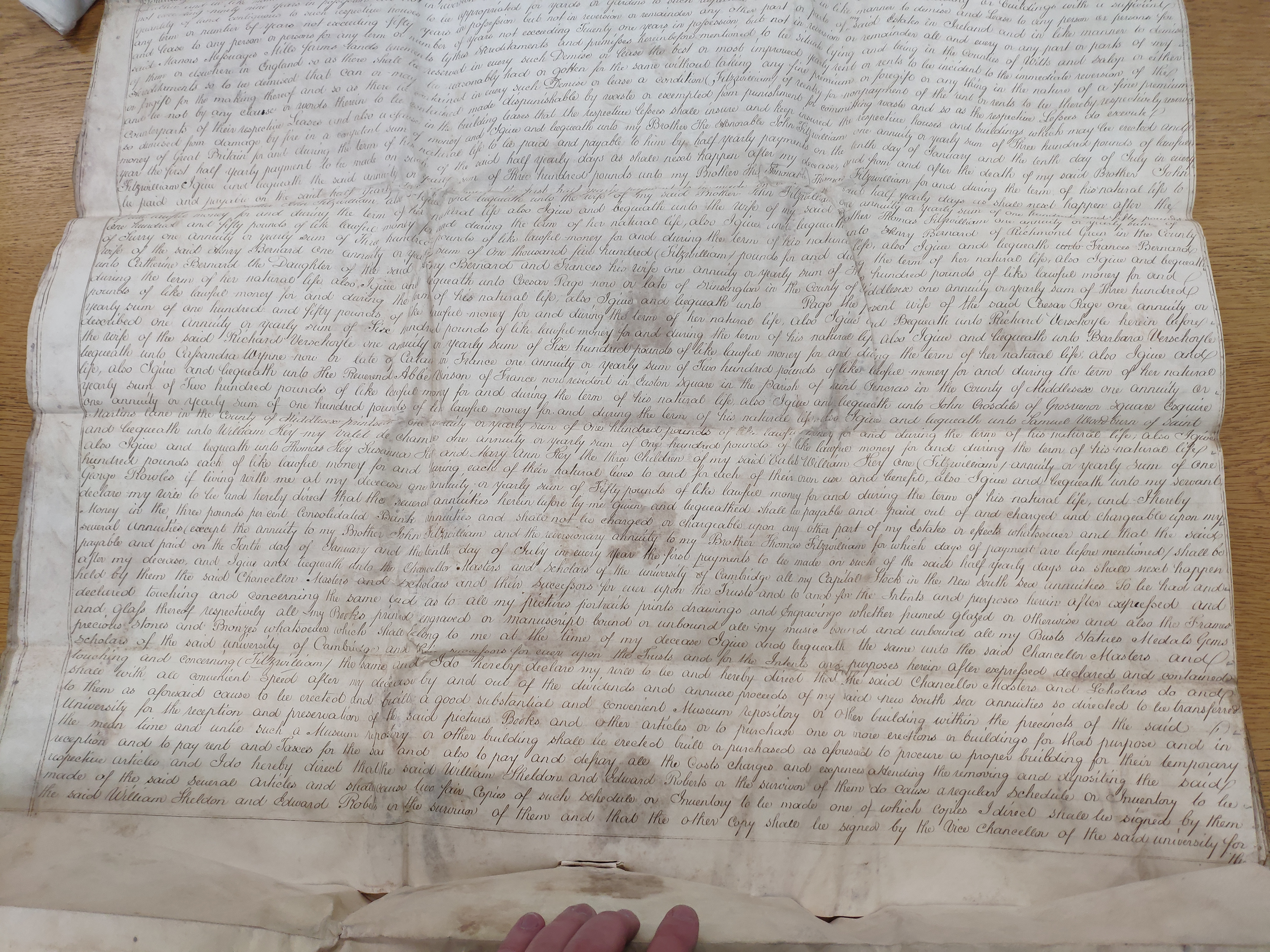
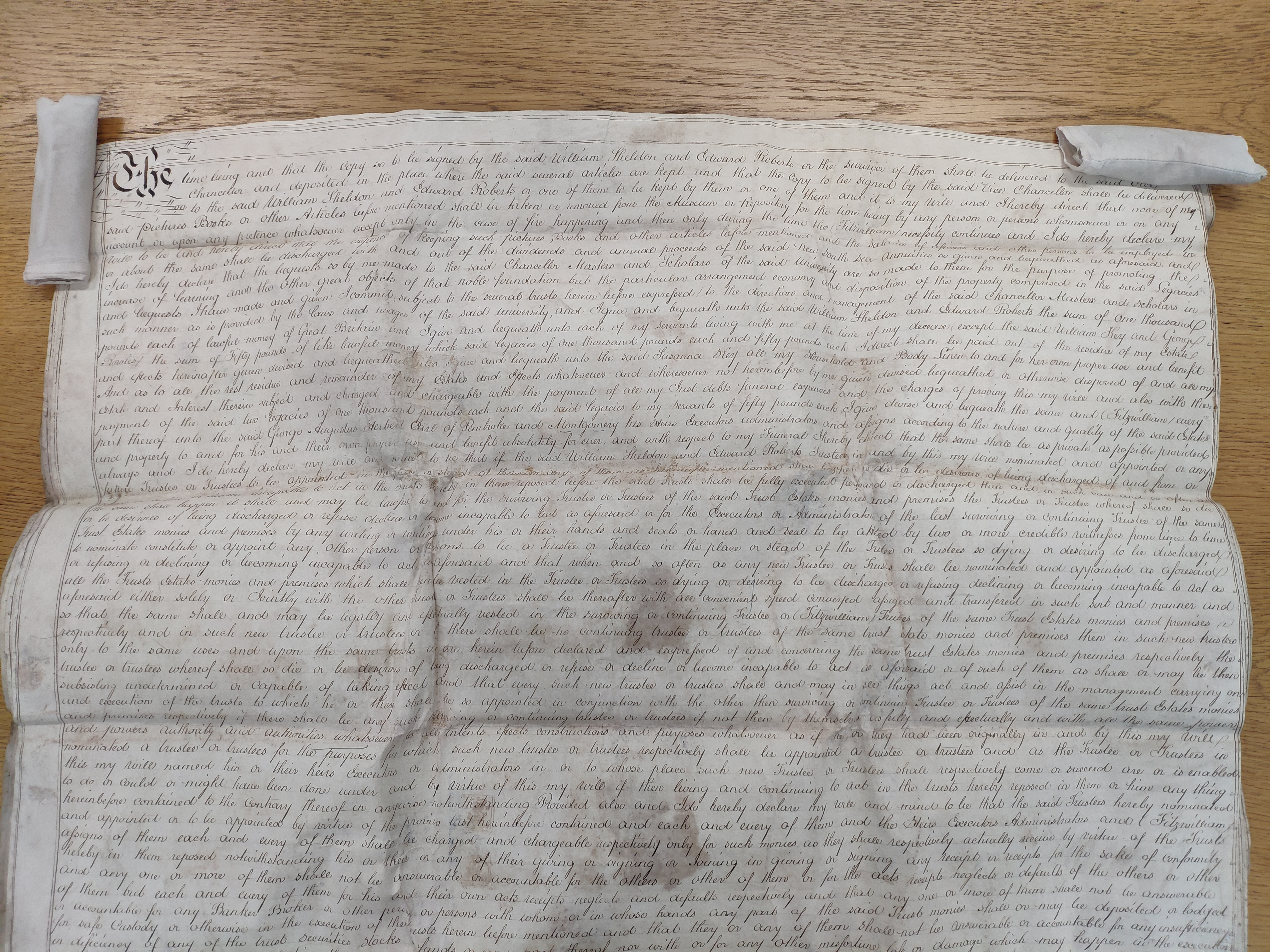
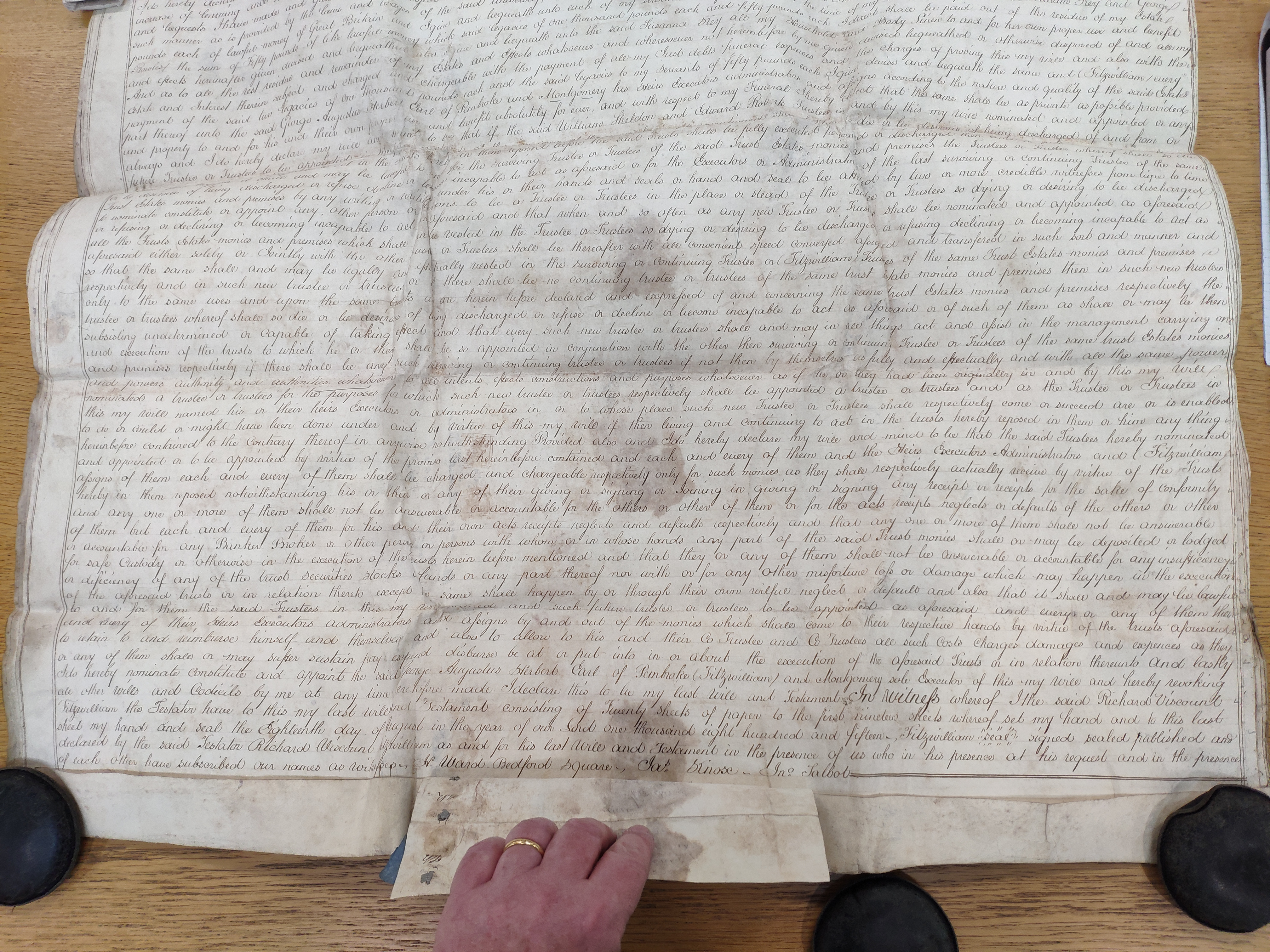
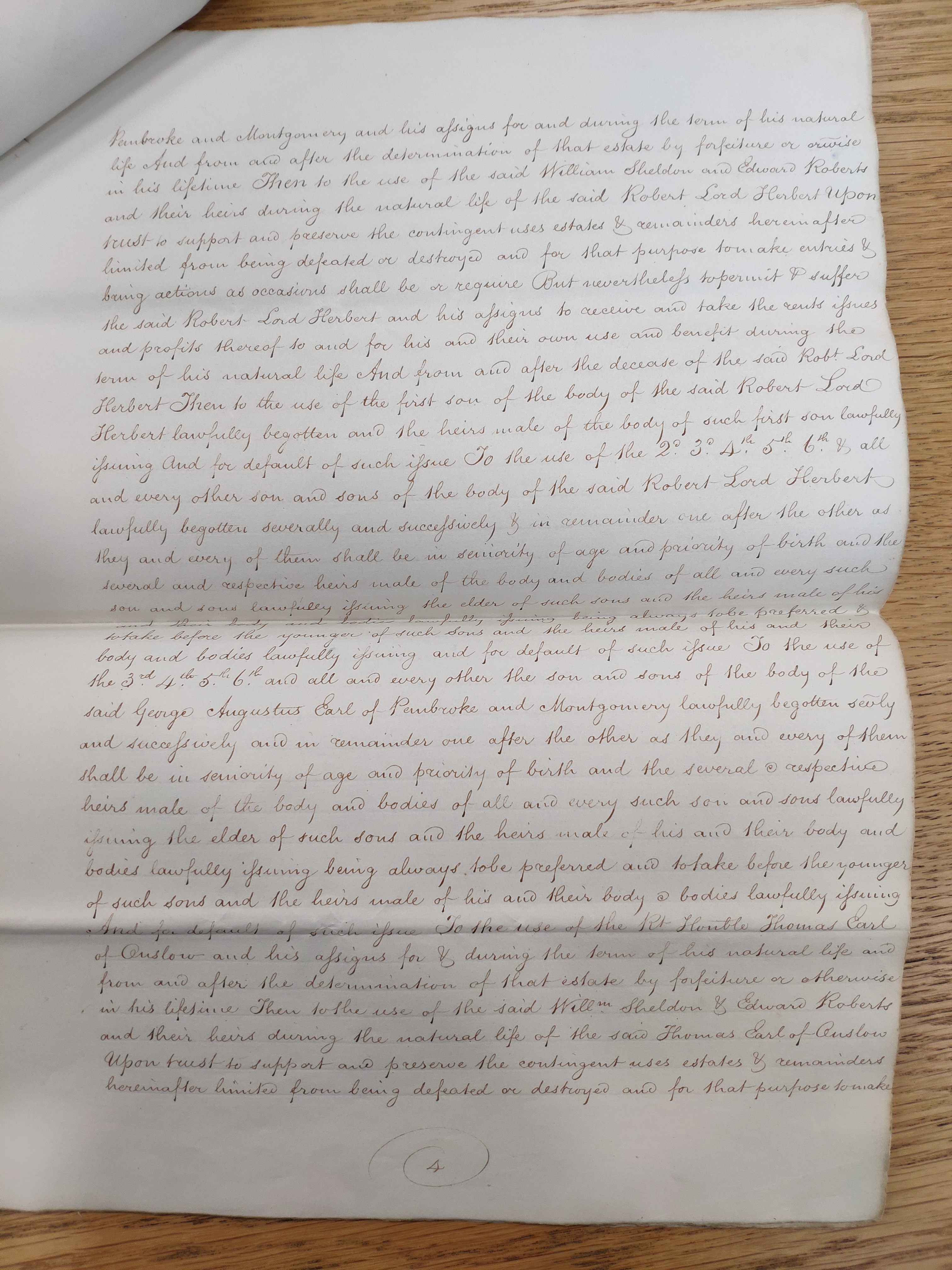
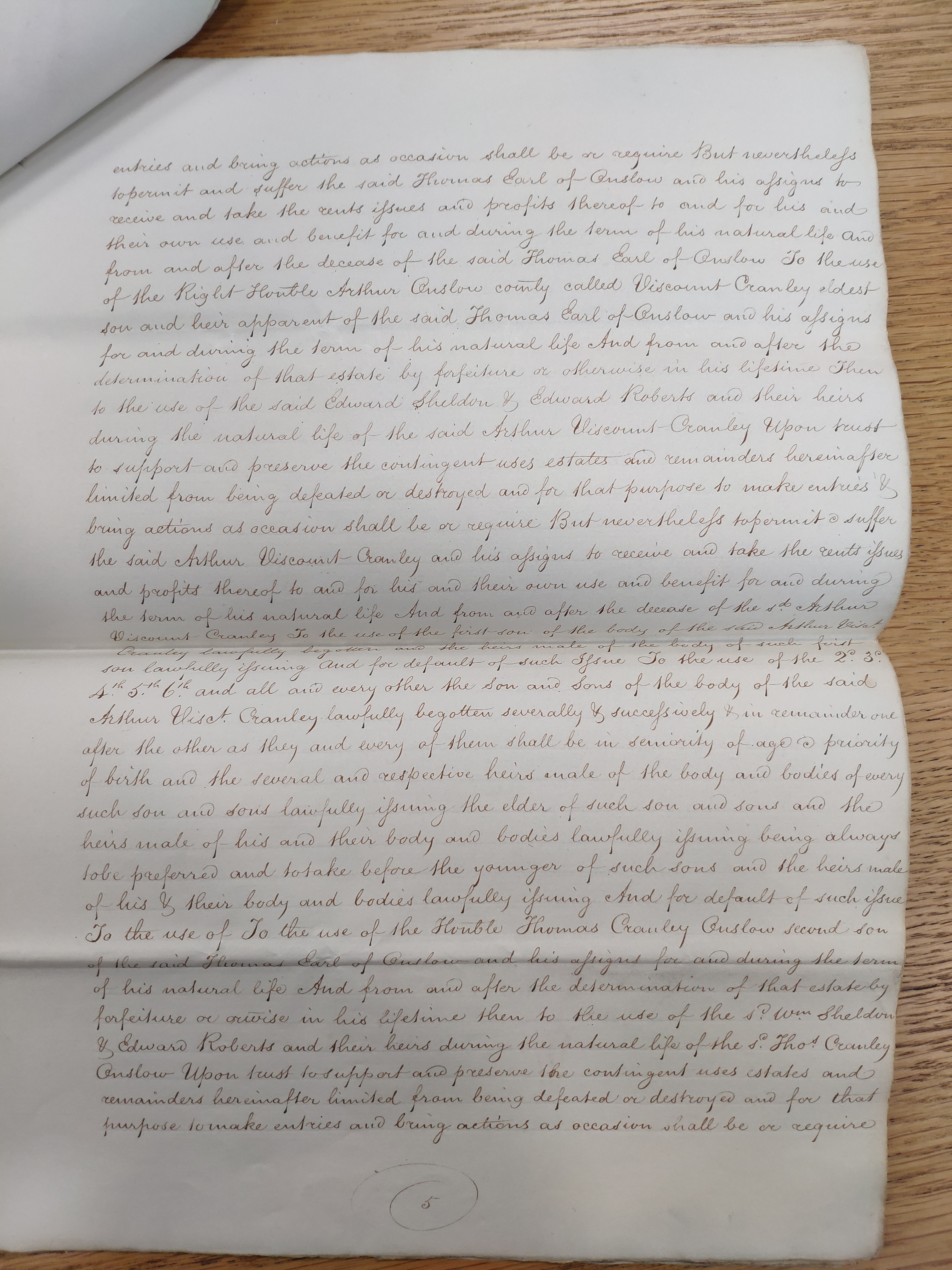
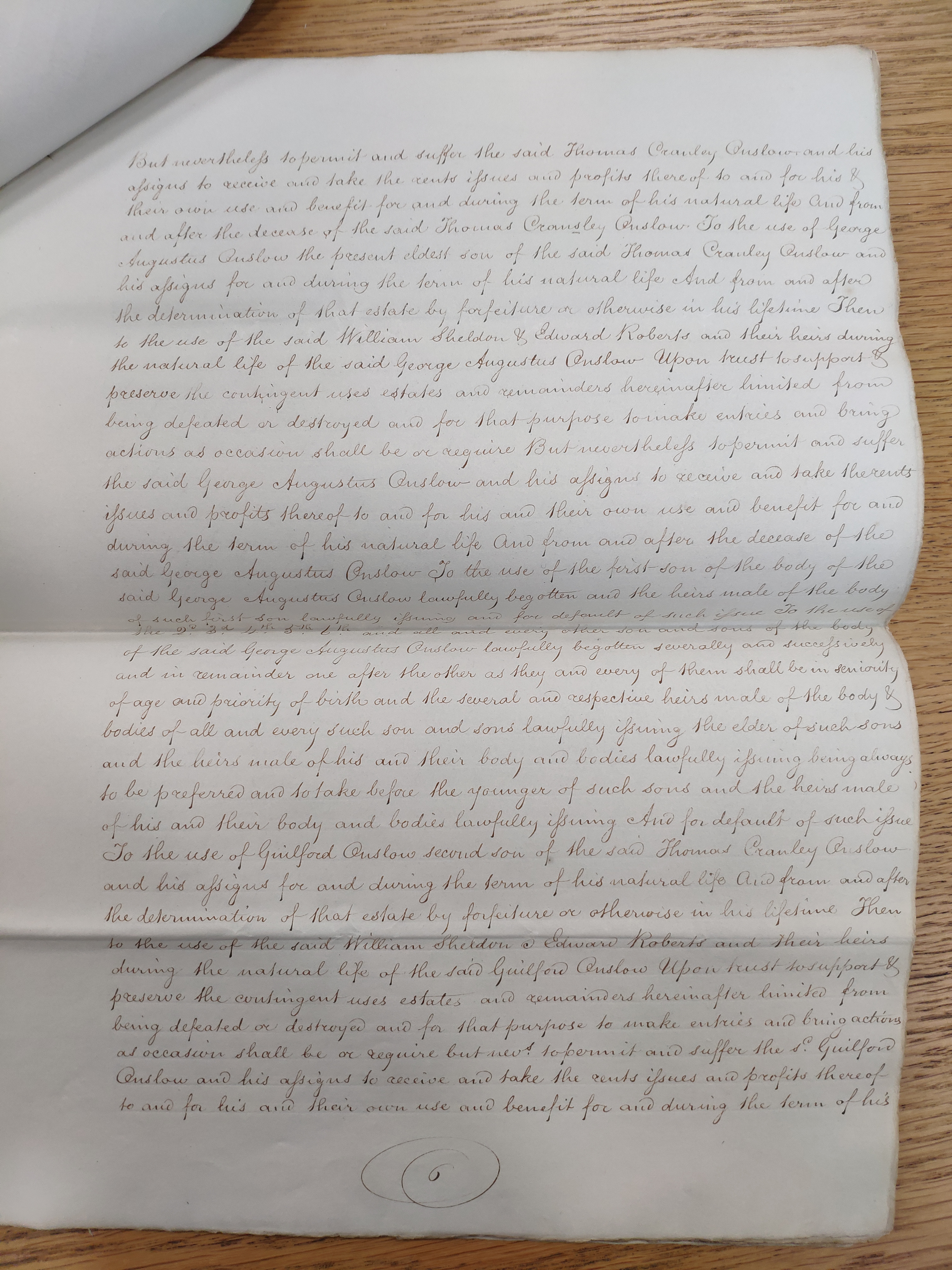
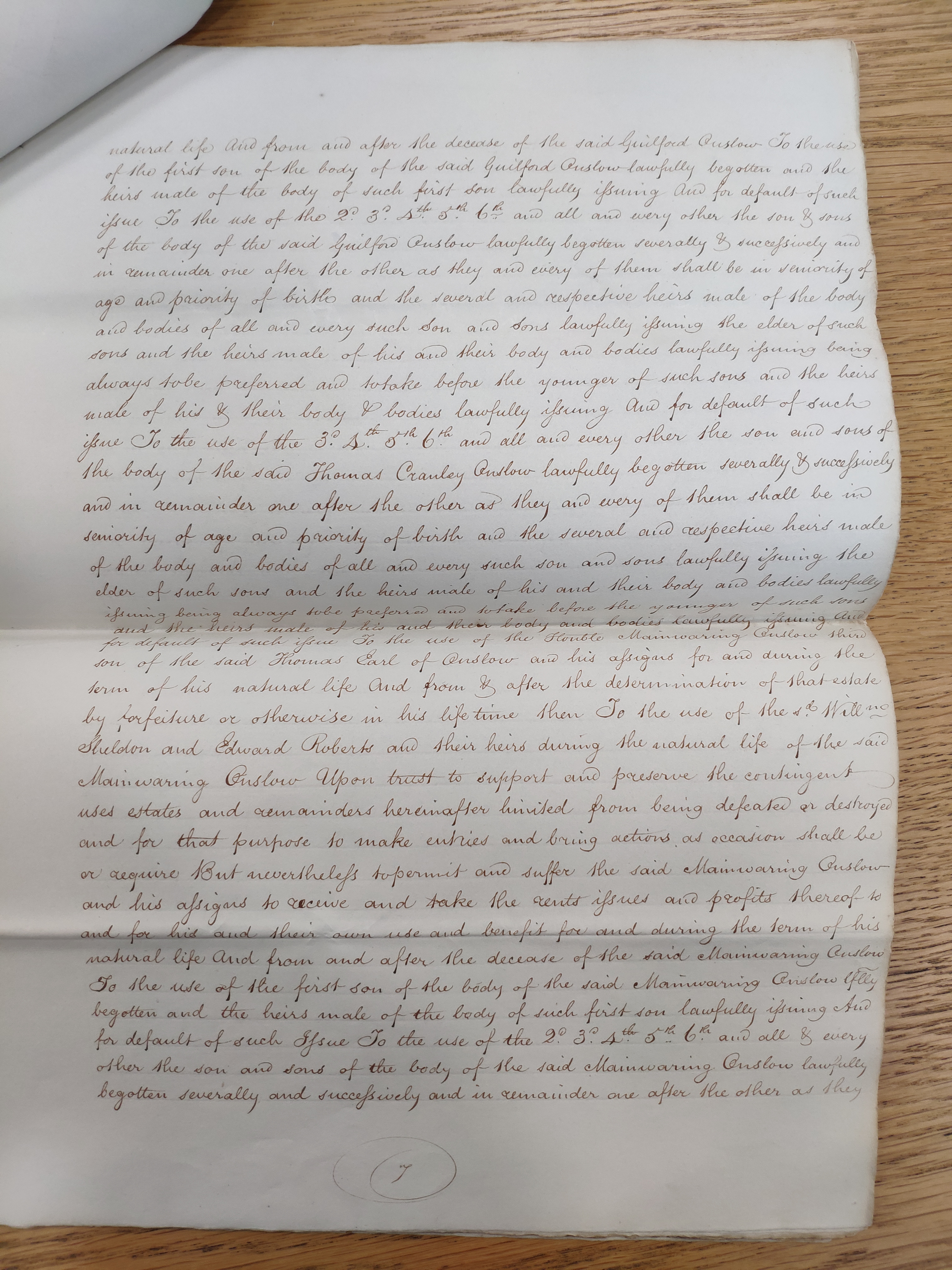
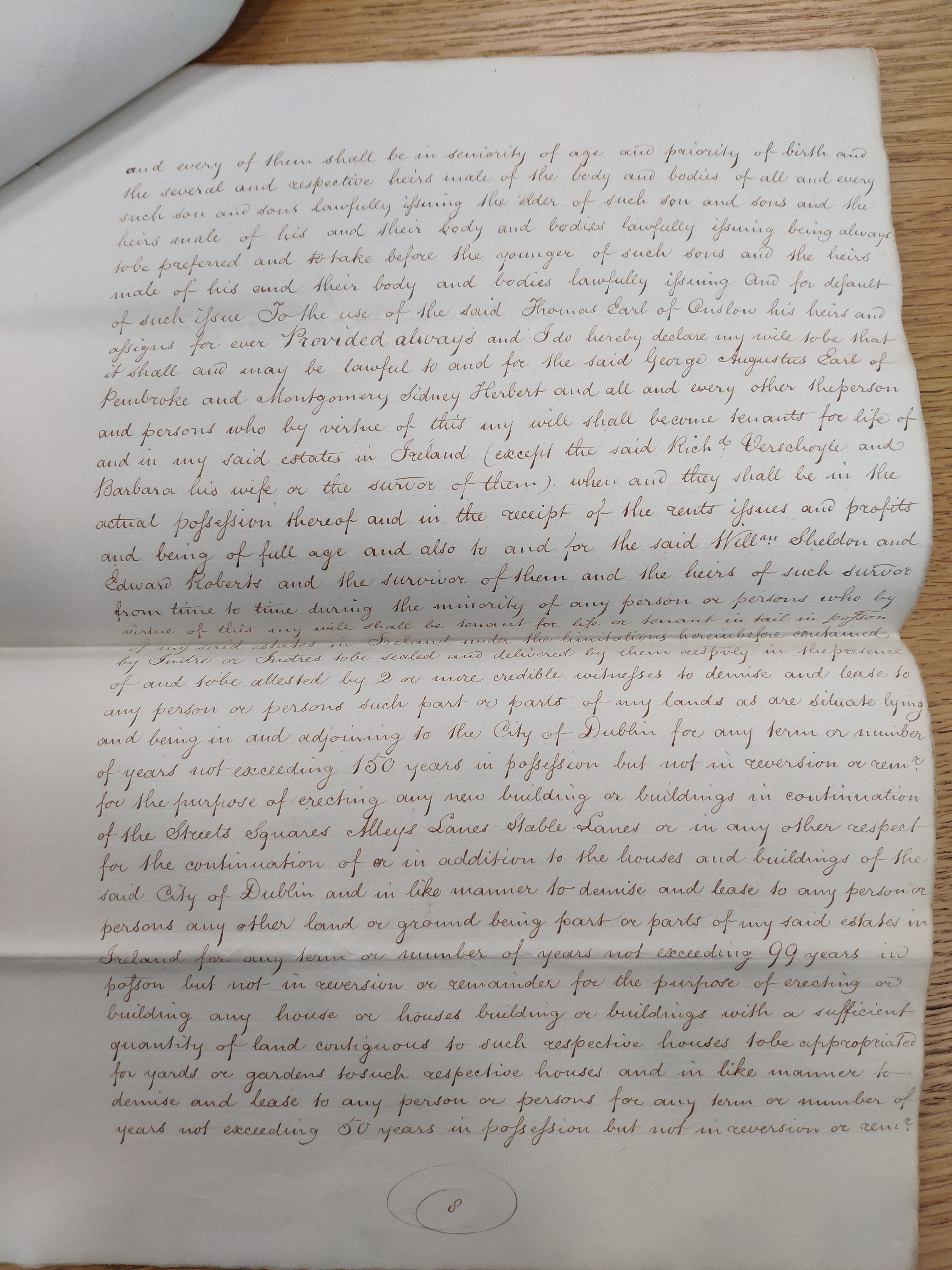
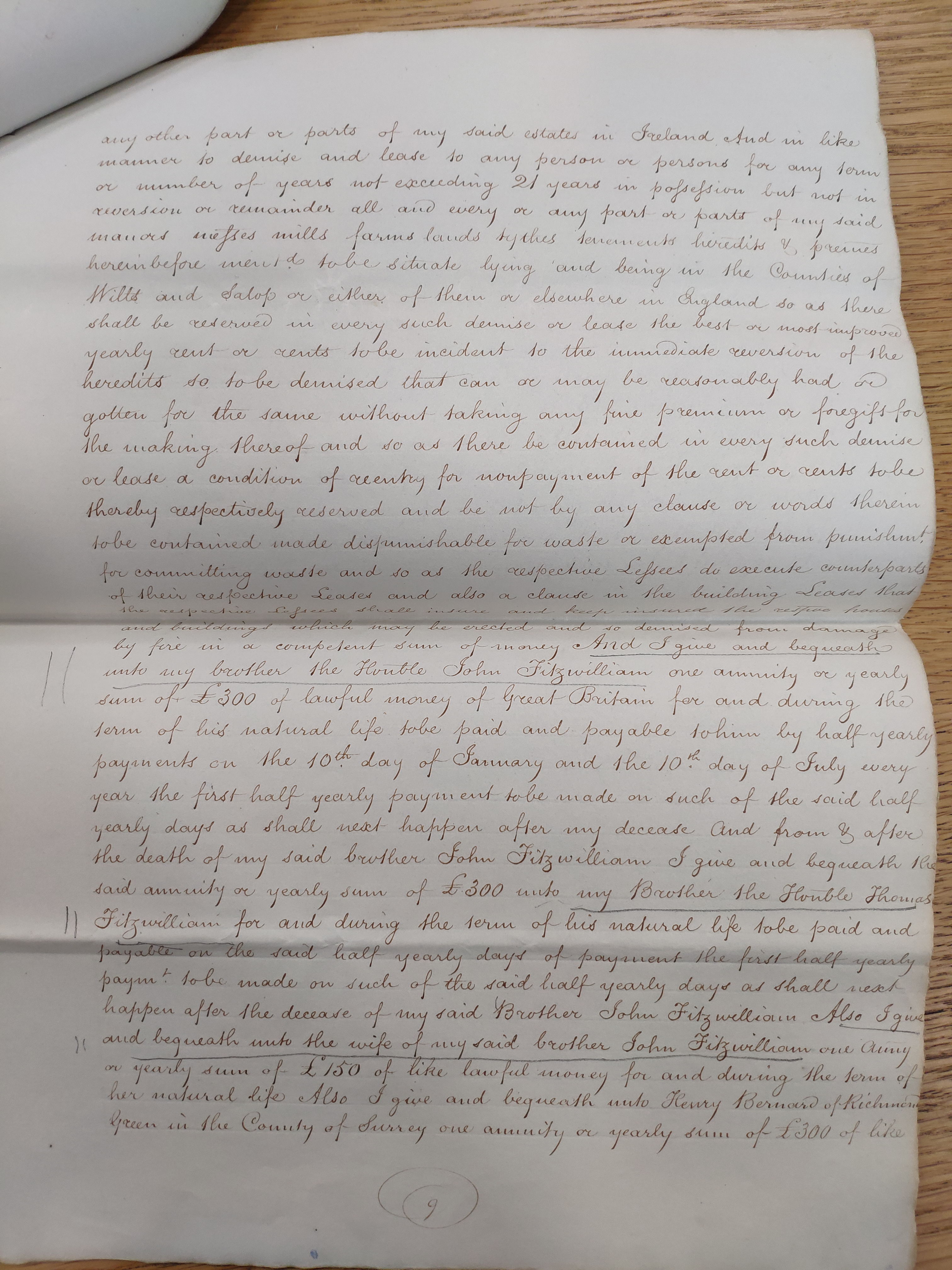
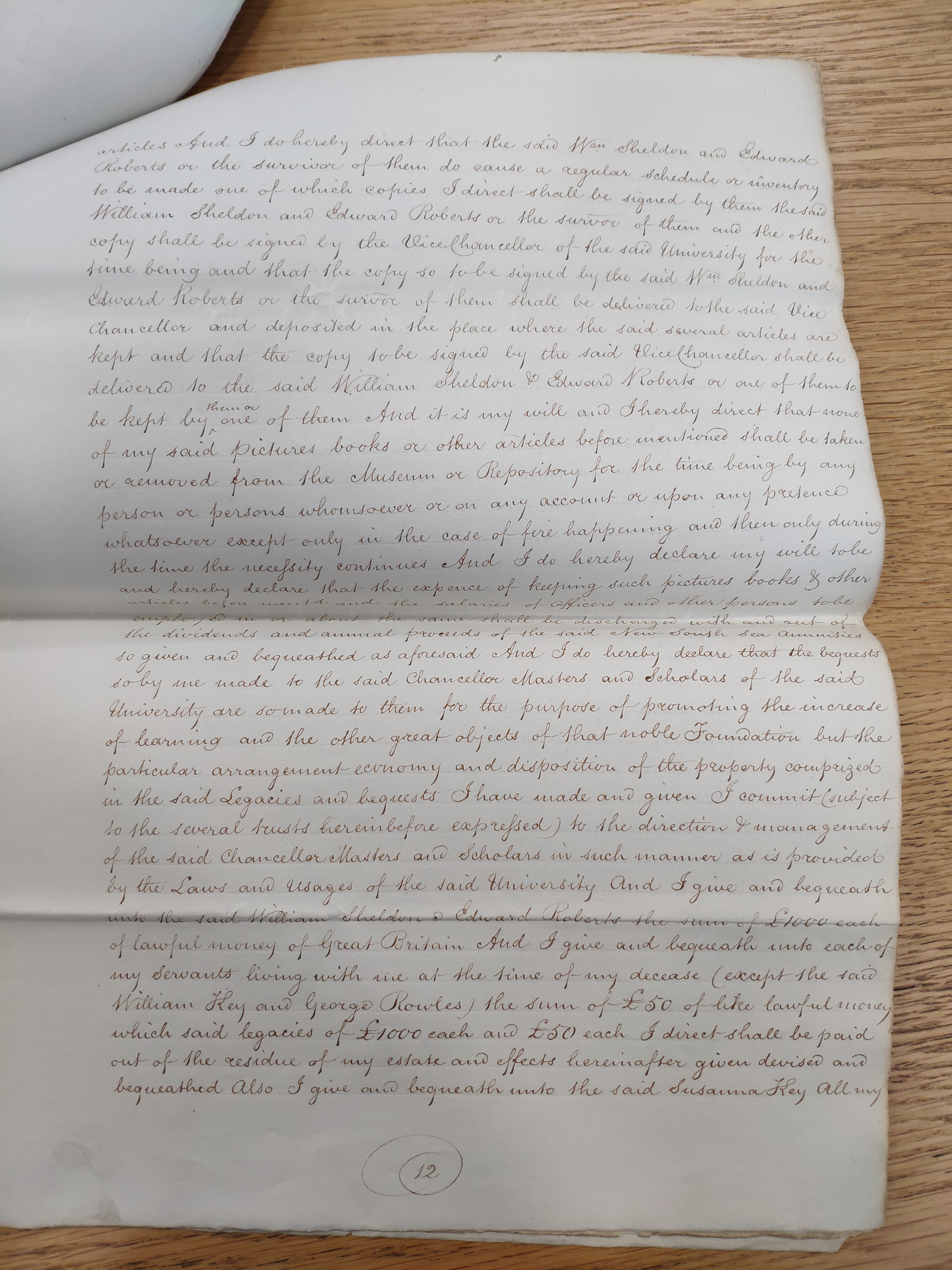
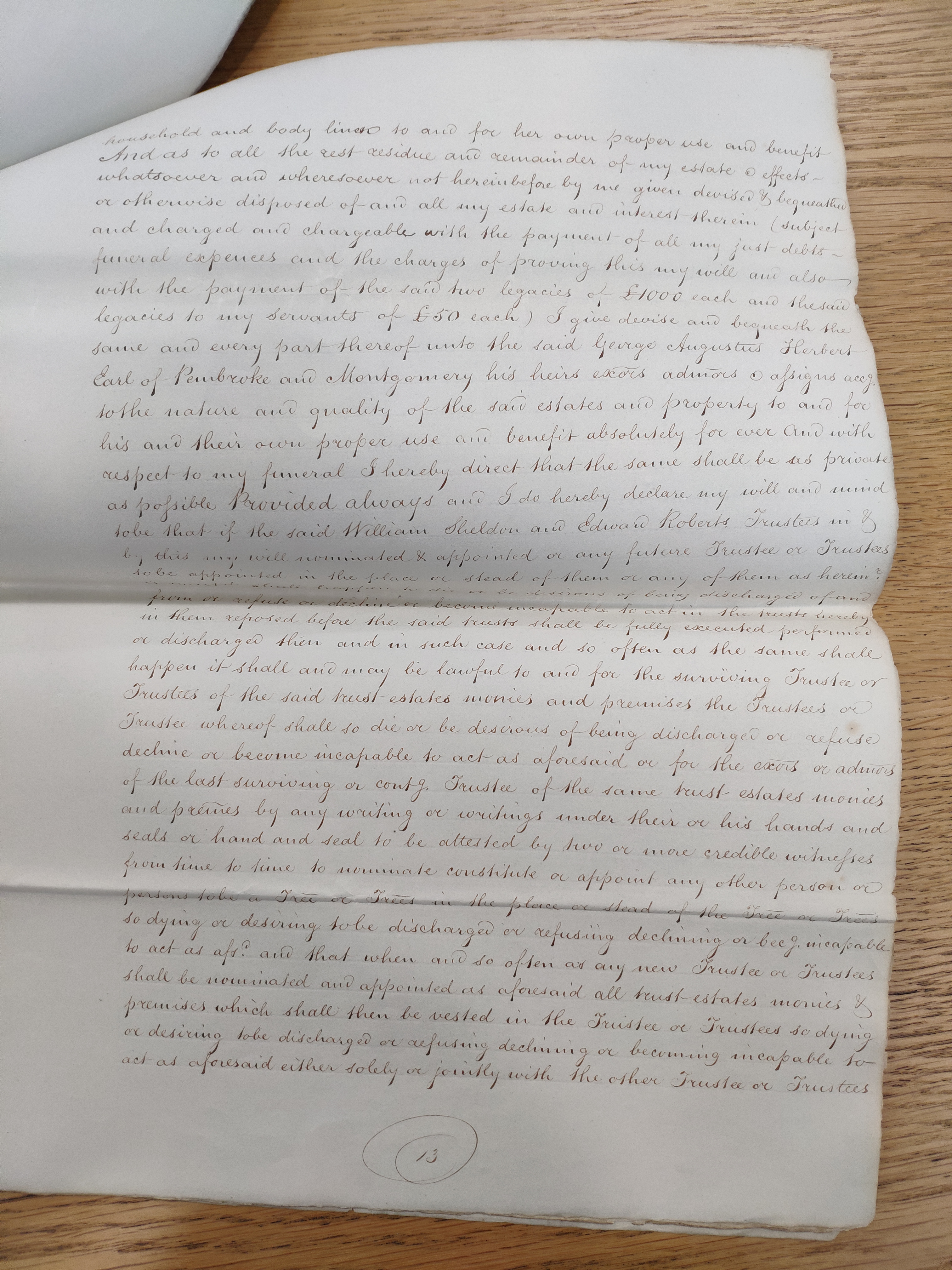
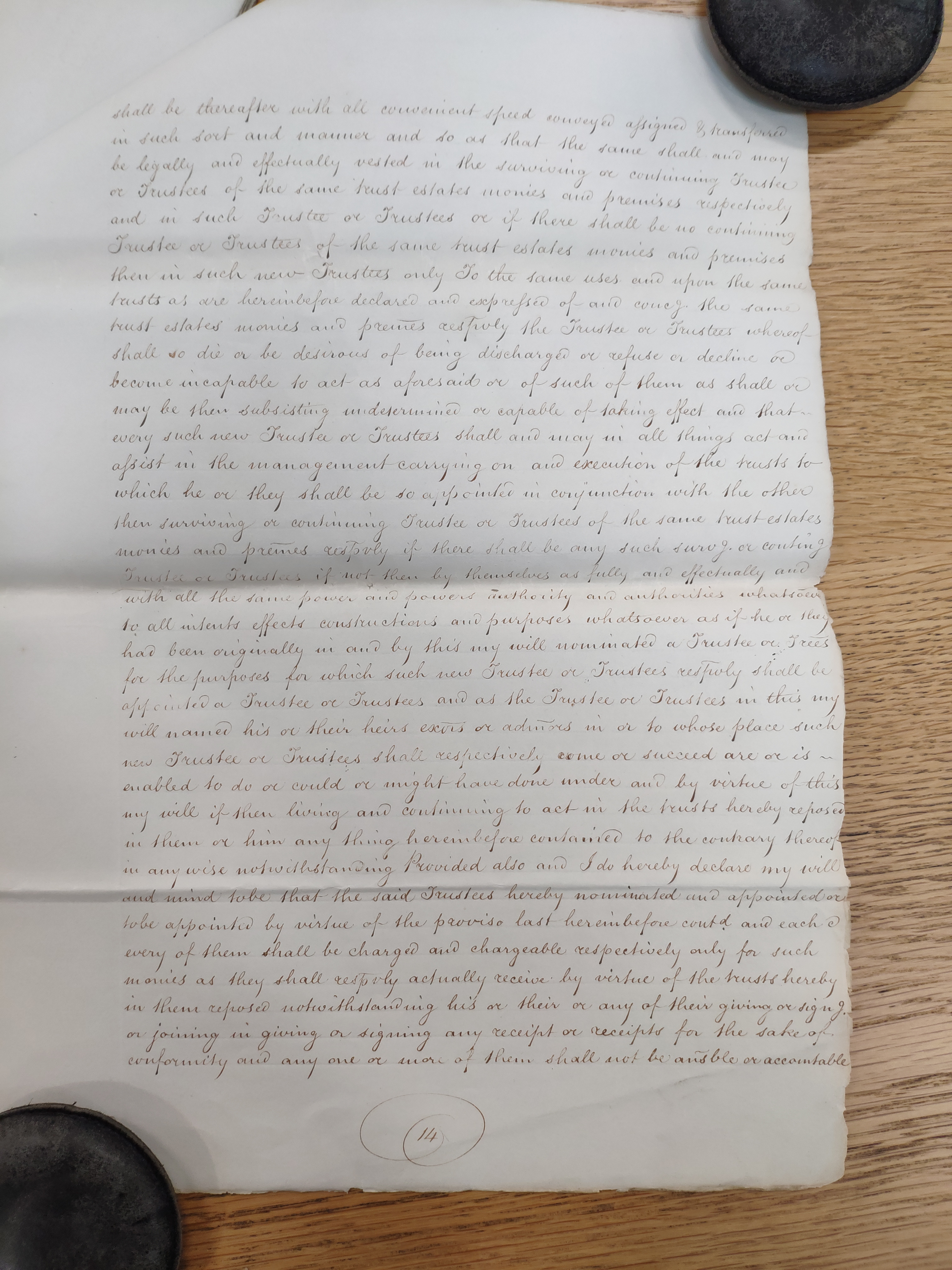
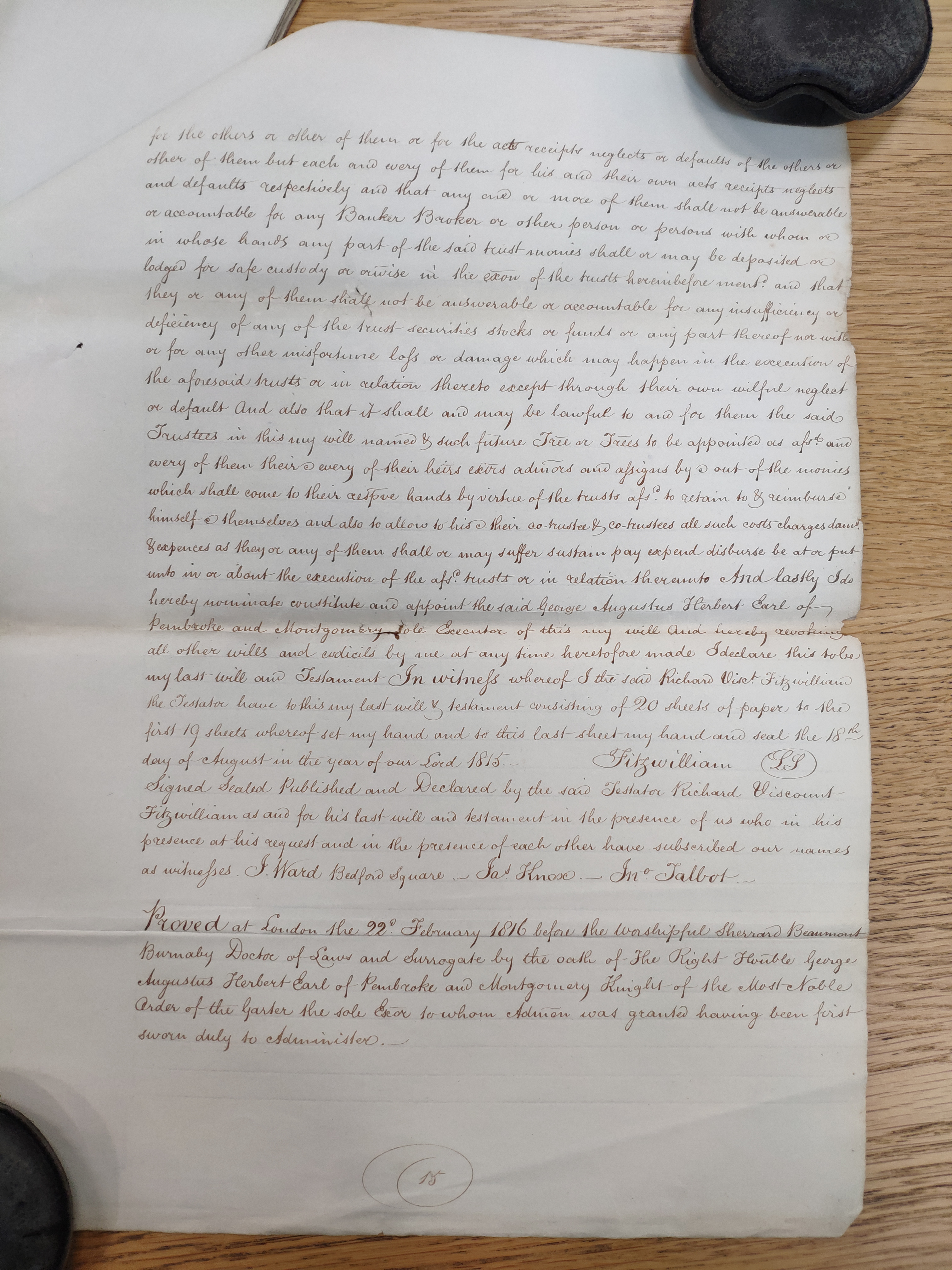
- Two copies of will in
2057/D5/18.
- Older, hard to read, copy:
- Later, easier to read, copy:


The 7th Viscount leaves his vast estate to the 11th Earl of Pembroke.
Top: See
full size.
Bottom:
See
full size.
From
2057/D5/18.
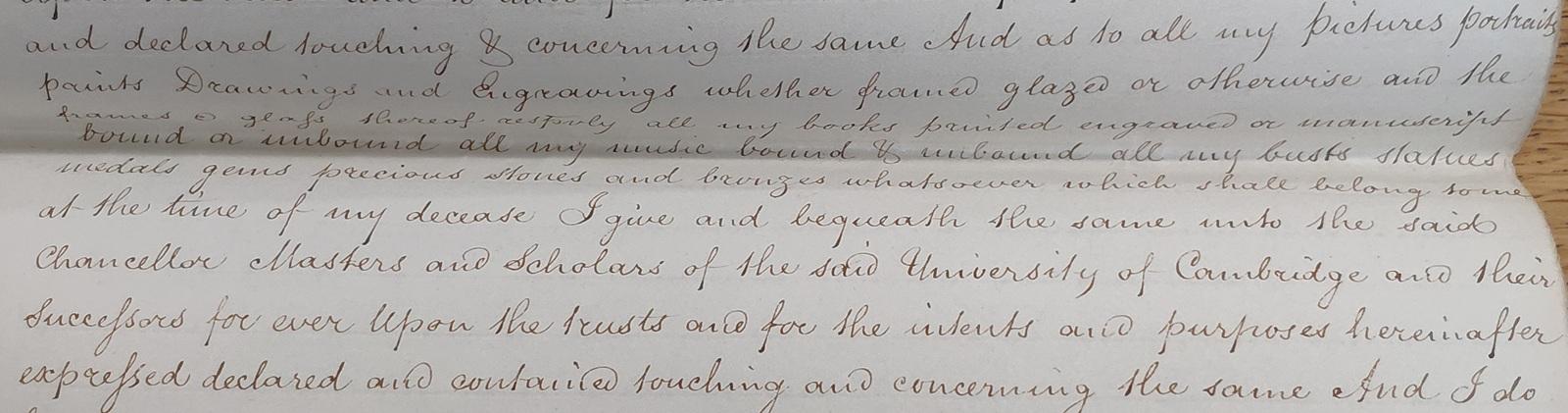
The 7th Viscount leaves his vast collection to the University of Cambridge.
See full size.
From
2057/D5/18.